
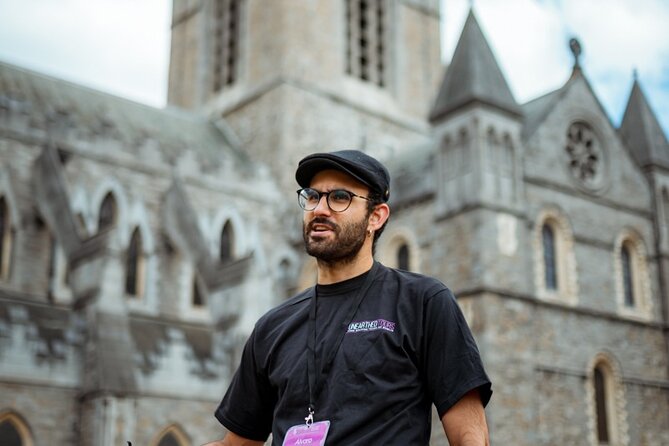
Reviewed · GHOST & DARK HISTORY TOURS
Dark Dublin: Torture, Murder & Mystery
Dark Dublin: Torture, Murder & Mystery is interesting because it turns well-known Dublin landmarks into clues for the city’s grim past. I like that it’s a medium-group walking tour with an easy start location, and I also like how it gets you out toward Smithfield instead of only circling the busiest center streets. One thing to consider: the stories are truly macabre, with themes like torture, grave robbery, and cannibalism, so it is not for everyone.
You walk at a relaxed-but-active pace for about 2 hours starting at 5:30 pm, and you’ll hear the connections between what you see and what happened there. You will not go inside the major churches and cathedrals, but you still get the story behind them. The tour feels purpose-built for people who want night-time Dublin with a darker edge, plus guides who can keep the mood lively, like Cillian, Killian, Kim, Michael, Stephen, and John, based on names shared in feedback.
Key Highlights You Will Actually Feel
- A focused 2-hour route that balances famous sights with lesser-seen areas
- Outside-only visits at Dublin Castle and the cathedrals, with the dark stories attached
- The 40 Steps stop includes admission, making it the one place you will pay for during the walk
- Smithfield Square is the finale, with a closing murder story in a public space
- Small group feel (max 30) with guides who use humor while staying on theme
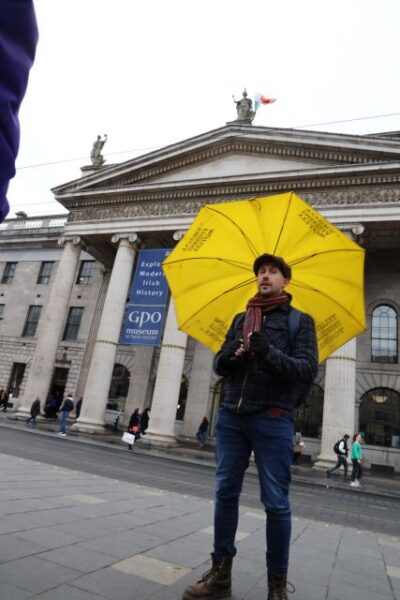
- Easy meeting point at Barnardo Square near City Hall, marked by purple umbrellas
Why Dublin’s “dark side” works best at night
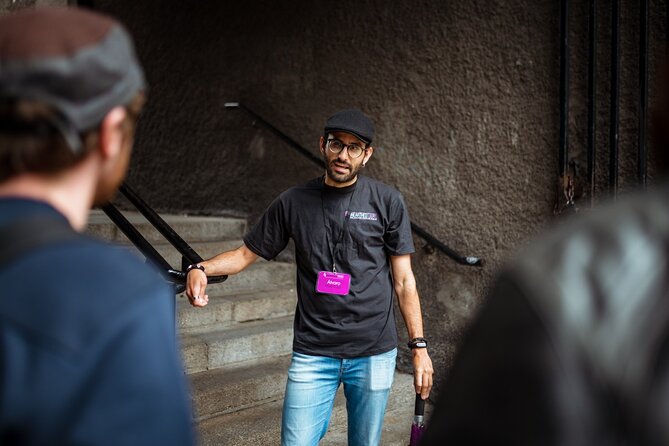
Dublin at night has a different rhythm. Street noise levels shift, alleyways feel longer, and the city’s stone buildings suddenly look less like postcards and more like places where things could have happened. That is exactly what this tour plays with: you are not just looking, you are listening.
What makes the experience work is how it links the physical sites to the stories people whisper about, even when the official guidebook version is more polite. You will walk past places you probably already recognize, like Dublin Castle and St Patrick’s Cathedral, then hear what was going on around them when Dublin was far less peaceful than it looks today. The goal is clear: murder, torture, and mystery as a lens, not as random shock value.
The content is grim, so I recommend this if you like true crime history, spooky storytelling, and the “how did this place get that reputation” feeling. If you want a gentle sightseeing stroll, or you get queasy with graphic topics, you might want to skip this one or choose a lighter tour.
More ghost walks and dark history tours in Dublin:
- Dublin Ghost Bus Tour with Professional Actors
★ 4.5 · 949 reviews - Haunted Dublin Walking Tour
★ 5.0 · 550 reviews - From Dublin: Gravedigger Ghost Bus Tour
★ 4.4 · 546 reviews
Meet at Barnardo Square, follow the purple umbrellas
The tour starts at Barnardo Square on Dame Street (Dublin 8), right by City Hall, opposite the Olympia Theatre. It is a small, easy-to-find square, and guides are visible with purple umbrellas, which helps a lot when you arrive early and the street seems busy.
Start time is 5:30 pm. Plan to be there a few minutes early so you can settle your group and start walking without stress. This is also one of those tours where being on time matters, because the story flow is built around short, specific stops.
From a practical standpoint, you are walking on foot through central Dublin. If you know your tolerance for evening walking, set yourself up accordingly: wear comfortable shoes, and consider a light layer for the walk because you are outside the entire time.
Dublin Castle courtyards and the Devil’s Half Acre (no entry)
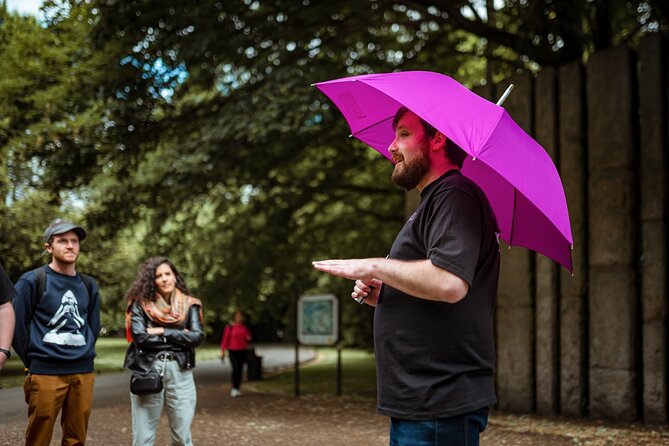
Dublin Castle is the type of place you expect to explore on a basic sightseeing day. Here, you treat it more like a stage set for dark legends. The tour does not enter Dublin Castle, but your guide spends time in the courtyards, first in the Lower Courtyard and then in the Upper Courtyard area.
This is where the story shifts into “medieval and early-modern Dublin,” with talk of tortures of the past. Then you move to the Devil’s Half Acre, which is the kind of phrase that sounds like folklore until it is explained as part of how certain parts of the city functioned. Even without entering the castle itself, you still get the power of place, because the courtyards give you space for the guide to point, pace, and connect details to what you can see.
A drawback to note: since you do not go inside, this is not the day to come expecting castle interiors. If you want photos in courtyards and narrative history from the outside, it delivers. If your dream is indoor sightseeing tickets, you will likely feel a bit held back.
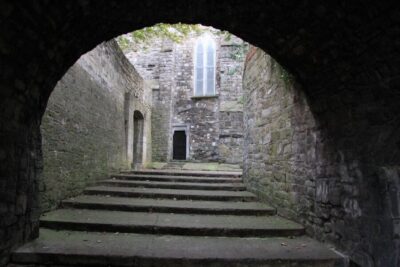
The 40 Steps: the cannibalism stop with included admission
If you like your Dublin stories to lean hard into the bizarre, the stop at The 40 Steps is the one built for you. The guide focuses on stories of cannibalism here, and this stop has admission included as part of the tour.
This is also one of the few segments where the “darker theme” is not just a side note. The site itself becomes the hook, and you get the narrative that explains why it matters. If you have seen other “spooky” walks that feel like they are mostly ghost vibes, this segment is different because it stays anchored to a specific place and a specific story line.
Timing wise, the tour budgets about 15 minutes for this stop. That makes it compact enough to stay punchy, but long enough that your guide can set context and not just toss out a grim headline. Come ready to listen, not just to look.
Same city, a different sort of day out:
- Dublin to Cliffs of Moher, including Wild Atlantic Way and Galway
★ 5.0 · 23,331 reviews - From Dublin: Cliffs of Moher, Burren & Galway City Day Tour
★ 4.8 · 18,888 reviews - Dublin: Guinness Storehouse Entry Ticket
★ 4.6 · 16,863 reviews - Dublin to Cliffs of Moher, Burren, Wild Atlantic Way, Galway Tour
★ 5.0 · 12,924 reviews
St Patrick’s Cathedral and Christ Church: grounds only, but big stories
One of the smartest ways to design a dark walking tour is to keep you outdoors while still letting you use Dublin’s most dramatic architecture as a backdrop. That is what happens at St Patrick’s Cathedral and Christ Church Cathedral.
At St Patrick’s Cathedral, the tour takes you into the grounds, but you do not enter the church. The guide uses the stop to uncover the history of Jonathan Swift, which is a great example of how this tour mixes famous names and famous buildings with the less polite parts of the narrative. You will likely notice the contrast right away: the architecture feels grand and established, while the stories are more complicated, darker, and more human.
Then you move to Christ Church Cathedral for another grounds-focused visit. Again, you do not enter, but the guide covers hidden history connected to the extraordinary church. Expect atmosphere, plus a clear emphasis on what was happening around these places, not just what the buildings symbolize on postcards.
Why this matters for you: skipping entrances saves time and keeps the tour flowing. It also means you are not juggling ticket lines with narrative moments. The trade-off is simple, you miss interior viewpoints and guided inside explanations, so this tour works best as the story-led walk, not as a replacement for a full cathedral visit.
St Audoen’s and St Michan’s: grave robbings, the Black Pig, and Billy in the Bowl
If you want the walk to feel like it is moving beyond the obvious “top sights,” these two stops do that job. St Audoen’s Church is where the guide unearths dark pasts, including grave robbings and attacks from The Black Pig. You get the sense that this is Dublin’s underside, tied to older city life where danger could be close and informal justice could be messy.
Then comes St Michan’s Church, with a guide focus that includes Billy in the Bowl and more recent dark events. Even without entering the church, the storytelling is structured to make the place feel specific. This stop works well if you like the way legends become part of local identity, especially when your guide connects the myth to the reality of how cities change and reuse spaces.
Timing for each of these stops is about 15 minutes, and the pace is designed to keep you moving. You might notice that the walking is light enough to stay comfortable, but fast enough that slow walkers could feel rushed at times, depending on the group. If you are traveling with anyone who moves slowly, it is smart to set expectations early.
Smithfield Square ending: a local murderer to close the loop
The tour finishes at Smithfield Square (end point at 7 Smithfield, Dublin). It is a public square, so you are not trapped waiting inside anywhere when the story ends. The final segment includes an incredible finishing story of a local murderer.
This ending matters because it puts a ribbon on the whole night’s theme. You start near City Hall, pass through Dublin Castle’s story universe, then fan out into cathedrals and church neighborhoods, and you end in a place that feels like it belongs to the city’s working life. Smithfield is where the tour’s atmosphere starts to feel less like “tour mode” and more like “Dublin in layers.”
If you like it when a guided story has a satisfying last beat, this ending is a good match. You also get flexibility afterward, since you are in a public square and can head toward dinner or a drink on your schedule.
Price and value at $23.22 for 2 hours
At $23.22 per person, this tour sits in the “worth it for a focused experience” category, especially if you price it against the cost of a museum ticket and a guide combo. You get an in-person guide, small group format, and an eco-friendly approach noted by the provider. You also get a mobile ticket, which tends to make check-in easier on a night when you already want to be outside.
What you should expect about admissions: most major stops are not entry tickets for the churches and cathedrals, because you do not enter them. The tour notes that the admission at The 40 Steps is included. Other stops are listed as free or not included depending on the location, so your time is mostly guided narrative plus walking rather than paid entry after paid entry.
Also think about timing value. Starting at 5:30 pm gives you an efficient way to spend evening hours without giving up your whole night. If you only have one shot to see Dublin in a way that feels different from daylight sightseeing, this tour is built for that.
Who should book, and who might want a different kind of night
This is the kind of tour I recommend when you like:
- true crime style stories tied to real city locations
- a walking format that keeps you engaged with short, structured stops
- guides who use humor to manage heavy topics, like several named guides in feedback (Cillian, Killian, Kim, Michael, Stephen, John)
It might not be the right fit if:
- you want mostly daylight-style sightseeing, because the tour is story-led and dark-themed
- you are sensitive to torture or cannibalism topics, even if the tone is entertaining
- you are bothered by city sounds, since traffic and street noise can affect your focus on an outdoor walk
- you or your group need a very slow pace, since some feedback points out the pace can feel quick for less mobile walkers
If your group includes a mix of interests, this works best with people who genuinely want darker history. Bring friends who enjoy the “how could this happen here” angle.
FAQ
What time does the Dark Dublin tour start?
It starts at 5:30 pm.
How long is the tour?
The tour runs for about 2 hours.
Where do we meet the guide?
Meet at Barnardo Square, Dublin 8, near City Hall opposite the Olympia Theatre. Guides are visible with purple umbrellas.
Do we enter Dublin Castle or the cathedrals?
No. The tour explores Dublin Castle courtyards and the grounds of St Patrick’s Cathedral and Christ Church Cathedral, but it does not enter these buildings.
Is any admission fee included?
Admission is included for The 40 Steps. Other stops are listed as free or not included.
What group size should I expect?
The tour has a maximum of 30 travelers and is described as a small-group experience.
Is the tour offered in English?
Yes, it is offered in English.
Is the tour suitable for most people?
The tour states that most travelers can participate. Service animals are allowed, and it is near public transportation.
Is free cancellation available?
Yes. You can cancel up to 24 hours in advance for a full refund.
Should you book this torture, murder and mystery walk?
Book it if you want a 2-hour evening walk that swaps polite guidebook history for murder, torture, and mystery stories tied to real Dublin locations. It is good value at $23.22 because the format is tight, the stops are specific, and the tour leads you to places like Smithfield that you might skip on your own.
Skip it if you do not like dark subject matter, or if you need a slow, quiet stroll. For the right mood, this is one of the most fun ways to see Dublin after sunset.
Fresh options around Dublin
- Wicklow Mountains Private Day Tour including Glendalough★ 5.0 · 7 reviews
- Wicklow: Private Day Tour from Dublin★ 5.0 · 5 reviews
- Women Of Ireland: Trailblazers & Pioneers★ 5.0 · 4 reviews
- Wicklow Mountains & Glendalough Luxury Private Day Tour★ 5.0 · 23 reviews
- Wicklow tour of Glendalough★ 4.5 · 8 reviews
- Dublin To Kilkenny Castle Waterford Crystal Private Car – Day Tour★ 5.0 · 8 reviews
- Waterford Crystal and Kilkenny Full-Day Rail Tour from Dublin★ 5.0 · 3 reviews
- Full Day Private Wicklow Tour★ 5.0 · 12 reviews
Ghost & Dark History Tours, compared.


Hidden Dublin: Haunted History Walking Tour v2.0 2026
Read our review →
Browse the lists this tour appears in