
Reviewed · DUBLIN
Cupid’s Trail: Romantic Puzzle Quest in Dublin
Cupid’s Trail is interesting because it turns a classic Dublin stroll into a smartphone puzzle quest with romantic waypoints like Love Lane. You follow clues from stop to stop, and the story gives you direction as you go.
I like that the route threads together landmark spots you can actually see on foot, including Ha’Penny Bridge and the Molly Malone Statue. I also like that you end at Oscar Wilde House, so the city walk has a clear finish point, not just a random loop.
One possible drawback: there is no tour guide, so you are relying on the app and the places on the route being accessible. If a business stop (like the bubble tea location on the route) is closed when you arrive, the story flow can feel off.
Key things to know before you go

- Self-paced clue solving: you solve a clue, get the next directions, and you can linger as long as you like.
- Tight central route: the stops concentrate around St Stephen’s Green, the Liffey area, and central Dublin landmarks.
- Romantic landmarks on purpose: Love Lane is a named stop, and the ending at Oscar Wilde House ties the romance theme to Dublin’s literary past.
- No guide, no entry tickets needed: you do not need paid attraction tickets to complete the quest.
- Works after booking: you can play at any time after you book, without rescheduling.
How Cupid’s Trail turns Dublin into a smartphone puzzle walk

Cupid’s Trail is a group activity that uses your phone as the main interface. You do not get a live tour guide, so the experience is about reading the next clue, solving the puzzle, then walking to the next spot.
The quest runs about 30 minutes to 1 hour, which is a smart length for a city day. It is long enough to feel like you did something structured, but short enough that you can still fit in a café stop or a proper pub evening right after.
Your ticket is mobile, and you get 24/7 customer support if you run into app trouble. One extra convenience I appreciate is that you can play it anytime after booking without needing a reschedule.
Since it is private for your group, you are not squeezed into someone else’s pace. That can matter when a puzzle takes you a minute longer, or when one person wants to stop for a photo at Ha’Penny Bridge while the others keep an eye on the next clue.
More of Dublin worth an open tab:
- Dublin to Cliffs of Moher, including Wild Atlantic Way and Galway
★ 5.0 · 23,331 reviews - From Dublin: Cliffs of Moher, Burren & Galway City Day Tour
★ 4.8 · 18,888 reviews - Dublin: Guinness Storehouse Entry Ticket
★ 4.6 · 16,863 reviews
Starting at Fusilier’s Arch near St Stephen’s Green
You begin at Fusiliers’ Arch, St Stephen’s Green, Dublin (D02 HX65). This is a good start point because it puts you right in central Dublin, within easy walking distance of a lot of famous sights.
The first moment of the quest is simple: you get your first clue at the arch. Once you solve it, the story gives you directions to the next stop.
Practical tip: before you start, take a quick look at your surroundings and get your bearings. Dublin streets in the center can feel similar block to block, and the app directions work best when you know which direction you are walking.
Also, treat the first few minutes as warm-up. Even if you are good with puzzles, the first clue sets the tone for how the game expects you to move. Once you click into that rhythm, the rest tends to feel smoother.
Whitefriar Church and the next clue beat
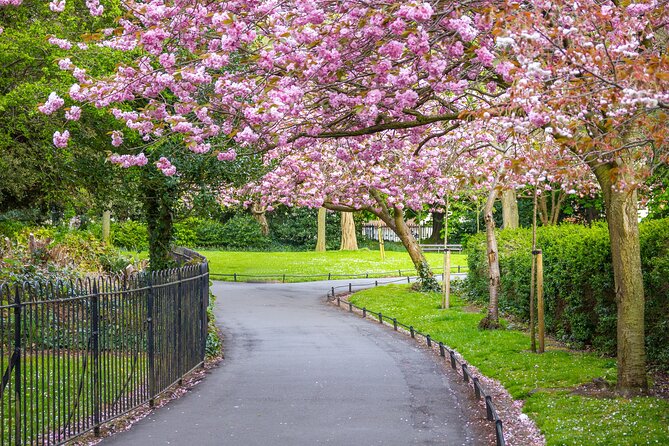
Your second stop is Whitefriar Church. Here you get a new clue to solve, and after that you move on when you are ready.
This is one of the points where the format really shows its value. You are not just passing buildings while your brain goes into autopilot. Instead, you slow down, look at details the clue might be referencing, and connect what you are seeing to the story as you walk.
One benefit of a self-guided quest is that you can pause when something catches your eye. The instructions say you can stop for as long as you like, so if you want a few extra minutes to read the surroundings and make sense of a clue, you can.
A drawback of this same setup is that you have to be comfortable with figuring it out yourself. Since there is no tour guide, the experience depends on your phone and your patience when the clue feels vague.
CHEWBREW Bubble Tea Room: fun stop, but check it first
Next is CHEWBREW Bubble Tea Room. Like the other stops, you get a clue you need to solve, and you can continue at your own pace after.
This stop is interesting because it adds a modern Dublin flavor to the romance storyline. It is also the one most likely to test your patience because it is tied to a specific business location.
A published review pointed out that the bubble tea location had closed down at the time of their visit, and the story jumped around afterward. That does not mean it will happen to you, but it is a fair consideration.
If you book this, I suggest you plan for a small possibility of mismatch. Give yourself a little flexibility. If you get to the spot and it is not operating, do not panic. Keep your phone handy, follow the game’s next directions carefully, and treat the quest like a street-based puzzle rather than a scripted guided tour.
Same city, a different sort of day out:
- Dublin to Cliffs of Moher, Burren, Wild Atlantic Way, Galway Tour
★ 5.0 · 12,924 reviews - Dublin: Giants Causeway, Dark Hedges, Dunluce & Belfast Tour
★ 4.8 · 8,843 reviews - Dublin to Belfast Black Cab, Dunluce Castle and Giant’s Causeway
★ 5.0 · 7,954 reviews - Kilkenny, Wicklow Mountains & Glendalough Day Tour from Dublin
★ 5.0 · 7,897 reviews
Love Lane: the romantic waypoint that makes the whole theme click
The quest’s next big romance stop is Love Lane. This is where the theme feels most direct, because the name matches the purpose of the adventure.
Love Lane is a great kind of waypoint for a puzzle walk because it is memorable even without the game. When you arrive, you can spend a minute just looking around before you solve the next clue. If the clue references the location name or nearby street details, it is easier to connect the puzzle to what you are seeing.
I like that the route does not keep the romance in a fantasy bubble. It puts you in front of real Dublin streets and points of interest that you can revisit later for photos, coffee, or just a second look.
One more reason this stop works: it breaks up the walk rhythm. You go from church to a commercial stop, and then you hit Love Lane as a clear mood change. That keeps the route from feeling like a single long hallway.
Temple Bar Pub: story clues in the loud, lively center
Next you head to The Temple Bar Pub. Temple Bar is one of the most recognizable areas in Dublin, and that matters for a puzzle quest because it gives you a vivid visual landmark.
You will get a new clue here. After solving it, you keep moving on your own pace. Because Temple Bar can be crowded, I recommend you plan to move calmly even if you feel surrounded by activity.
If you want smoother puzzle solving, step a little away from the densest foot traffic when you read the clue. The more noise and people around you, the harder it can be to focus on small details the puzzle might rely on.
Also, remember the quest does not require attraction entry tickets to complete. So you are not stuck waiting for a ticket line. You are doing a walking and puzzle route, and the pub is there as a location anchor.
Ha’Penny Bridge and Molly Malone Statue for big Dublin photo energy

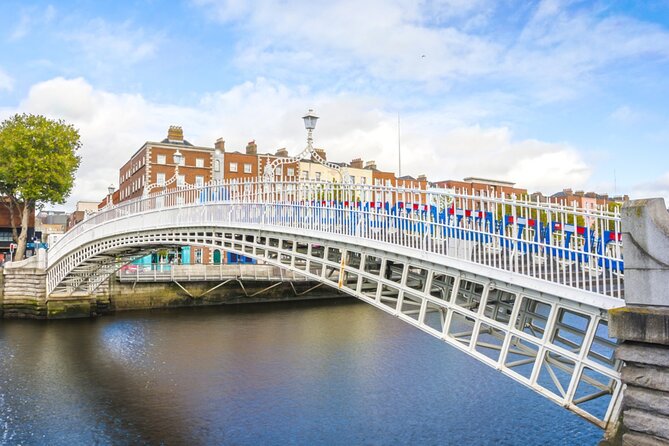
Then comes Ha’Penny Bridge. This stop is a classic Dublin sight, and it is a practical puzzle checkpoint too, because it is hard to miss.
You get a clue to solve here, then continue. If you take this quest during daylight, you will enjoy the bridge and river views more, and you can better confirm you are standing at the right spot.
After that, you reach the Molly Malone Statue. It is another central landmark that you can align your puzzle-solving with quickly. This is the kind of stop where the game helps you notice what you might otherwise speed past.
A good strategy at both Ha’Penny Bridge and Molly Malone: solve the clue, then give yourself 3 to 5 extra minutes for photos and a short rest. It keeps you from rushing, and the quest is meant to feel like a walk you can savor.
Irish Whiskey Museum and Gormleys Fine Art, then the grand finish at Oscar Wilde House
The next stop is Irish Whiskey Museum. As with earlier points, you get another clue here and you keep going when you are done.
Even if you are not planning to buy a ticket or enter a museum, this stop still adds a strong Dublin identity. The quest is not only about romance and puzzles. It is also about passing through places that scream Irish culture.
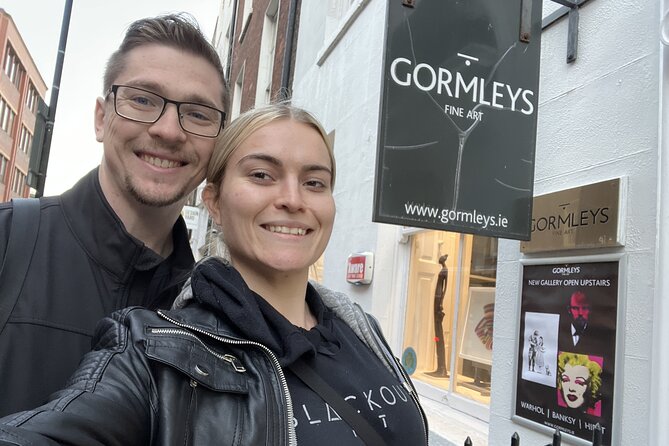
After that you visit Gormleys Fine Art, which gives the route a different flavor than pubs and bridges. Art stops can be useful in puzzle quests because they encourage you to look more carefully rather than just move from attraction to attraction.
Finally, you finish at Oscar Wilde House. This is where both the story and the city exploration game end, so you get closure. From a value point of view, that matters. You spend time on an activity, and you know exactly where it leads.
If you are the kind of person who likes to extend a good stop, Oscar Wilde House is also a natural place to keep exploring after the game ends. Even if you just linger outside, you end your walk in a Dublin spot that feels meaningful for a romance-themed quest.
Price and value: why $7.21 can make sense for a solo walk-or-together plan
At $7.21 per person, Cupid’s Trail is priced like a low-cost activity. The real value is not only the price tag. It is the structure: a set route, story-driven clues, and a time window of 30 minutes to 1 hour.
For groups, the cost can work even better. The experience notes group discounts, and if your group is larger than 15 people, you can book multiple groups.
It also helps that you get a mobile ticket and the option to play it anytime after booking. That means you can match it to your day plan instead of forcing your schedule around a tour departure time.
One more value angle: you do not need a tour guide and you do not need entry tickets for attractions to complete the quest. If you are trying to stretch your budget while still seeing central Dublin, this is a practical way to do it.
Booking is also fairly common, with an average booking window listed at 61 days in advance. That does not mean you cannot book later, but it is a clue that popular slots may go sooner, especially during peak travel seasons.
A balanced take on the romance story and what can go wrong
The format here is story plus puzzles plus directions. That can be great when the tone clicks, and it can be disappointing when the narrative feels confusing or off to you.
One negative review criticized the story for feeling not romantic and for not making sense, and they also mentioned that a stop location had closed. They said the story jumped around and that the storyline did not match the romantic goal.
That feedback matters because it points to the two biggest risk areas with any clue-based city game: (1) narrative tone and clarity and (2) real-world businesses changing or closing.
How you protect yourself:
- Keep expectations realistic: this is a puzzle quest, not a live scripted romance with a human guide to smooth things out.
- Plan for the phone to be your guide: bring a charged phone and be ready to follow directions instead of relying on local knowledge.
- Be flexible if one location is not available: do not assume the entire route collapses if a business stop is closed. Keep going based on the next direction in the app.
- If the story tone feels strange, shift your focus: you can still enjoy the city walking loop through Love Lane, Temple Bar area, Ha’Penny Bridge, and Molly Malone.
If you want polished storytelling led by a person, this is not that kind of experience. If you want a fun way to walk Dublin with a puzzle framework, it can be a solid fit.
Who Cupid’s Trail is best for in Dublin
Cupid’s Trail is a good match if you want:
- A self-guided romance themed walk without paying for a traditional guide.
- A short, central route you can finish in under an hour.
- A group experience that stays private for your party.
- A puzzle format that turns sightseeing into an active scavenger challenge.
It is also a nice option for couples who like playful tasks, or friends who enjoy solving riddles while walking through real streets. And because it is offered in English, it is easy to follow if that is your working language.
If you dislike puzzles, or if you need a guide to explain context, you might find the experience frustrating. The lack of entry-ticket dependencies is helpful, but you still have to solve the clues to get directions forward.
Should you book Cupid’s Trail in Dublin?
If your goal is a budget-friendly, central Dublin walk that mixes romance-themed stops with puzzle solving, yes, it can be worth booking. At $7.21 per person for a 30 to 60 minute activity, you are paying for structure and a playful route, not for museum admissions or a live lecture.
I would book it especially if you like the idea of finishing at Oscar Wilde House and you are comfortable guiding yourself with your phone. Just go in with the understanding that the story experience is app-driven, and one location tied to a specific business could be the one point where things do not match what you expected.
If you want a guaranteed smooth narrative with human flexibility, then a guided tour might suit you better. But for many people, this quest format is a fun way to see Dublin without spending half a day on transportation and ticket lines.
FAQ
How long does Cupid’s Trail: Romantic Puzzle Quest take?
It typically takes about 30 minutes to 1 hour to complete.
Where do I start and where do I finish?
You start at Fusiliers’ Arch, St Stephen’s Green, Dublin and you finish at Oscar Wilde House.
Is there a tour guide during Cupid’s Trail?
No. The experience does not include a tour guide. You solve clues using the mobile format and follow the directions given.
Do I need entry tickets to attractions on the route?
No. Entry tickets are not needed to complete the tour.
Is this activity private, and how does it handle larger groups?
It is a private tour/activity, so only your group participates. If your group is larger than 15 people, you can book multiple bookings.
What is the cancellation policy?
Cancellation is free up to 24 hours before the experience starts for a full refund. If you cancel less than 24 hours before the start time, the amount paid is not refunded.
Fresh options around Dublin
- Wicklow: Private Day Tour from Dublin★ 5.0 · 5 reviews
- Wicklow Mountains Private Day Tour including Glendalough★ 5.0 · 7 reviews
- Women Of Ireland: Trailblazers & Pioneers★ 5.0 · 4 reviews
- Wicklow Mountains & Glendalough Luxury Private Day Tour★ 5.0 · 23 reviews
- Wicklow tour of Glendalough★ 4.5 · 8 reviews
- Waterford Crystal and Kilkenny Full-Day Rail Tour from Dublin★ 5.0 · 3 reviews
- Full Day Private Wicklow Tour★ 5.0 · 12 reviews
- Dublin To Kilkenny Castle Waterford Crystal Private Car – Day Tour★ 5.0 · 8 reviews