
Reviewed · WALKING TOURS
1916 Rebellion Walking Tour
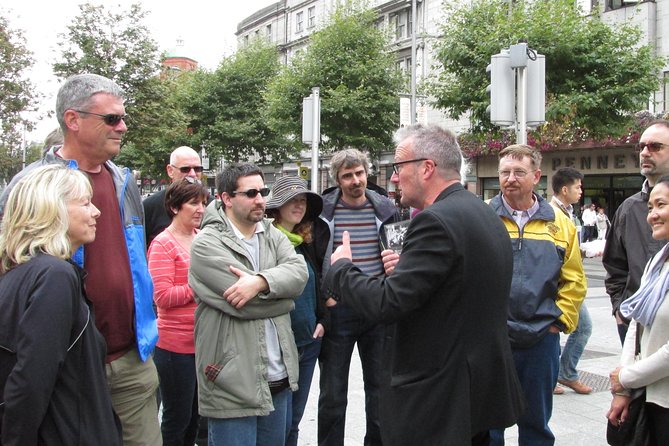
If you like your history in real places, this Dublin walk is a great match. It starts at the International Bar on Wicklow Street, tied to Lorcan Collins, who has guided this 1916 tour since 1996, and it keeps you close to the landmarks that shaped Easter Week.
I especially love the story-first build-up, where you start with the Irish Famine and work toward the Rising, so the events feel connected instead of like random dates. I also like that the walk is built around up-close streetside stops, from Dublin Castle to the GPO, where you can literally stand where major decisions and confrontations played out.
One thing to plan for: the tour is sold as about 2 hours, but the pacing can run long if you ask questions or if your group stays in discussion. Also, the group can be up to 30 people, so if you hate crowds, aim for good positioning early on.
Key Things to Know Before You Go

- International Bar start: You begin where Lorcan Collins has been running the 1916 story since 1996
- Famine-to-Rebellion context: The guide links the Irish Famine of the 1840s to 1916 so it all makes sense
- Major landmarks in a single loop: City Hall, Dublin Castle, the Four Courts area, O’Connell, the GPO, and more
- Chilling physical reminders: You’ll pause to look at bullet holes still visible on monuments
- Professional guide + conversation style: Expect questions, explanations, and lively storytelling
- No extra site ticket fees: The stops are admission free, so you pay once and walk
Start at the International Bar on Wicklow Street, guided by Lorcan Collins’ legacy

The meeting point is 23 Wicklow St, Dublin, where the tour begins at the International Bar. It’s a smart start, because you get oriented right away in a place locals actually use, not a sterile tour office. If you arrive early, you can settle in with a drink and read the intro material your guide provides.
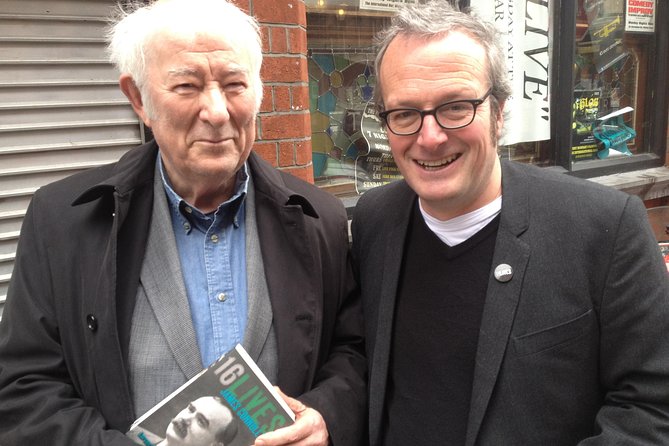
This is also where the tour’s credibility shows. Lorcan Collins has been running the 1916 walking tour through this same bar setting since 1996, so you’re stepping into a well-established storytelling rhythm. I like that it makes the whole thing feel rooted in Dublin, not stitched together from distant museum facts.
Alcohol is not included, but drinks are available for purchase. If you want to keep things easy, treat it like a pre-walk “set the scene” moment, not a party, since you’re heading out on foot right after.
More walking tours in Dublin:
- Dublin Highlights and Hidden Gems Guided Walking Tour
★ 5.0 · 6,020 reviews - Dublin: Highlights and Hidden Gems Walking Tour
★ 4.9 · 2,140 reviews - 90 Minute Dublin Walking tour and Sightseeing tips
★ 5.0 · 916 reviews
From the Irish Famine to Easter Week 1916, the tour teaches the why
After a short introduction, the guide builds the story from the Great Hunger in the 1840s through the long road toward revolutionary action. This matters because it stops 1916 from feeling like an isolated outburst. You understand the background pressures that shaped Irish political mindset, so the Rising lands with more meaning.
A key perk here is that you can ask questions early, before the walk turns into a fast sequence of streets. You get time to learn the timeline and the key players without feeling rushed. Even if you start with zero knowledge, the tour is set up for you to catch up quickly.
You’ll also hear the tour route gets announced, and while the walk follows a solid plan, it can vary day to day. That keeps it from feeling like you’re doing the exact same script as every other group.
City Hall and Dublin Castle, where power and rebellion collided
The second stop is City Hall, a site tied directly to the Irish Citizen Army during the Rising. You’ll pause and talk about how Easter Week played out in the city, not just in the headlines. This stop gives you a sense of how occupation and control worked in practice during the revolution.
Then comes Dublin Castle, the British administration center that controlled Ireland for a long stretch of time. The guide connects it to what happened during 1916 and to the later War of Independence. If you know the film Michael Collins, you’ll likely recognize the castle vibe, but you’ll also get the broader context of why this place mattered.
One practical note: these stops are talk-heavy. Even though it’s a walking tour, you should expect moments where you stand still, look around, and listen closely. That’s where good shoes help, and where being early to the meeting point pays off.
The Four Courts from the River Liffey, and why 1916 leads to 1922
The tour heads toward the area of the Four Courts, which was occupied by revolutionaries in 1916. It’s also linked again to the period leading up to the Irish Civil War in 1922, which is one of the tour’s smartest threads.
Instead of pushing you up to the building, the guide keeps it sensible by explaining it from a bridge over the River Liffey. That viewpoint approach is useful, because you can take in the layout of the area while still focusing on the story. It also avoids the “tour stops at the door” problem and turns the streetscape into a history lesson.
The explanation doesn’t stay trapped in 1916. You get the way later events grew out of the earlier fighting, and how the political and military situation shifted over time. If you only want a simple Rising narrative, you may feel the extra complexity, but it’s there for a reason: it makes the bigger Irish story feel continuous.
Same city, a different sort of day out:
- Dublin to Cliffs of Moher, including Wild Atlantic Way and Galway
★ 5.0 · 23,331 reviews - From Dublin: Cliffs of Moher, Burren & Galway City Day Tour
★ 4.8 · 18,888 reviews - Dublin: Guinness Storehouse Entry Ticket
★ 4.6 · 16,863 reviews - Dublin to Cliffs of Moher, Burren, Wild Atlantic Way, Galway Tour
★ 5.0 · 12,924 reviews
O’Connell’s memorial bullet holes and Jim Larkin’s working-class connections
Next you’ll stop at O’Connell Monument, where the guide points out the bullet holes connected to the Rising. Seeing those marks in the stone is one of those moments that makes history feel uncomfortably real. It’s the kind of detail you remember long after the walk ends.
After that, the tour includes Jim Larkin’s Statue. Big Jim Larkin is presented as a key Union man from Liverpool, a comrade of James Connolly, and a friend of Dublin’s working class. This stop shifts the focus from government buildings to people and movements, which I find is where many first-time visitors start feeling the human scale of events.
These two stops also add variety to the walk. You go from civic monuments and official power hubs to names that represent organizing, solidarity, and class politics. If your goal is to understand Ireland beyond postcard landmarks, these pauses are where the tour really clicks.
The GPO and Moore Street, the Proclamation moment and the last stand
The heart of the walk is the An Post General Post Office, usually just called the GPO. This is one of the most important stops, because it was the headquarters for the revolutionaries in Dublin during Easter 1916. The guide explains how events unfolded around the GPO, and you hear how PH Pearse read the Proclamation here.
If you’ve ever heard the Proclamation quoted, or you’ve seen dramatic reenactments, this is where your brain connects the words to a real building. It also helps that the tour doesn’t just name-drop. It ties the scene to the national sense of identity that grew from this moment.
Then you often continue to Moore Street. Depending on time, the guide may show you where the GPO garrison made its last stand during Easter Week. Even without dramatic special effects, the idea lands because you’re walking the same streets where the final phase happened.
This portion of the tour is also where you can expect the most emotional weight. It’s not just dates and factions. You’re meant to feel the stakes and the consequences, and the guide’s storytelling style helps a lot.
Bank of Ireland and flexible route choices near Trinity College
The walk typically finishes back around the city center with a stop at Bank of Ireland, sometimes referred to as the Old Parliament. The guide explains its role in Irish history and sometimes points out connections with nearby Trinity College, depending on the route chosen that day.
The tour is intentionally flexible. The route varies, so you might see slightly different streetside angles or timing, but you’ll still hit the major themes and landmarks. For you, that means you can plan to enjoy the walk even if you’ve read about a “perfect” 1916 route. The guide is adjusting to time, crowd flow, and what’s most instructive in the moment.
As with the earlier stops, most of what you’ll do here is stand, look, and listen. You’re learning how the city itself becomes a map of political conflict.
Timing, group size, and how to make the 2-hour walk work for you
The tour duration is listed as about 2 hours, and that’s a realistic planning window if you keep questions quick and your group stays on track. Still, one of the main things to consider is that the conversation style can stretch the schedule. If you want time for chatting, factor in a little extra.
The group size has a maximum of 30 travelers. That’s not huge, but it is enough that early in the walk you’ll want to position yourself where you can see and hear clearly. If you’re hard of hearing or sensitive to noise, pick a spot near the guide rather than at the very back.
This experience requires good weather. If it’s canceled due to poor weather, you’ll be offered a different date or a full refund. Dublin can change fast, so bring a light layer and be ready to adapt.
What you should bring is simple: comfortable walking shoes and a phone with your mobile ticket ready. A refillable water bottle helps too, since you’ll be outside for most of the time.
Who this Dublin 1916 Rebellion walking tour is for
This walk is ideal if you want a deeper education on Irish revolutionary history without needing background knowledge. The guide’s structure helps you understand the buildup to the Rising, so you’re not memorizing names in the dark.
It also suits history buffs who like landmarks up close and want more than a museum lecture. The tour keeps you outside, close to the physical reminders, so the story has weight.
If you’re traveling with friends and you want something more human than a rigid script, you’ll probably like the guide-led conversation feel. There’s space for questions, and the best tours use that space well.
It’s also a good value for the price because it’s professional guidance plus a concentrated set of major stops, and the listed stops are admission free. You’re not buying multiple tickets to piece together one education.
Should you book the 1916 Rebellion Walking Tour?
I think you should book this tour if you want a focused, street-level understanding of Easter Week 1916 and the forces behind it. Starting at the International Bar, linking the Irish Famine to the Rising, and stopping at places like the GPO and City Hall makes the whole timeline feel coherent.
Skip it only if you have limited tolerance for standing still during talk-heavy stops, or if you strongly dislike groups near the 30-person max. Also, if you’re expecting a strict two-hour clock with no extra questions, you may want to build in buffer time.
FAQ
Where is the meeting point for the 1916 Rebellion Walking Tour?
The tour starts at 23 Wicklow St, Dublin, D02 VH59, Ireland. It ends back at the meeting point.
How long is the tour?
It runs for about 2 hours.
What is the price per person?
The price is $27.81 per person.
Is there a mobile ticket?
Yes, you’ll have a mobile ticket.
Is the tour in English?
Yes, it is offered in English.
Do I need to pay separate entry fees at the stops?
Admission is listed as free at the stops included in the tour, so you do not need extra admission tickets during the walk.
Are alcoholic drinks included?
No. Alcoholic drinks are available to purchase, but they are not included in the tour price.
What is the maximum group size?
The tour has a maximum of 30 travelers.
Can children join this tour?
Children must be accompanied by an adult.
What happens if the weather is poor?
This experience requires good weather. If it is canceled due to poor weather, you will be offered a different date or a full refund.
What is the cancellation policy?
You can cancel for free up to 24 hours in advance for a full refund. If you cancel less than 24 hours before the start time, the amount you paid will not be refunded.
Fresh options around Dublin
- Wicklow: Private Day Tour from Dublin★ 5.0 · 5 reviews
- Wicklow Mountains Private Day Tour including Glendalough★ 5.0 · 7 reviews
- Women Of Ireland: Trailblazers & Pioneers★ 5.0 · 4 reviews
- Wicklow Mountains & Glendalough Luxury Private Day Tour★ 5.0 · 23 reviews
- Wicklow tour of Glendalough★ 4.5 · 8 reviews
- Dublin To Kilkenny Castle Waterford Crystal Private Car – Day Tour★ 5.0 · 8 reviews
- Waterford Crystal and Kilkenny Full-Day Rail Tour from Dublin★ 5.0 · 3 reviews
- Full Day Private Wicklow Tour★ 5.0 · 12 reviews
Walking Tours, compared.
Dublin Highlights and Hidden Gems Guided Walking Tour
Read our review →
90 Minute Dublin Walking tour and Sightseeing tips
Read our review →
Historical 2-Hour Guided Walking Tour of Dublin
Read our review →
Dublin Traditional Irish 3 Course Meal Walking Tour with Local
Read our review →
Browse the lists this tour appears in