
Reviewed · IRISH MUSIC & DANCE SHOWS
Dublin Traditional Irish Music Walking Tour with Live Performance
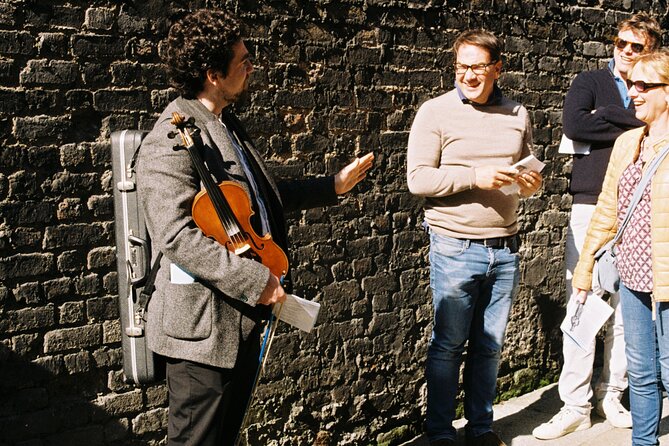
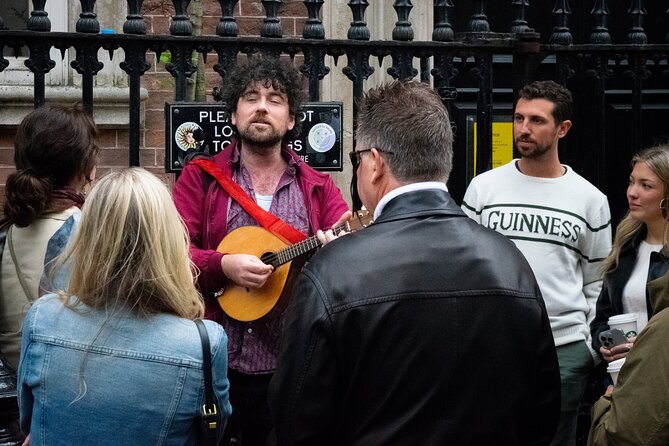
What makes this experience fun is that you walk Dublin with a real Irish musician, and you get traditional songs that explain what you are seeing, not just facts on repeat. I love the way the guide strings together street stories across medieval and Victorian Dublin, and I love the energy shift at each stop when the music lands. One possible drawback: if street noise is high or you end up at the edge of the group, hearing every lyric can take effort.
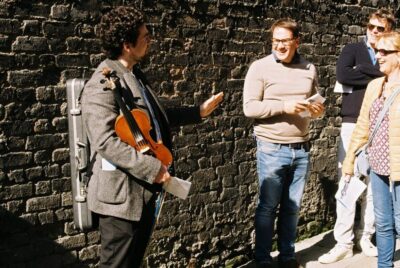
Guides who run this style of tour include Ciarán, Shaun, Sean, and Dylan, and the common thread is the same, music-first storytelling with real Irish banter. You meet at 3 Crown Alley in Temple Bar at 1:00 pm and spend about 2 hours moving between landmarks.
The only real thing to watch is logistics. Temple Bar is busy, and the meeting point area can look crowded, so arrive a few minutes early and make sure you are with the right group before you start walking.
Key highlights you will actually feel on the street
- Temple Bar start at 3 Crown Alley, right in the center of the action
- A live musician guide who uses song, poems, and sometimes dance or sing-alongs
- Medieval Dublin focus at Christ Church Cathedral, tied to darker stories told through music
- Oldest-street and first-peak-performances lore on Fishamble Street, including Handel’s Messiah
- Photo-friendly lanes and stone landmarks, from bridges with seahorse lanterns to Dublin Castle steps
- Small group size (maximum 20), which helps you stay close enough to hear
Temple Bar to St Patrick’s Cathedral, a 2-hour Dublin route with music
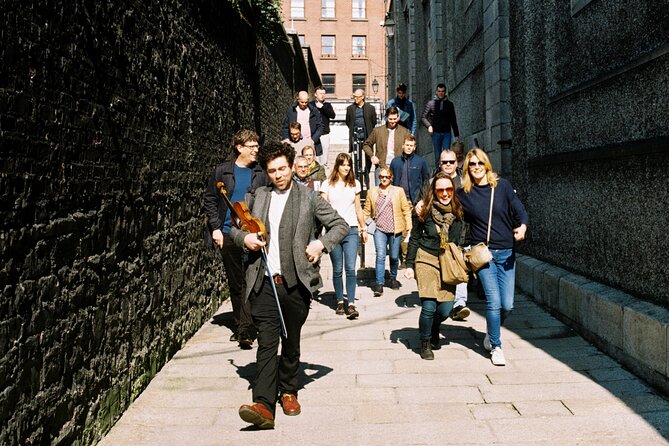
This is a walking tour built around one simple idea: Dublin makes more sense when you hear it. Instead of a guide talking at you the whole time, you get a musician who performs folk ballads and songs that have lasted for decades. The “walking tour” part is real, but the main course is the live performance.
The route is tight and efficient. You will hit six major points, with about 10 minutes at each stop, then you move on. That short stop format sounds rushed on paper, but it works well here because the guide is giving you a story in the same amount of time you are standing still to look around.
You are also not just getting cathedral photos. You walk across bridges, down laneways, and through streets that connect the big famous sights with the places where Dublin life actually happened. That is why this tour often lands as a favorite for first-timers, especially if you already like Irish music or you want a fast way to get your bearings.
More Irish music and dance nights in Dublin:
- Dublin Irish House Party Live Show, Dinner Option Available
★ 4.5 · 1,246 reviews - The Irish Dance Party in Dublin
★ 5.0 · 918 reviews - Dublin: Music and Dance Show at The Irish House Party
★ 4.8 · 744 reviews
What you really get from a musician guide (and why it matters)
On normal tours, you get a timeline. On this one, you get a mood. The guide uses song to frame place, so a lane is not just a lane, it becomes a clue. A bridge is not just a bridge, it becomes a reference point in the city’s social life. A cathedral is not just architecture, it becomes a setting for stories.
The reviews back up what you can expect in practice. When guides like Ciarán, Shaun, Sean, or Dylan lead the walk, they bring humor, performance energy, and a clear sense of how to connect music to what you are seeing. More than one person mentioned that the guide made the songs feel like they belonged in that exact spot, which is the point.
There is also an interactive element you might run into. Some groups end up with sing-alongs or light movement, depending on the guide and the mood. If that is not your thing, you can still participate by listening and looking. The tour is built to be watchable and enjoyable even if you stay seated, standing, or quiet.
Smock Alley Theatre (1662): where Temple Bar’s stagecraft begins
Your first real stop is the Smock Alley Theatre, 1662, in the heart of Temple Bar. This is one of those places that immediately changes how you view the surrounding streets. You are standing near a theater history marker while the guide connects performance culture to the city itself.
Why this stop works:
- It gives you a cultural anchor early, so when you hit later churches and castles, you understand the role of public life and performance in Dublin.
- It is close to the meeting point, so you get momentum fast.
Practical note: the stop is short, about 10 minutes. That means you should come with your eyes open. Watch the facade, notice the setting, and let the song land before you start mentally moving on to the next stop. The guide is using this stop to set tone, not just to provide a fact.
One value of starting here is that you are inside the Temple Bar atmosphere from minute one. Even if you do not stay in Temple Bar late, the area’s role as a meeting place for music and social life becomes clearer when you learn it from a performer.
Grattan Bridge and the River Liffey: seahorse lanterns and easy city views
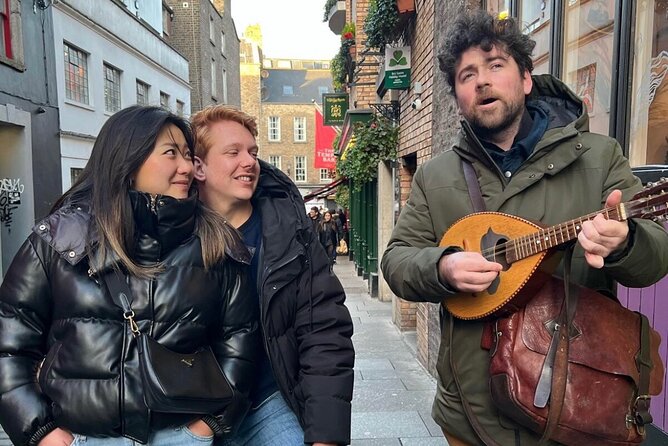
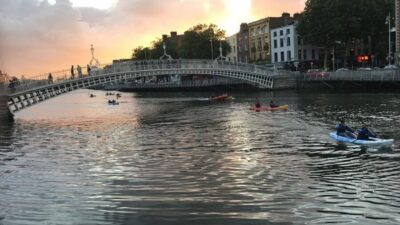
Next up is Grattan Bridge, a picturesque crossing over the River Liffey. It connects Capel Street and Parliament Street, and it is decorated with seahorse lanterns. This is a great breather stop in the route because you get open views compared to the narrow laneways.
Why I like this part of the walk:
- It breaks up the stone-and-steep feel with a water moment.
- The bridge gives you a natural “look around” point to take photos and reset your attention.
What to do here: if the light is decent, step slightly back to frame the bridge and the river. The tour is time-boxed, so you will not have long, but you can still get a solid shot if you position yourself early.
Also, the River Liffey is one of the reasons Dublin’s history is so layered. Trade, movement, and daily life all tie into where people crossed the water. When the guide brings the music into this setting, it feels less like a random song break and more like a city map made audible.
More walking tours in Dublin:
- Dublin Highlights and Hidden Gems Guided Walking Tour
★ 5.0 · 6,020 reviews - Dublin: Highlights and Hidden Gems Walking Tour
★ 4.9 · 2,140 reviews - 1916 Rebellion Walking Tour
★ 5.0 · 1,605 reviews - 90 Minute Dublin Walking tour and Sightseeing tips
★ 5.0 · 916 reviews
Fishamble Street: Viking-settlement clues and a Handel Messiah link
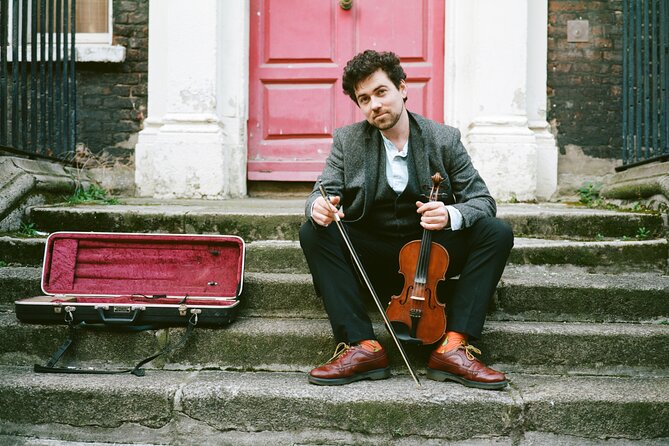
Fishamble Street is one of the most interesting stops on the route because it layers several eras into a single lane. The tour notes that it is often said to be Dublin’s oldest street and that it was home to a major Viking settlement found outside Scandinavia. You also get the famous cultural footnote: it is linked to the first ever performance of Handel’s Messiah.
Even if you do not know much about Dublin’s past, this is the kind of stop that changes how you walk the city after the tour. It is easy to miss these details on your own because they are not always big signs. A musician guide is good at turning “invisible history” into something you remember.
The drawback here is also practical. Streets can be tight, and this stop is still only 10 minutes. If you want a photo, plan your angle before the story really starts. Once the performance begins, focus on listening and let your phone camera take a few quick frames, not long shots.
Christ Church Cathedral: medieval Dublin with song and a darker edge
Christ Church Cathedral is the heart of medieval Dublin on this route, and it is not treated like a simple sightseeing stop. The tour sets the tone by saying you will explore some of the cathedral and surrounding environs, plus a darker side of the story, told through song.
This is one of the best value stops on the whole walk because it balances two kinds of learning:
- Architecture and place: you get context for what you are looking at and how the cathedral fits the city.
- Story and atmosphere: the guide uses music to bring out the mood of the era.
What makes it memorable is that churches are not just “pretty buildings” when you hear the social context. Even if you are not a cathedral person, you will likely leave with better instincts for what to look for next time you visit. You will understand why certain details matter, and you will connect them to people, not just stone.
Practical tip: cathedrals can be visually busy. If you feel overwhelmed, pick one spot to anchor on, like a doorway, a specific section of stonework, or a view from your standing position. Then let the song guide your attention.
Dublin Castle steps at the Ship Street Gate area
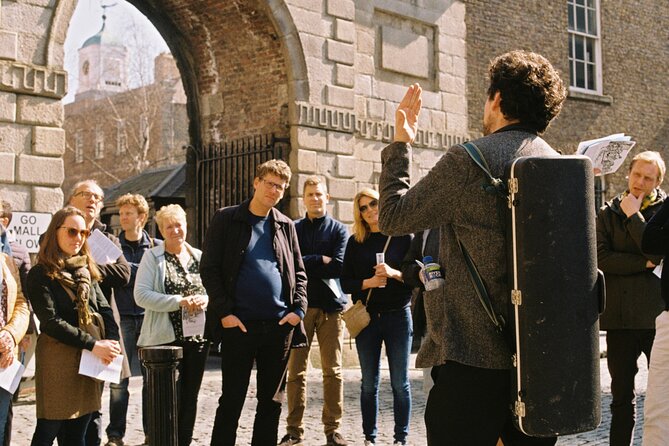
After the cathedral, the tour swings by Dublin Castle, focusing on the Ship Street gate area and the famous steps in view. This stop is another “quick hit” landmark, timed to keep you moving but still giving you a sense of what the castle represents in the city’s power story.
Why this stop adds value on a music walking tour:
- It keeps the tour from becoming only religious and old-street oriented. You get governance, authority, and public history too.
- It is a nice contrast to the cathedral. Same general old-stone vibe, different social meaning.
If you are thinking like a photographer, this is a good moment to take a few snaps fast. The tour is designed for it: cathedrals, castles, bridges, and laneways give you variety in backgrounds and angles.
St Patrick’s Cathedral finale: finishing in St Patrick’s Close
The tour ends at St Patrick’s Cathedral, in the St Patrick’s Close area. This matters because it lets you close the loop on Dublin’s big religious landmarks with a final sense of place.
By the time you reach the finish, you will likely be in a different mode than at the start. The music has carried you through streets and eras, so the final cathedral does not feel like a random stop. It feels like the last page of the story.
Why this finale works well:
- You finish at a major landmark that is easy to recognize and easy to plan your next move from.
- You leave with a clear mental route you can replay while you wander on your own afterward.
Price and value: is $27.81 fair for a live musician walk?
At $27.81 per person for about 2 hours, this tour is priced like a budget-friendly walking experience, but it includes a live performer and free-listed entries at multiple stops. That changes the equation.
You are not paying only for narration. You are paying for:
- A musician guide performing songs as part of the itinerary
- A curated route between high-impact Dublin sights and streets
- A small group format (up to 20), which helps performance quality and pacing
If your goal is to see Dublin quickly, this can be a smart use of one afternoon. If your goal is only to check off landmarks, a regular walking tour might feel simpler. But if you like Irish music, stories, or any kind of cultural connection between past and present, the musician-led format is where the value comes from.
Best fit: who should book this Dublin traditional Irish music tour
I think this tour is a strong match if:
- You are a first-time visitor who wants a “Dublin feel” fast, not just a list of sights
- You enjoy Irish folk music, or you want an easy way to meet it in context
- You like small groups and stories that tie places together
- You want a tour that can be fun and light while still pointing out real landmarks
It may feel less ideal if:
- You are very sensitive to street noise and you hate performances in open-air or semi-open spaces
- You expect long cathedral time or deep museum-style explanations
- You want a strictly quiet, museum-grade experience
Common snags, and how to avoid them
This is the kind of tour that depends on hearing the guide. One review issue involved a guide being late at the meeting point, which created confusion, while another involved ending up on the wrong version of a walk and missing the music entirely. You can reduce the odds of that happening.
Here is how to set yourself up:
- Arrive early at the Temple Bar meeting point at 3 Crown Alley, so you can confirm the correct group before the walk starts.
- If multiple tours are gathering nearby, look for the musician and the group heading toward the first stop.
- During songs, try not to drift to the edge of the group. Stand where you can hear without craning.
Also, keep expectations realistic. Every stop is short, about 10 minutes, and you are moving. This is a performance-style walking tour, not a slow meander with unlimited questions at each location.
Should you book this Dublin traditional Irish music walking tour?
Yes, if you want Dublin with a soundtrack and you like stories told through music. The route is compact, the stops are meaningful, and the musician-led format is what turns it into more than another city walk.
I would especially book it if you have limited time and you want to connect Dublin’s streets to centuries of cultural life, from Viking-era lore to cathedral atmosphere and Handel’s Messiah link. Just do yourself a favor and start on time at the Temple Bar meeting point, then stay where you can hear the performance. That is how you get the full payoff out of the songs.
FAQ
Where do I meet the guide for this tour?
You meet at 3 Crown Alley, Temple Bar, Dublin, D02 CX67, Ireland.
What time does the tour start?
The start time is 1:00 pm.
How long is the tour?
The tour is about 2 hours.
How much does it cost?
The price is $27.81 per person.
Is the ticket mobile?
Yes, the tour uses a mobile ticket.
How big is the group?
The maximum group size is 20 travelers.
What stops are included during the walk?
The itinerary includes Smock Alley Theatre (1662), Grattan Bridge, Fishamble Street, Christ Church Cathedral, Dublin Castle (Ship Street gate area), and St Patrick’s Cathedral (St Patrick’s Close).
Are the stop admissions covered?
The itinerary lists free admission ticket at the stops.
Is the tour accessible?
Most travelers can participate, service animals are allowed, and it is near public transportation.
What is the cancellation policy?
You can cancel for a full refund if you cancel up to 24 hours before the experience starts. If you cancel less than 24 hours before, the amount you paid is not refunded.
When will I receive confirmation?
You will receive confirmation at the time of booking.
Fresh options around Dublin
- Wicklow: Private Day Tour from Dublin★ 5.0 · 5 reviews
- Wicklow Mountains Private Day Tour including Glendalough★ 5.0 · 7 reviews
- Women Of Ireland: Trailblazers & Pioneers★ 5.0 · 4 reviews
- Wicklow Mountains & Glendalough Luxury Private Day Tour★ 5.0 · 23 reviews
- Wicklow tour of Glendalough★ 4.5 · 8 reviews
- Dublin To Kilkenny Castle Waterford Crystal Private Car – Day Tour★ 5.0 · 8 reviews
- Waterford Crystal and Kilkenny Full-Day Rail Tour from Dublin★ 5.0 · 3 reviews
- Full Day Private Wicklow Tour★ 5.0 · 12 reviews
Irish Music & Dance Shows, compared.
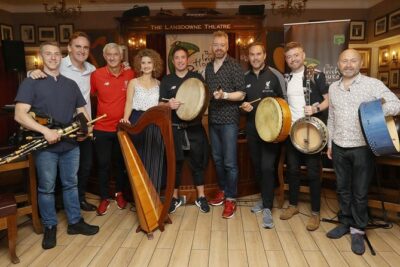
Dublin Irish House Party Live Show, Dinner Option Available
Read our review →
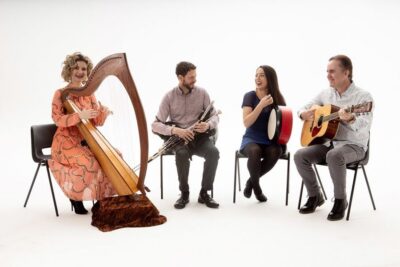
Classic Irish Pubs Private Tour of Dublin: Live Music, Beer and Nightlife
Read our review →
Dublin Pub Tour: Guinness Perfect Pour, Whiskey, Music and More
Read our review →Browse the lists this tour appears in