
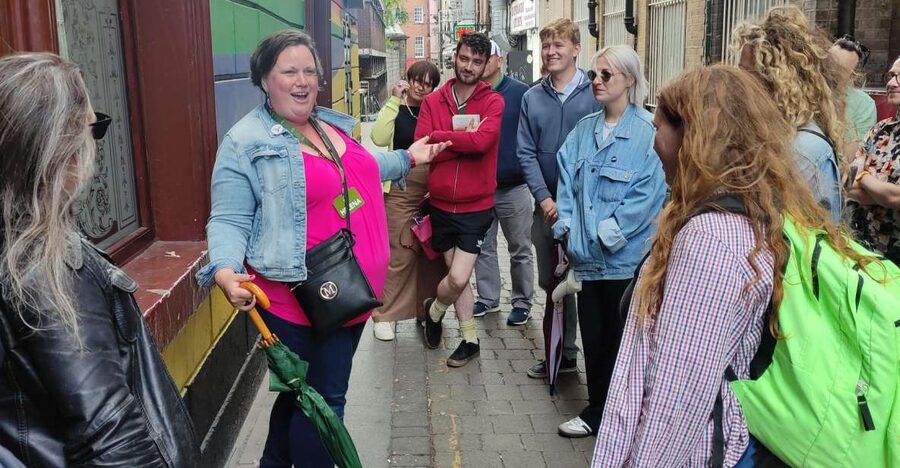
Reviewed · HISTORICAL TOURS
Dublin: LGBT Pride Walking Tour with Queer History
Dublin’s queer history comes alive fast when you follow it on foot, because the city’s landmarks are tied to real people, real laws, and real protests. This tour led by Helena turns street corners into queer history stories you can actually picture.
I love how clearly the tour links major moments to specific places, like the first pride protest at Liberty Hall. I also love the emotional range, from uplift to struggle, as you hear about figures including Panti Bliss and Dr Lydia Foy. One drawback to consider is that it packs a lot into a 2-hour walk, and some stories about exclusion and abuse are heavy, so it helps to come ready for real history, not just celebration.
Key highlights worth your time
- Green-umbrella meeting point outside the Old Storehouse Bar and Restaurant makes it easy to start
- Liberty Hall to Trinity College shows how rights changed alongside Irish culture
- Panti Bliss and Dr Lydia Foy bring named, specific queer voices into the story
- Trinity College and the Sexual Liberation Movement connect activism to education and ideas
- Diceman’s Corner and the Hirschfield Centre add local context beyond the biggest headlines
- The George helps you understand why LGBTQ venues matter, then and now
Why Dublin’s Queer History Walk Hits Different
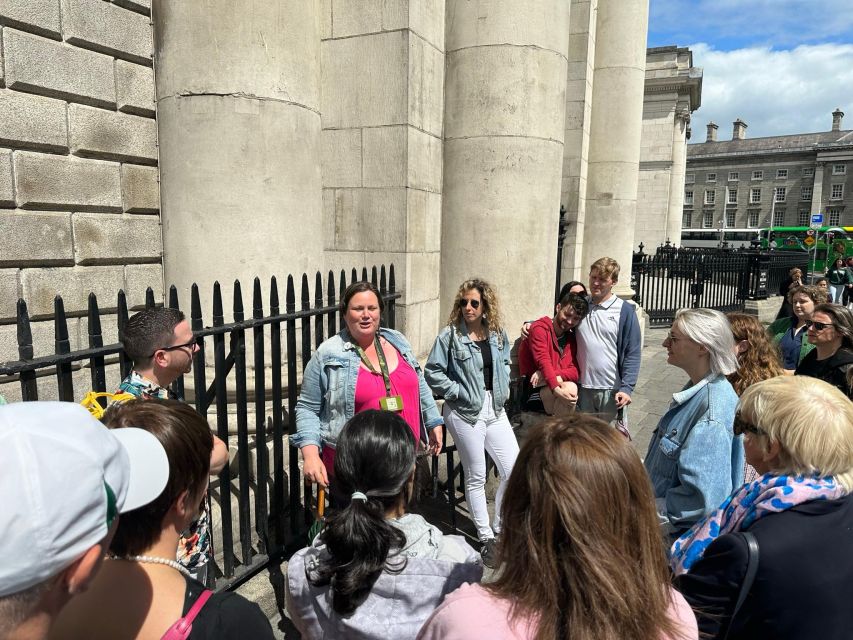
This isn’t a generic “Pride facts” stroll. It’s built around the idea that you learn more when you connect the people to the streets. You’ll walk through Dublin and hear how Ireland moved from exclusion and abuse toward marriage equality, with stops that put names and turning points right where they happened.
What makes the experience feel worthwhile is the balance. You get stories of courage and community pride, but you also get the reality of the fight for recognition. The tour is designed so you’re not just hearing dates, you’re seeing the landmarks and understanding why they mattered.
It also helps that the guide is praised for being engaged, funny when appropriate, and generous with questions. In the reviews, the same theme shows up again and again: the guide makes time feel short because the pacing is good and the stories feel human.
More walking tours in Dublin:
- Dublin Highlights and Hidden Gems Guided Walking Tour
★ 5.0 · 6,020 reviews - Dublin: Highlights and Hidden Gems Walking Tour
★ 4.9 · 2,140 reviews - 1916 Rebellion Walking Tour
★ 5.0 · 1,605 reviews
Where You Start (And How Not to Get Lost) by the Old Storehouse
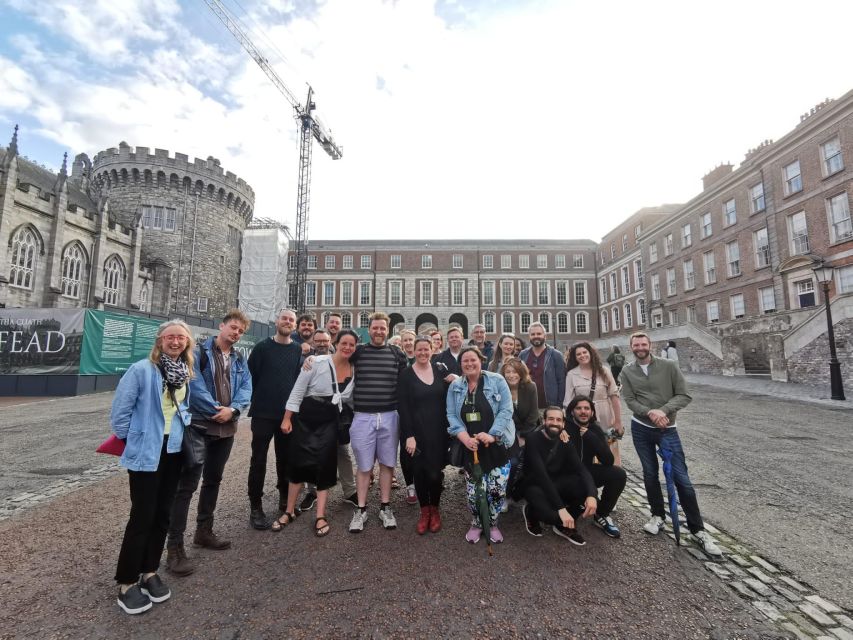
You meet the guide directly outside the Old Storehouse Bar & Restaurant. The tip that makes this simple: look for someone carrying a green umbrella.
The tour ends back at the same meeting point, so you can plan your day without doing the “how do I get back?” math. That matters in Dublin, because once you’re walking through neighborhoods, it’s easy to lose track of where you parked or where you wanted to grab coffee later.
Since this is a guided walking tour in English with a live guide, come with one practical mindset: comfortable shoes. This is a city-walk format, so your legs do the heavy lifting, not a bus or a train.
Liberty Hall: The First Pride Protest and What It Represents
Liberty Hall is one of the anchors of the tour, and for good reason. You’ll hear about the first pride protest tied to this location, which gives you more than a symbol. It gives you a starting point for understanding how early activism looked when LGBTQ people were fighting for visibility and safety.
When you stand near a landmark like this, the story changes. Instead of thinking about pride as an annual event, you start seeing it as a chain of moments. That’s the big value of the Liberty Hall stop, it reframes pride into action, not just celebration.
You’ll also get the sense that Irish progress didn’t happen automatically. It came through organized pressure, public statements, and people who refused to stay quiet.
Trinity College and the Sexual Liberation Movement
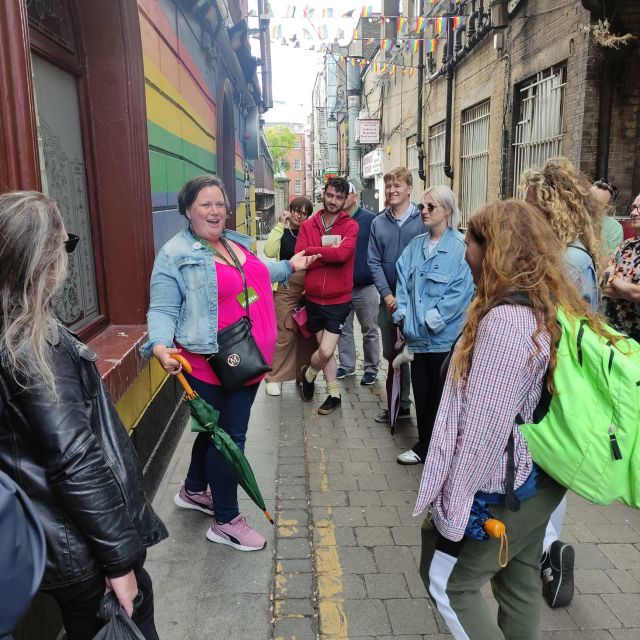
Next up is Trinity College, and the tour uses that setting to talk about the Sexual Liberation Movement. The practical benefit of this stop is that it broadens your view. You’re not only focused on nightlife or community spaces. You’re learning how ideas spread, how people argued in public, and how cultural shifts connected to legal and social change.
Trinity College also helps you understand why activism and education often overlap. Even without getting technical, the tour frames the broader movement as something that influenced attitudes, conversations, and eventually laws.
One thing to watch for with stops like this is pacing. You’ll be moving, listening, and walking at the same time. If you like to take lots of photos, pause your picture-taking right when you arrive, then focus on listening while you walk away from the corner. It keeps the tour flowing and helps you catch details.
More history tours in Dublin:
- Dublin Historical Centre Food Tour with 8 Food Tastings & Drinks
★ 5.0 · 1,718 reviews - 2-Hour Historical Walking Tour from Dublin
★ 5.0 · 875 reviews - Historical 2-Hour Guided Walking Tour of Dublin
★ 4.7 · 865 reviews - Dublin to Cork, Blarney Castle & Cóbh Heritage Centre by train
★ 4.5 · 510 reviews
The General Post Office and Panti Bliss’s Revolutionary Queer Voice
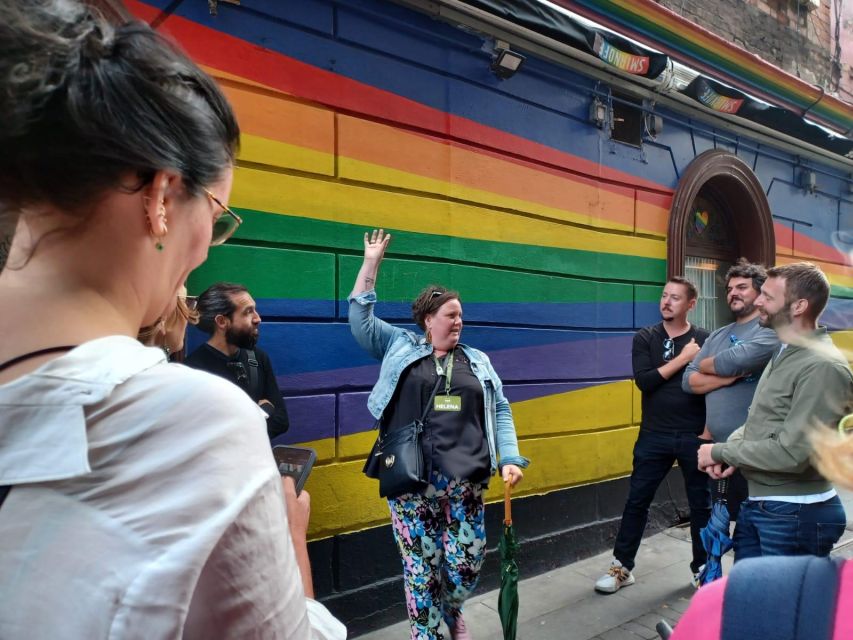
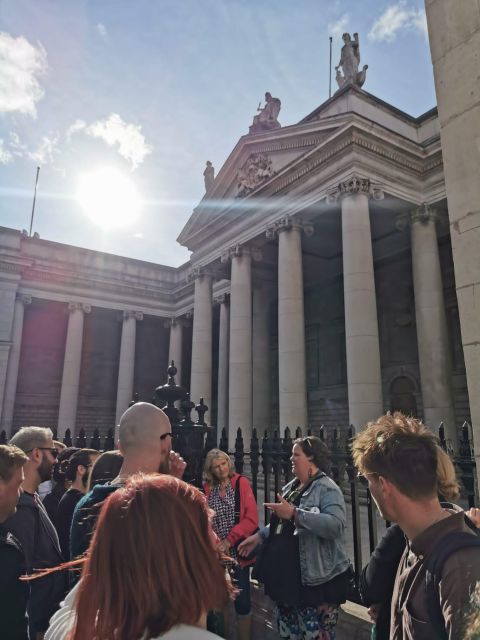
The General Post Office is another key location on the route. You’ll hear stories connected to revolutionary queer figures like Panti Bliss, and you’ll also get a sense of how a public presence can be political.
This stop matters because it links queer history to mainstream visibility. You’re learning how LGBTQ people shaped public conversation, not just private community life.
If you’re the type of traveler who likes context, the framing here is useful. It’s not just “this person existed.” It’s “this person used their voice in a way that mattered,” and you connect that back to what the city looks like now.
Dr Lydia Foy, the Gender Recognition Act, and the Legal Turn
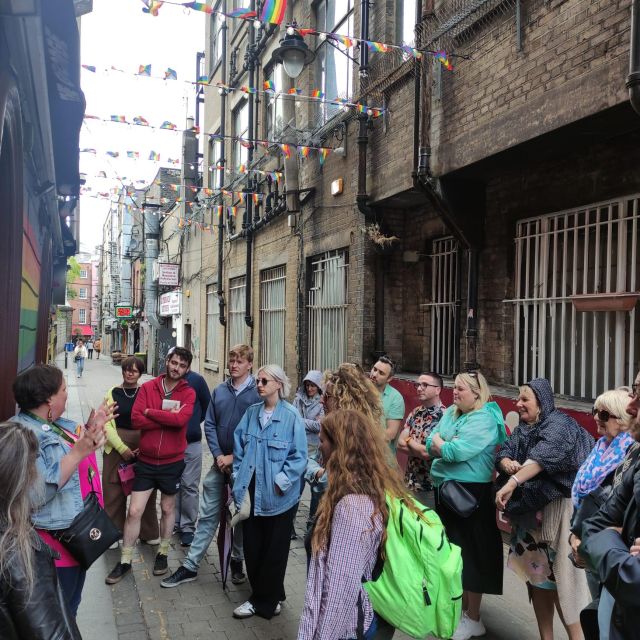
The tour includes Dr Lydia Foy and the Gender Recognition Act. That’s a big deal, because legal recognition is one of those topics that sounds dry until you see what it changes day to day.
Here’s what I like about including this type of content on a walking tour. You’re not learning in a vacuum. You’re hearing it in a city context, which helps you understand why laws move slowly, why activism matters, and why recognition isn’t just paperwork. It affects safety, dignity, and everyday life.
The tour’s structure also keeps this section from feeling like a lecture. You’ll be walking between locations, and the guide connects laws and stories to the landmarks you’re passing.
Hirschfield Centre, Diceman’s Corner, and the Local Touch
You’ll pass by additional important places, including the Hirschfield Centre and Diceman’s Corner. These stops add local texture to the tour. Instead of only focusing on the biggest famous points, you also get places that help explain how queer Dublin developed its own identity.
Diceman’s Corner is especially valuable as a concept, even if you’re not already familiar with it. A name like that makes you curious about the people and the street culture behind the landmark. The tour uses that curiosity to teach you why queer spaces and communities have always needed specific meeting points.
The Hirschfield Centre stop helps you understand that support and visibility are ongoing, not a one-time achievement. Places like this represent community infrastructure, the kind that keeps people connected when visibility and rights still have ground to cover.
The George Venue: Why LGBTQ Nightlife Became History
The tour also includes the George, described as Ireland’s most iconic LGBTQ venue. Even if you’re not looking for nightlife during your visit, this is a meaningful stop.
Here’s the reason it works: venues are more than entertainment. They are community hubs, places where people find belonging, and spaces where visibility becomes ordinary. When you learn about the venue in the context of queer history, you start to see it as a social lifeline.
This stop rounds out the tour nicely. It connects activism and legal progress to lived experience. You leave with a better sense of how LGBTQ life has shaped Dublin’s culture, not just responded to it.
What You Actually Get in 2 Hours (And Why That’s a Good Fit)
At 2 hours, this tour is long enough to connect several eras and personalities, and short enough that you can still enjoy the rest of your day. The price is listed at $27 per person, and for what you’re getting, it’s fair value.
Why I think the value makes sense:
- You’re paying for a guide who connects named figures, like Dr Lydia Foy and Panti Bliss, to real locations you can revisit later.
- You’re covering multiple landmarks, including Trinity College, Liberty Hall, the General Post Office, the Hirschfield Centre, Diceman’s Corner, and the George.
- You’re getting a story thread from exclusion and abuse to marriage equality, which would be hard to assemble on your own in such a limited time.
Also, the tour is wheelchair accessible. That doesn’t mean it removes every challenge of city walking, but it signals the format can work for more people than you might expect from a standard “just walk around and listen” style tour.
It’s a smart choice if you:
- Want queer history but don’t want a museum-only approach
- Like to learn through places you can picture later
- Prefer a guided narrative with opportunities to ask questions
Tips to Make the Most of the Walking Part
Keep it simple and you’ll enjoy it more.
Bring comfortable shoes, and consider leaving your heaviest bag at your accommodation. You’ll be moving around the city for about 2 hours, and small comfort choices make a big difference.
If you’re the note-taking type, jot down names and landmarks rather than trying to write sentences. The tour is fast paced, and the details are the kind you’ll want to remember when you’re back in your room or grabbing dinner.
If you ask questions, ask one at a time. The guide has a lot of material to cover, and you’ll get better answers when your question is clear.
Should You Book This Dublin LGBT Pride Walking Tour?
If you like city walks with a story, I’d book it. This tour gives you something practical: landmark-based context for LGBTQ+ history in Dublin, with real names and real turning points. The biggest reason to choose it is the balance of inspiration and honest struggle, guided by Helena, who is consistently praised for being engaging and easy to connect with.
Skip it only if you want purely upbeat pride entertainment or you know you’re not up for hearing about discrimination and abuse as part of history. Also, if you can’t do a sustained 2-hour walk, plan for a different format, even though the tour is listed as wheelchair accessible.
Overall, this is an efficient, memorable way to understand Dublin’s queer past and present, and it helps you see the city with new eyes long after you leave the green umbrella behind.
FAQ
How long is the Dublin LGBT Pride Walking Tour with Queer History?
The tour lasts 2 hours.
How much does the tour cost?
The price is $27 per person.
Where do I meet the guide?
Meet your guide directly outside the Old Storehouse Bar & Restaurant. Look for someone carrying a green umbrella.
Where does the tour end?
The tour ends back at the meeting point.
Is the tour wheelchair accessible?
Yes, it is listed as wheelchair accessible.
What language is the tour guide in?
The live tour guide is in English.
What landmarks does the tour pass by?
The tour includes stops and passing locations such as Liberty Hall, Trinity College, the General Post Office, the Hirschfield Centre, Diceman’s Corner, and the George.
What should I bring?
Wear comfortable shoes.
Is a guided tour included in the price?
Yes. What is included is the walking tour and the guide.
What is the cancellation policy?
You can cancel up to 24 hours in advance for a full refund.
Can I book without paying right away?
Yes. The listing offers reserve now & pay later, meaning you can book your spot and pay nothing today.
Fresh options around Dublin
- Wicklow: Private Day Tour from Dublin★ 5.0 · 5 reviews
- Wicklow Mountains Private Day Tour including Glendalough★ 5.0 · 7 reviews
- Women Of Ireland: Trailblazers & Pioneers★ 5.0 · 4 reviews
- Wicklow Mountains & Glendalough Luxury Private Day Tour★ 5.0 · 23 reviews
- Wicklow tour of Glendalough★ 4.5 · 8 reviews
- Waterford Crystal and Kilkenny Full-Day Rail Tour from Dublin★ 5.0 · 3 reviews
- Full Day Private Wicklow Tour★ 5.0 · 12 reviews
- Dublin To Kilkenny Castle Waterford Crystal Private Car – Day Tour★ 5.0 · 8 reviews
Historical Tours, compared.

Dublin Historical Centre Food Tour with 8 Food Tastings & Drinks
Read our review →
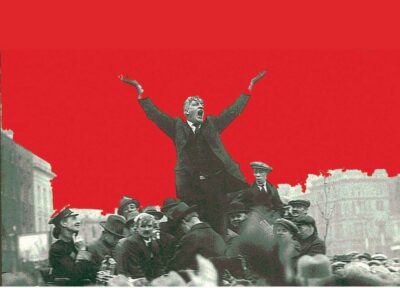
Historical 2-Hour Guided Walking Tour of Dublin
Read our review →
Dublin to Cork, Blarney Castle & Cóbh Heritage Centre by train
Read our review →
Jeanie Johnston Tall Ship Irish Famine History Tour
Read our review →

Deliciously Dublin: The Artisan Donut Walking & History Tour
Read our review →
Hidden Dublin: Haunted History Walking Tour v2.0 2026
Read our review →Browse the lists this tour appears in