

Reviewed · HISTORICAL TOURS
2 Hours Senior’s Historical Private Walking Tour of Dublin
A short private history walk like this is interesting because you get a clean route through the Dublin classics without having to plan it all yourself. It also works well for senior travelers since the pace and timing are built around a tight 2-hour window, not a half-day marathon, and it ends in a calm cathedral area.
I like that the stop list mixes big landmarks with the human bits of Dublin, from Trinity College to the Molly Malone statue. I also like the private group setup, so your guide can slow down, answer questions, and keep the walk feeling tailored rather than rushed.
The main consideration is the “walk and look” format. Several stops are outside visits, so if you’re hoping for lots of interior time, you may need a different tour to go deeper inside.
Key things you’ll notice on this Dublin senior history walk

- A tight 2-hour route with a sensible flow from Trinity toward St Patrick’s Cathedral
- Outside looks at major landmarks so you still get highlights even with limited time
- Trinity and the Campanile area as a major first stop for quick Dublin context
- Iconic story stops like the Molly Malone statue and Ha’penny Bridge photo moment
- Temple Bar plus castles and cathedrals gives you both street-level feel and official power
- A warm, diligent guide approach with strong knowledge and a focus on seeing what you want
A 2-hour Dublin loop made for limited time (and comfortable pacing)
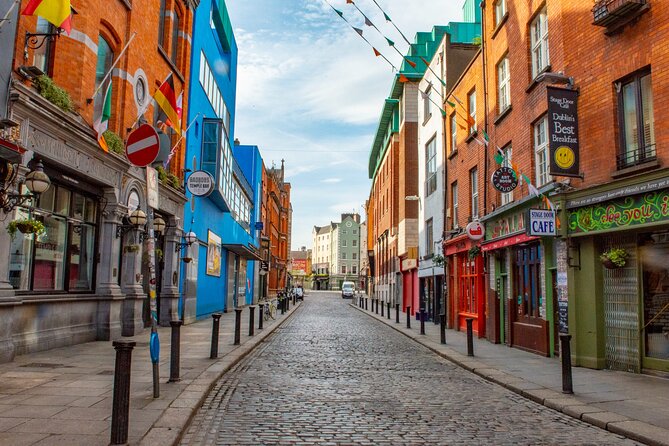
This is the kind of tour that helps you understand Dublin fast. In two hours, you move through a sequence of places that basically explain the city in snapshots: education at Trinity, everyday folklore with Molly Malone, a riverside bridge that anchors the center of town, the famous pub quarter, then official authority at Dublin Castle and the big medieval church sites.
Because the tour is private and designed for seniors, the walk is more about clarity than stamina. You are not competing with a huge crowd. You can ask a question when something catches your eye, and your guide can adjust attention on the spot. The pace also matters for your comfort. A short, timed walk is easier on knees and energy than longer sightseeing days.
Two practical things to keep in mind. First, the tour assumes good weather, so pack for rain just in case. Second, this route ends at St Patrick’s Cathedral, not where you start. That is normal for a one-way loop, but it does mean you should plan your next move afterward.
More walking tours in Dublin:
- Dublin Highlights and Hidden Gems Guided Walking Tour
★ 5.0 · 6,020 reviews - Dublin: Highlights and Hidden Gems Walking Tour
★ 4.9 · 2,140 reviews - 1916 Rebellion Walking Tour
★ 5.0 · 1,605 reviews
Trinity College Dublin and the Campanile moment you’ll remember
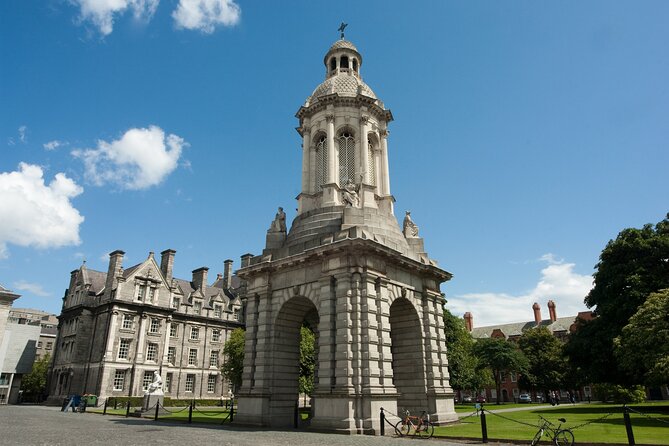
Trinity College Dublin is one of those stops that instantly tells you what kind of city Dublin is. You’re starting in the heart of the academic world, with a campus that looks classic and feels active. Trinity was established in 1592, and even if you don’t know much about Irish universities yet, the setting gives you instant context.
The highlight here is the Campanile area. Even as an outside visit, it’s the kind of Dublin focal point that helps you orient yourself. You see it and you start thinking, okay, this city has deep roots, and it still functions as a working place, not just a museum.
Timing is also smart. You get about 20 minutes here, which is enough to take photos, get your bearings, and connect a few dots about Trinity’s place in Irish history without dragging the rest of the route. If you want the most from this stop, I’d arrive mentally ready to ask one question early, like what Trinity represented in its early years, or how a university became part of Dublin’s center.
Also, note the practical side: admission tickets are listed as free for the stops on this route, so you’re not paying extra just to stand near famous doors.
Molly Malone: folklore in bronze, and why the song sticks
Next comes the Molly Malone statue, one of those Dublin icons people recognize even if they cannot explain why. Molly Malone is tied to a famous song, and the statue works like a quick cultural shortcut. You’re not just looking at a figure, you’re seeing how Dublin turns everyday characters into lasting symbols.
You get about 15 minutes here, which is perfect for this kind of stop. Too much time and it becomes repetitive. Too little and you never really connect the statue to the idea behind it. In this time window, you can slow down, read the vibe around the spot, and ask your guide how the song and the figure became part of Dublin’s identity.
One benefit of placing this stop mid-tour is that it gives you a break from the big institutions. After Trinity, Molly Malone reminds you that history is not only about official buildings. It’s also about street life, memory, and the stories a city repeats until they feel real.
If you’re traveling with someone who loves cultural trivia, this is the moment that often produces the most “I didn’t know that” reactions.
Ha’penny Bridge, the River Liffey, and the easiest photos in the center
Ha’penny Bridge is the sort of place that makes you understand why people love walking Dublin. It crosses the River Liffey, and the bridge gives you a natural framing device for city views. You can look one direction and then shift your angle and see something else.
You’ll have about 20 minutes at this stop, which is generous enough to take photos and still listen without feeling like you’re in a rush. The best use of this time is not just snapping pictures, it’s getting oriented. The river is a dividing line, and bridges like Ha’penny tell you where key parts of central Dublin sit relative to each other.
This is also a good mental recharge. If your feet are starting to feel it, this stop can be your short breather without falling behind the tour. Just make sure you wear shoes with solid grip, since river areas can be slick if it has rained.
Again, admission is listed as free for this stop, so you’re paying for the guided walk and context, not for entry.
More history tours in Dublin:
- Dublin Historical Centre Food Tour with 8 Food Tastings & Drinks
★ 5.0 · 1,718 reviews - 2-Hour Historical Walking Tour from Dublin
★ 5.0 · 875 reviews - Historical 2-Hour Guided Walking Tour of Dublin
★ 4.7 · 865 reviews - Dublin to Cork, Blarney Castle & Cóbh Heritage Centre by train
★ 4.5 · 510 reviews
Temple Bar: quick cultural grounding without a full pub crawl

Temple Bar is Dublin’s cultural quarter, and it’s known for lively energy, cobbled streets, and lots of historic pub facades. This stop is about letting you experience the neighborhood feel, not turning it into a nightlife plan.
You get about 20 minutes, which is exactly what works for most people on a short history route. In that time, you can walk slowly along the street, notice how the buildings create a dense, social atmosphere, and then step back to see the area’s reputation in context.
One smart way to handle Temple Bar is to treat it like a living set. Look at how people move through the streets. Notice where the crowd gathers. Then ask your guide how the area became associated with music, pubs, and tourism. That’s where a good guide adds value, because the neighborhood is easy to recognize but hard to explain correctly without local framing.
If you’re hoping for quiet, Temple Bar is not that. But if you want to see why Dublin has a reputation for conversation and music, it’s a useful stop. And with a guided time box, you can enjoy it without getting stuck.
Dublin Castle from the outside: power, not paperwork
Dublin Castle is one of those landmarks that signals authority. Even when you’re viewing it from the outside, you get a strong sense of how official power shaped the city.
You’ll have about 15 minutes, which is enough for exterior viewing and some historical context without turning this part into a long museum interruption. The castle’s stately architecture and its gardens help you understand why it became such a central reference point through centuries of events. You’re not just admiring stone. You’re learning how institutions claim space in a city.
One practical note: outside viewing is easier for seniors and for people who want to keep the walk smooth. You don’t have to commit to indoor lines or extra entry time just to appreciate the main structure.
To get the most, stand where your guide points and listen to the sequence of what the site represented over time. Places like this work best when someone connects the dots for you.
Christ Church Cathedral: medieval architecture and the cathedral vibe

Christ Church Cathedral is among the oldest medieval cathedrals in Dublin. Even with an outside visit time of about 15 minutes, it’s a powerful stop because it changes the mood from city streets to sacred space.
You’ll hear about the cathedral’s features like its historic crypt and stained glass. While you may not be touring inside for long, the point is to help you recognize what makes this church distinct within Dublin’s cathedral family.
For many first-time visitors, this is where the tour starts to feel more meaningful. Temple Bar and bridges are about the city’s everyday energy. Christ Church adds the “how did Dublin come to be what it is” layer. Medieval cathedrals often anchor neighborhoods, and they show what communities invested in for generations.
If you have photos on your list, this is a good place to take them, but I’d also take a moment to look upward. Cathedral exteriors can be easier to appreciate in parts, like windows and rooflines, rather than all at once.
Admission is listed as free for this stop, so again the cost is for guidance and timing, not ticket add-ons.
St Patrick’s Cathedral: the calm finish that still feels like Dublin

The tour ends at St Patrick’s Cathedral, about 15 minutes at the site. This is a strong closing location because it’s described as the largest cathedral in Ireland, and it also has tranquil green spaces. That combination matters, especially at the end of a walk.
By finishing here, you get a shift from busy streets to a setting where you can slow down. Even if your time inside is limited, the cathedral’s scale and setting help you absorb the final idea of the tour: Dublin is both street-level lively and deeply rooted in institutions that shaped daily life.
If you’re planning your next step after the tour, this ending helps. St Patrick’s area is easy for a next stroll because you’re already in a prominent historical zone. You’ll be able to continue exploring without needing to fight across the city.
Price and value: is $447.44 per person worth it?
Let’s talk money in a practical way. The price is $447.44 per person for a 2-hour private tour. That is not “budget” sightseeing. So you should ask what you’re actually buying.
You’re buying three things:
- A private guide experience for your group, which usually means more flexibility and less waiting than a big group tour
- A focused route that hits key sites fast, with a time plan that suits limited mobility
- A guide who can connect landmarks to stories, so the stops feel like a coherent walk rather than random photos
You are also not paying for separate paid entry tickets as part of the stops listed. The tour information lists admission tickets as free for each stop, including Trinity, Molly Malone, Ha’penny Bridge, Temple Bar, Dublin Castle, Christ Church Cathedral, and St Patrick’s Cathedral. That matters because it keeps your spending predictable.
Where the price can feel better is when your group size works for group discounts. Private tours become easier to justify when you spread the guide cost across more people. If you’re traveling solo or as a couple and paying full private rates, you should be confident that you want a guide and not just a self-walk with a map.
My rule for value here is simple: if you want a short guided history walk and you prefer comfort and pacing over squeezing in extra stops, this is likely a good fit. If you enjoy DIY city wandering and you’re happy reading on your phone at each stop, you may feel the cost is high.
What makes the guide approach matter in a 120-minute tour
For short tours, the guide is the product. A good route is helpful, but a great guide makes the route click.
In the feedback around this tour style, I see a pattern you should look for if you book: the guide comes across as warm and diligent, with a solid knowledge base and a strong desire to make sure you see what you want. That kind of energy matters because Dublin landmarks can be visually impressive but story-light if you’re not pointed in the right direction.
In a 2-hour private walk, your guide should be able to do two things at once:
- Keep the timing smooth so you don’t feel behind
- Give you story details you can remember later, not just names you forget on the walk back
Here’s how to get that outcome for yourself. Before you start, decide what you care about most. Pick one theme, like education at Trinity, Irish folklore with Molly Malone, or how cathedrals shaped the city. Then ask your guide at the first stop to tailor a few facts to your theme. In a private setup, that request is exactly the kind of thing that should be easy to honor.
Also, have one or two follow-up questions ready. For example: What changed over time at Dublin Castle? Or how does the song about Molly Malone connect to what the statue represents? These prompts usually bring out better answers.
Practical tips for seniors: footwear, weather, and how to pace yourself
This walk is built around iconic stops, but you still need to manage comfort. Dublin’s center can involve cobbles, river-adjacent surfaces, and lots of turning corners, even on a “short” tour.
Here’s what I’d do:
- Wear shoes with good traction. You’ll move from river sights to older streets quickly.
- Bring a compact rain layer. The tour notes that it requires good weather, and conditions can change fast.
- Plan a flexible first hour and a relaxed plan after. This tour ends at St Patrick’s Cathedral, so you’ll want a low-stress next step.
- Use photo stops strategically. If you take your best shots at the start and at the bridges, you can walk slower during street sections.
If you have mobility limits, a private tour can be a big advantage because you can set a comfortable tempo with your guide. Still, since several stops are outside, you’ll do more standing and walking than waiting in indoor spaces.
Should you book? My take for the right traveler
Book this tour if you want Dublin history in a very digestible form. It’s a solid choice for seniors, first-time visitors, and anyone who likes their sightseeing guided, short, and story-driven. The stop mix makes sense, and finishing at St Patrick’s Cathedral gives you a peaceful ending point.
Skip it if you want heavy interior time, museum depth, or lots of extended stops. This route is about seeing the big landmarks and connecting them quickly. If you need deep access inside buildings for long periods, you’ll likely want a different style of tour.
One last way to decide: if you’re the type of traveler who benefits from a real person translating what you’re seeing into context, the private format justifies itself. If you love wandering solo with a map, you might not get enough added value for the price.
FAQ
How long is the 2 Hours Senior’s Historical Private Walking Tour of Dublin?
The tour lasts about 2 hours.
Is this tour private or shared with other groups?
It is a private tour/activity. Only your group will participate.
Where does the tour start and where does it end?
The tour starts at Trinity College Dublin, College Green, Dublin 2, Ireland. It ends at St Patrick’s Cathedral, St Patrick’s Close, Dublin, D08 H6X3.
What language is the tour offered in?
The tour is offered in English.
Are admission tickets included for the stops?
The tour information lists admission tickets as free for the listed stops.
Does the tour run in any weather?
The tour requires good weather. If it is canceled due to poor weather, you’ll be offered a different date or a full refund.
What is the cancellation window?
You can cancel up to 24 hours in advance for a full refund. If you cancel less than 24 hours before the experience starts, the amount paid is not refunded.
Fresh options around Dublin
- Wicklow: Private Day Tour from Dublin★ 5.0 · 5 reviews
- Wicklow Mountains Private Day Tour including Glendalough★ 5.0 · 7 reviews
- Women Of Ireland: Trailblazers & Pioneers★ 5.0 · 4 reviews
- Wicklow Mountains & Glendalough Luxury Private Day Tour★ 5.0 · 23 reviews
- Wicklow tour of Glendalough★ 4.5 · 8 reviews
- Dublin To Kilkenny Castle Waterford Crystal Private Car – Day Tour★ 5.0 · 8 reviews
- Waterford Crystal and Kilkenny Full-Day Rail Tour from Dublin★ 5.0 · 3 reviews
- Full Day Private Wicklow Tour★ 5.0 · 12 reviews
Historical Tours, compared.

Dublin Historical Centre Food Tour with 8 Food Tastings & Drinks
Read our review →

Historical 2-Hour Guided Walking Tour of Dublin
Read our review →
Dublin to Cork, Blarney Castle & Cóbh Heritage Centre by train
Read our review →
Jeanie Johnston Tall Ship Irish Famine History Tour
Read our review →

Deliciously Dublin: The Artisan Donut Walking & History Tour
Read our review →
Hidden Dublin: Haunted History Walking Tour v2.0 2026
Read our review →Browse the lists this tour appears in