
Reviewed · WALKING TOURS
A Self Guided Walking Tour of Dublin’s Docklands
Dublin’s Docklands are one of those city areas where old work life meets new office life, and it happens fast as you walk. This self-guided audio tour turns that walk into a story, with turn-by-turn narration and GPS so you’re not guessing what you’re seeing.
What I like most is the easy, manageable pace and how the narration stays clear as you move. The other big win for me is the offline access to both audio and maps, so you can focus on the quays and bridges instead of checking your data plan.
One thing to consider: you need to bring your own smartphone and headphones. If you prefer a fully guided, headphone-free experience, this might feel a bit too self-directed.
Key Highlights You’ll Actually Use
- Offline audio and maps so the Docklands story keeps going even with spotty signal
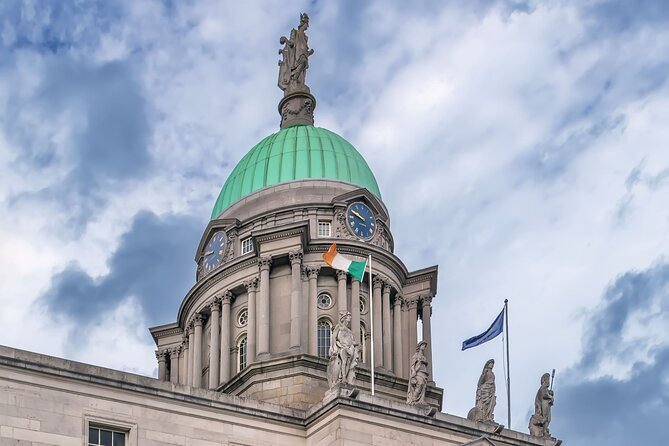
- GPS self-guided route with directions to get you started at the Custom House
- Major landmarks in one walk, from Custom House to Grand Canal Square and Red Sticks Dublin
- Labor, maritime, and transport history threaded through the sights, not just read-out facts
- Engineering stops like the Scherzer Rolling Lift Bridges, explained in a practical way as you pass
- Great for independent travelers who want a history route without waiting on a group
Why Dublin’s Docklands Work So Well for an Audio Walk
Dublin’s Docklands can look confusing if you’re only relying on views. You’ll see striking buildings, then modern business districts, then bridges that look like they belong in a different century. The beauty of an audio route here is that it gives you a sense of direction, not just a list of stops.
You start in the area tied to Dublin’s maritime industry, then the tour nudges you along the riverfront. You’re not just walking for exercise. You’re walking with context for why the river and the docks mattered, and how the city repurposed the space over time. I also like that it’s offered in English and designed to be easy to follow, which matters when you’re moving and crossing streets.
A nice bonus is the “virtual playback” option. That means you can replay the audio like an audiobook from anywhere, even if you’re not walking that exact day. It’s a simple way to review what you saw, and it helps the tour feel less like a one-time event.
More walking tours in Dublin:
- Dublin Highlights and Hidden Gems Guided Walking Tour
★ 5.0 · 6,020 reviews - Dublin: Highlights and Hidden Gems Walking Tour
★ 4.9 · 2,140 reviews - 1916 Rebellion Walking Tour
★ 5.0 · 1,605 reviews
Before You Go: Timing, Start Point, and What to Bring
This tour runs about 50 minutes to 1 hour 10 minutes, so it fits well between coffee plans and dinner plans. You don’t need a half-day commitment, and it also works if you want to stretch your legs during a longer Dublin stay.
Where it starts and ends
You begin at the Custom House, North Wall, Dublin 1, Co. Dublin, Ireland. The end point is Red Sticks Dublin in the Dublin Docklands area on the Grand Canal. In practice, your finish lands around the Grand Canal Square area, with the route wrapping up near the Red Sticks sculpture.
If you’re mapping it, the start location is a good walk from central sights. It’s about a 10 minute walk from O’Connell Street and roughly 15 to 20 minutes from College Green. Public transport is also close, including connections from Busáras and the nearby luas and bus stops, plus Tara Street DART.
What you must bring
The tour does not include a smartphone or headphones. Bring your own phone, plug in your headphones, and download nothing extra on the spot if you’re planning ahead, since the tour provides offline access to audio, maps, and geodata.
A few more Dublin days worth comparing
- Christ Church Cathedral Entrance Ticket & Self-Guided Tour
★ 4.6 · 773 reviews - Dublin Ghost Hunt Exploration Game and Tour
★ 4.0 · 34 reviews - Private Dublin Treasure Hunt Self Guided Tour
★ 4.5 · 14 reviews - Dublin Self-Guided Murder Mystery Tour by Temple Bar
★ 3.5 · 12 reviews
Listening setup tip
Do a quick test before you set off. Start the audio at the beginning location and make sure the volume is comfortable while you walk. The Docklands are full of street sounds, and you’ll get more from the narration if you can clearly catch the details.
Stop by Stop: Custom House to the Seán O’Casey Bridge
Think of the first stretch as your “why this area exists” section. The audio frames the Docklands as a working maritime zone first, then shows how layers of commerce, transport, labor, and engineering shaped what you see today.
1) Begin at the Custom House
You kick things off in the historic dockside zone where Dublin’s maritime industry drove daily life. Starting at the Custom House matters because it’s tied to Irish trade and commerce, and you’ll feel the shift from maritime roots to modern streets as you move.
2) Pass the Custom House
As you walk, the tour highlights the neoclassical Custom House and explains how it functioned as a center for Irish trade. If you’ve only seen it once from the outside, the narration helps you connect that grand facade with the practical role it played in moving goods.
3) Walk the quayside: old warehouses to newer development
Next comes the quayside, where you’ll pass a mix of historic warehouses and modern developments. This is where the audio route earns its keep. Instead of just saying you’re near old buildings, it helps you notice the change in use over time, without requiring you to be a history expert.
4) James Connolly memorial
You then pass a memorial honoring James Connolly, a key figure connected with Ireland’s fight for independence and workers’ rights. Even if you don’t know his story going in, this moment gives the Docklands a human angle. It’s not only shipping and trade, it’s also people and politics tied to work.
5) Liberty Hall Theatre
From there you move near the Liberty Hall Theatre, linked to Dublin’s labor movement history. The stop is a good reset point, because you’re shifting from maritime industry toward the labor identity that also grew in this part of the city.
6) Busáras, the city’s transport hub
You pass Busáras, Dublin’s central bus station. This is a smart inclusion, because it reminds you that docks were never only about ships. Dublin’s transport system grew around the same corridors, and you can see how the area stays tied to movement.
7) Connolly Train Station
Next up is Connolly Train Station, another major transit anchor with routes that connect domestically and internationally. If you’re a train person, you’ll love how the tour connects transport history with the modern reality you’re standing in.
8) IFSC: finance takes the stage
Then the audio points you toward the IFSC, Dublin’s financial hub. You’re walking through a section where multinational corporations and financial institutions are now part of the Docklands picture. This contrast is one of the tour’s strongest “you can see it right now” teaching moments.
9) Triumphal Arch
You pass the Triumphal Arch, a monument connected to Dublin’s maritime heritage and economic prosperity. It’s the kind of landmark that can look decorative if you don’t know why it exists. The narration gives it a reason to be there beyond aesthetics.
10) Scherzer Rolling Lift Bridges
Then comes a technical highlight: the Scherzer Rolling Lift Bridges. These are engineering marvels that once helped ships move through the maritime traffic in the area. This is one of those stops where you’ll slow down naturally, because the structure looks built to solve a specific problem.
If you enjoy structures, mechanics, or “how did they do that” design, this is where you’ll get a lot out of the audio, since you’re walking by something that’s both functional and historic.
11) The Famine Memorial
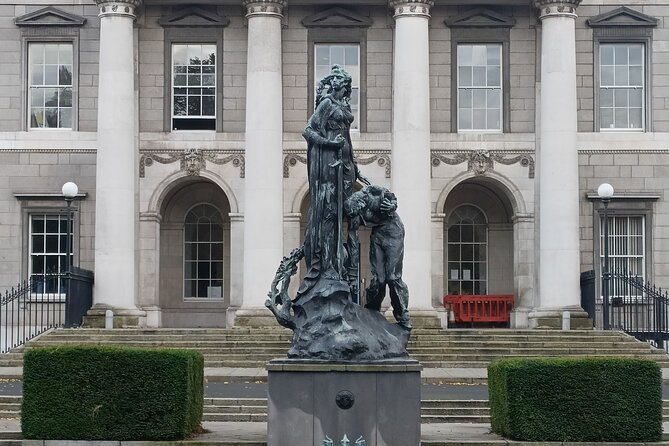
After the engineering stop, you reach the Famine Memorial, a tribute to those who suffered during Ireland’s Great Famine in the 19th century. This shift is heavy, but it’s also essential to understanding why Dublin’s maritime story includes emigration and loss, not just commerce.
12) Cross the River Liffey on the Seán O’Casey Bridge
Now you cross via the Seán O’Casey Bridge. From up here, you get a sweeping view of Dublin’s skyline and waterfront. The audio gives you a guided way to “read” the view, so the bridge isn’t just a crossing, it’s a viewpoint with a story behind it.
From Seán O’Casey Bridge to Grand Canal Square: Maritime Remembrance and Modern Dublin
This second stretch is where the Docklands feel layered. You’ll keep moving between memorials, maritime references, and modern infrastructure, and the route keeps the logic going so you’re not lost in the variety.
13) Memorial for Irish seafarers
After the bridge, you pass a memorial honoring Irish seafarers who lost their lives at sea. It’s a quiet moment that fits well after the Famine Memorial. Together, they anchor the Docklands story in real stakes for real people.
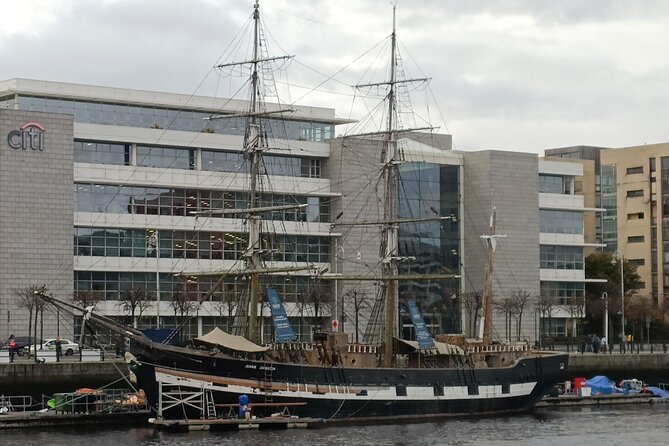
14) Replica of The Jeanie Johnston
You’ll also see a replica of The Jeanie Johnston, tied to the historic ship that carried Irish emigrants to North America during the Great Famine. This stop is a strong reminder that migration was not an abstract idea, it was packed into ships, routes, and long odds.
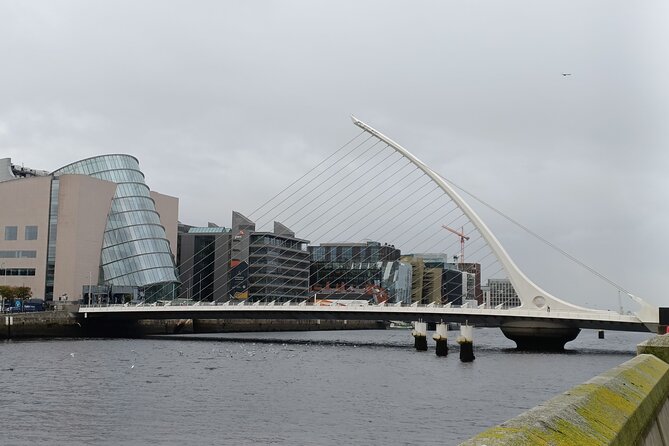
15) Samuel Beckett Bridge
Next is the Samuel Beckett Bridge, an iconic modern bridge named after the writer. You’re moving from maritime remembrance to contemporary Dublin, and the contrast works. It helps you see how the city keeps building new identities on the same waterline.
16) Convention Centre Dublin
You walk by the Convention Centre Dublin, a state-of-the-art venue for conferences, events, and exhibitions. It’s useful context: the Docklands today host global gatherings in buildings that still sit in the old river corridor.
17) Statue of Admiral William Brown
Then you pass the statue of Admiral William Brown, an Irish-born naval officer who founded the Argentine Navy. It’s a great “how far did Irish people reach” moment, and the audio helps connect the statue to the bigger maritime theme you’ve been following.
18) The historic Diving Bell
You see the historic Diving Bell, once used for dock maintenance in Dublin’s busy port. This stop gives you a practical, hands-on feeling about port work. It’s also a reminder that port life meant more than ships in the water, it meant repair, upkeep, and dangerous labor.
19) Tom Clarke Bridge (East-Link Bridge)
Now the route moves you toward the Tom Clarke Bridge, also called the East-Link Bridge. This is another infrastructure stop that fits the Docklands theme. It also helps you orient your walk because bridges act like landmarks you can visually confirm.
20) BrewDog Outpost Dublin
You pass BrewDog Outpost Dublin, a popular craft brewery with a lively atmosphere. It’s not a “you must stop” moment, but it’s a smart place to think about a pause. If you want a short break, this is a convenient option on the route.
21) The sea lock
Next comes the sea lock, described as a crucial component of Dublin’s maritime infrastructure regulating water levels in the docks. This is the kind of detail that sounds technical, but it makes the Docklands make sense. Locks and water control are what keep ships and dock operations workable.
22) Grand Canal Docks sign, then Hanover Quay
You’ll see the Grand Canal Docks sign, marking the entrance to the historic canal basin. Then the walk continues along Hanover Quay, known for a mix of residential and commercial developments.
There’s also a stop by Hanover Quay Studios, a recording studio complex frequented by musicians and artists. This is where the Docklands feel creative rather than purely industrial, and it helps you see that the area keeps finding new uses for old-space energy.
23) Finish at Grand Canal Square and Red Sticks Dublin
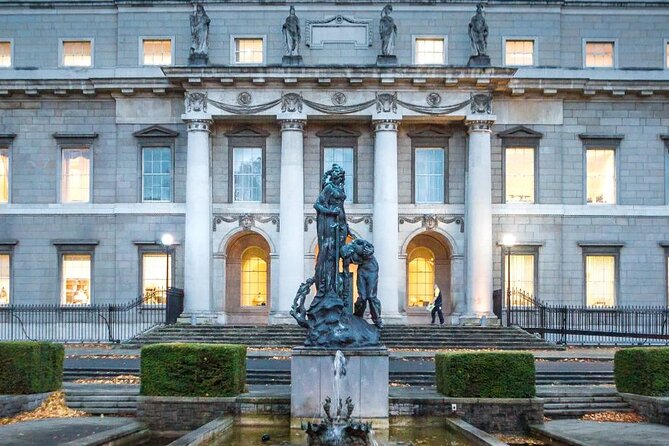
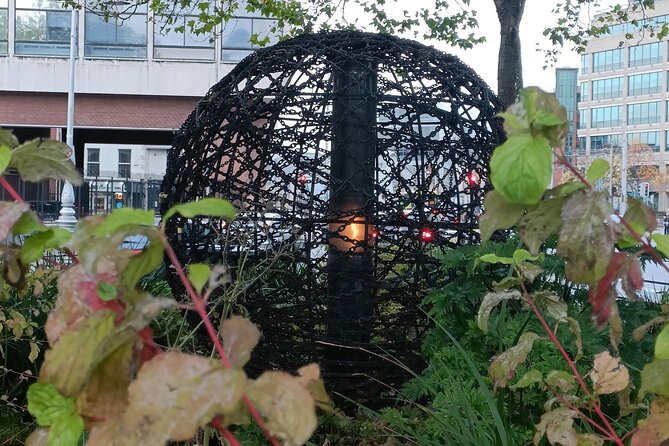
The tour ends at Grand Canal Square, described as a vibrant public space with modern architecture and cultural attractions. You’ll also pass Red Sticks Dublin, a landmark sculpture that adds an artistic pop to your final stretch.
Your end point is set at Red Sticks Dublin on the Grand Canal, so plan to wrap up your listening there and take a minute with your phone camera if you like riverside shots.
Price and Value: Why $11.99 Can Be a Smart Buy
At $11.99 per person, this tour costs less than a lot of guided tours, and you control the timing. The value here comes from what’s included, not just the price tag.
You get:
- Directions to the starting point so you’re not fumbling at the beginning
- Unlimited, lifetime use of the tour before your booking date and after it
- Virtual playback, so you can listen like an audiobook from anywhere
- Flexibility with GPS self-guided walking
- Offline access to audio and maps, which is huge in a city where data can be unreliable
The lifetime use part matters. You’re paying once, but you can revisit the route on another day, or replay portions later while planning a return. If you like to get your bearings and then wander back at a slower pace, that’s where this feels like good value.
Also, the route is designed around an easy walking window. At around an hour, you can fit it even if your schedule is tight.
Best Listening Style, Walking Pace, and Who Will Enjoy It
This is a self-guided audio walk, so the experience is best if you like doing your own thing while still getting real guidance. I enjoyed the way the narration keeps things understandable at a pace that feels doable. The route also includes enough major stops that you’ll feel like you accomplished something even if you don’t stop for long breaks.
How to get the most out of it
- Keep your phone on the audio and let the route guide your turns.
- Don’t sprint. The narration is built for walking, so if you rush, you’ll miss connections between stops.
- Stop for photos only when you’re near a landmark, like the bridges or memorial areas. You’ll save time and keep the tour flow smooth.
Who this suits
You’ll likely love this if you:
- Want a history story without a group
- Prefer a route where you can pause, listen, and continue
- Like cities with visible layers, where maritime structures turn into modern districts
- Enjoy practical details like how infrastructure worked, not only what things are called
It’s also handy if you’re traveling with people who have different interests. One person may focus on bridges and architecture, while you focus on the memorials and maritime theme, and the audio keeps both tracks moving.
Should You Book This Docklands Audio Tour?
Book it if you want a low-cost, low-stress way to connect the dots across Dublin Docklands, from Custom House to Grand Canal Square. The offline audio and maps alone make it a good bet if you don’t want your phone to run the show.
Skip it if you hate headphone listening, or if you strongly prefer a live guide who can answer questions on the fly. This tour gives you a solid script and a walking route, but it does not replace conversation with a real person.
If you’re the kind of traveler who likes to walk, listen, and learn at a pace you control, this one is a confident yes.
Fresh options around Dublin
- Wicklow: Private Day Tour from Dublin★ 5.0 · 5 reviews
- Wicklow Mountains Private Day Tour including Glendalough★ 5.0 · 7 reviews
- Women Of Ireland: Trailblazers & Pioneers★ 5.0 · 4 reviews
- Wicklow Mountains & Glendalough Luxury Private Day Tour★ 5.0 · 23 reviews
- Wicklow tour of Glendalough★ 4.5 · 8 reviews
- Dublin To Kilkenny Castle Waterford Crystal Private Car – Day Tour★ 5.0 · 8 reviews
- Waterford Crystal and Kilkenny Full-Day Rail Tour from Dublin★ 5.0 · 3 reviews
- Full Day Private Wicklow Tour★ 5.0 · 12 reviews
Walking Tours, compared.
Dublin Highlights and Hidden Gems Guided Walking Tour
Read our review →
90 Minute Dublin Walking tour and Sightseeing tips
Read our review →

Historical 2-Hour Guided Walking Tour of Dublin
Read our review →
Dublin Traditional Irish 3 Course Meal Walking Tour with Local
Read our review →
Browse the lists this tour appears in