
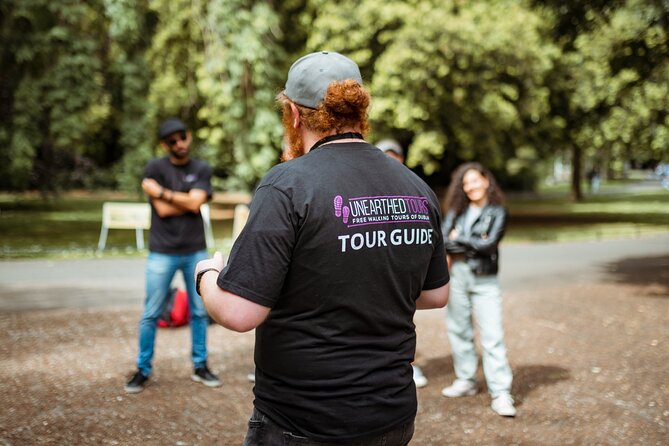
Reviewed · WALKING TOURS
DayTripper Dublin: A Guided City Walking Tour
DayTripper Dublin is interesting because it turns central Dublin into a guided storyline you can actually follow on foot, without wasting time on long detours. I love the way the route helps you get your bearings fast, and I like that your guide includes practical ideas for what to do after the walk. One possible drawback to note up front: the tour focuses on key spots from gardens and courtyards, so you do not go inside several big-name buildings.
Guides are a big part of why people rave about this tour. In the reviews I saw names like Kyron, Keiron, Ciaran, Ciarán, and Cieran, and the common theme is simple: they answer questions clearly, and they’ll often tailor the flow if you tell them what you care about, like women’s history. I also like that the tour ends with recommendations for the rest of your day, not just facts and photos.
Expect a moderate walking experience (it is a city walk, not a hike) and a small group size capped at 25. You get a mobile ticket, it runs in English, and you start near St Stephen’s Green and finish near College Green, with easy onward connections to Grafton Street and public transport.
Key things to know before you go
A tight, central route that strings together parks, streets, and major Dublin landmarks in about 2.5 hours
Guides that work for your questions, not just their script, with real city advice at the end
You mostly view outside or from courtyards, since the tour does not enter St Patrick’s Cathedral, Dublin Castle, Christ Church Cathedral, or Trinity College
Practical walking finish point near College Green and close to Grafton Street
Small groups (max 25) keep the tour from feeling like a cattle line
Free admission at many stops, so you are not stuck budgeting for ticket lines during the walk
Why this Dublin walk is a smart first-day move
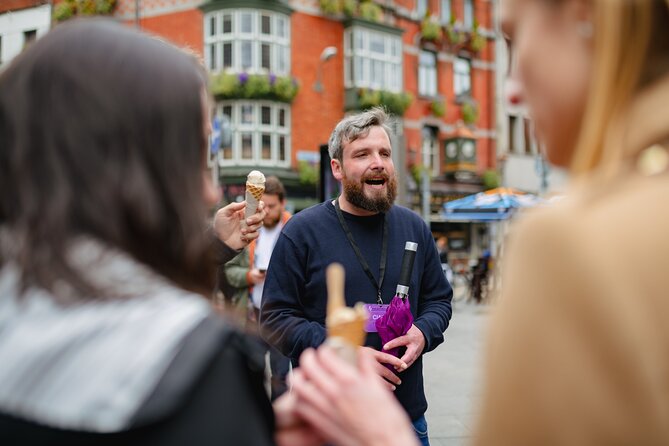
If you are new to Dublin, the biggest problem is not seeing sights. It is figuring out what connects them and why they matter. This tour is built for that. You walk through some of the city’s most recognizable points, and your guide explains what you are looking at in plain language, tying streets, statues, and institutions to the bigger Irish story.
At $27.82 per person for roughly 2.5 hours with an in-person guide, you are paying for time plus interpretation. The value is that you get a guided lens on places you would otherwise treat like postcard backdrops. And since multiple stops are free to view and the tour does not require you to buy additional paid entries for several major sites, you can keep your day simple and still leave feeling oriented.
This works best as an intro tour, ideally early in your trip. It also works later if you want a refresher, because Dublin has a way of rewarding repeat looking. After this walk, you will spot patterns you missed the first time you passed the same street.
More walking tours in Dublin:
- Dublin Highlights and Hidden Gems Guided Walking Tour
★ 5.0 · 6,020 reviews - Dublin: Highlights and Hidden Gems Walking Tour
★ 4.9 · 2,140 reviews - 1916 Rebellion Walking Tour
★ 5.0 · 1,605 reviews
Meeting at St Stephen’s Green, with Wolfe Tone setting the tone

The tour begins around St Stephen’s Green, at the Wolfe Tone sculpture area. That matters because St Stephen’s Green is a calm, central starting point. It is also an easy anchor for your mental map, especially if you plan to explore more neighborhoods later.
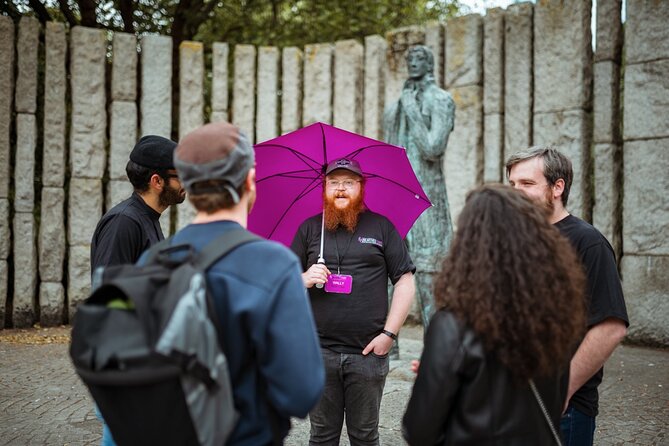
Wolfe Tone appears again as a wrap-up stop near the end of the walk. The way this tour uses that statue is useful. Instead of treating it like a random landmark, your guide uses it as a final thread, connecting earlier political and cultural points into a clearer picture of how Dublin got to where it is today.
Tip: if you are the kind of person who likes to ask questions, arrive a few minutes early. You will probably get better answers later, once you have your bearings and the guide has settled the group.
St Stephen’s Green: Irish culture in a park, not a classroom
One of the quieter stops on the route is St Stephen’s Green itself. You do not just walk through grass and paths. Your guide uses the park to talk about Irish culture and Irish history in a way that feels grounded, because parks in European capitals often reflect public life, memory, and civic identity.
What I like about this approach is that it breaks up the day. It gives your legs a moment to reset before you head into louder streets. It also sets a tone for the rest of the walk, where politics and culture keep showing up in public spaces.
If you are sensitive to walking time, this park stop is a good one. It keeps the tour from becoming nonstop streets and lets the information land.
Grafton Street and the Molly Malone statue, Dublin’s everyday identity
Grafton Street is one of Dublin’s busiest high streets, and the tour uses that energy. Your guide walks and talks through what makes this kind of shopping street feel distinct, not just busy. Even if you are not shopping, you get a sense of how Dublin markets itself and how public life plays out in the open.
Then you hit the Molly Malone statue. This spot is useful because it brings work and daily life into the story. Molly Malone is a name most people recognize, but your guide connects it to the working-class angle behind the legend, so it stops being just a photo stop.
Quick practical note: these are street segments. If it is rainy, bring a compact layer. Dublin weather can shift fast, and the tour does not pause for long indoor breaks.
A few more Dublin days worth comparing
- Dublin to Glendalough, Wicklow and Kilkenny Full Day Guided Tour
★ 5.0 · 4,895 reviews - Dublin Book of Kells, Castle and Molly Malone Statue Guided Tour
★ 4.5 · 3,825 reviews - The Little Museum of Dublin Famous Guided Tour
★ 5.0 · 2,948 reviews - Dublin Jameson Distillery and Guinness Storehouse Guided Tour
★ 4.5 · 2,608 reviews
St Patrick’s Cathedral gardens: learn the city without going inside
The tour does not enter St Patrick’s Cathedral, but it does stop at the gardens area and explains the history and origins of Dublin City from there. That decision is smart for two reasons.
First, it keeps the tour moving at a comfortable pace without turning into a timed-entry scramble. Second, seeing religious architecture from the surrounding grounds still gives you context for how the neighborhood developed around big institutions.
If you want cathedral interiors, plan that separately. This walk is about seeing the city as a system, not about collecting stamps inside every site.
Dubh Linn Gardens: a Vikings-to-Dublin landmark stop

Dubh Linn Gardens is another stop with free admission, and it gets treated like more than a pretty corner. Your guide presents it as a landmark connected to Viking-era Dublin, so the garden becomes a bridge between eras.
I like this kind of stop because it changes your perspective. Instead of thinking of Dublin as one unified modern city, you start to see it as layers. That is what makes the tour feel “worth it” after the photos are done. You leave with a story that explains why the city looks the way it does.
What to do here: slow down. Even on a guided tour, you will get more out of this stop if you pause and actually look at the setting. A garden with deep historical framing makes it easier to understand why the city continues to protect certain views and landmarks.
Dublin Castle courtyards: political history, without the interior ticket
The route includes Dublin Castle courtyards, again without entering Dublin Castle. Your guide brings in Northern Ireland history and the political struggles across the nation. That sounds heavy, and it can be, but the format keeps it readable because you are hearing it in short, street-level segments.
This is a place where walking matters. The castle grounds sit in the center of Dublin’s power story, and seeing them from the courtyard viewpoint makes it easier to grasp the physical relationship between governance and city space.
If your goal is maximum interior access, you may feel slightly frustrated. If your goal is to understand the political arc of modern Ireland while staying efficient on foot, this stop is a strong fit.
Christ Church Cathedral courtyard and Viking threads
Christ Church Cathedral also does not get entered. Instead, the tour heads into the courtyard area and explains the founding and Viking connections through the exterior architecture and setting.
Why do I like this style? Because it keeps your day flexible. You are not forced into a longer sightseeing block at a time when your legs might be done. The guide still points out what to notice, and you get the historical context without surrendering half the afternoon.
If you are the type who enjoys architecture, you will probably enjoy this part most. Look for what the guide points to, then glance back at it after the explanation. That is when the information sticks.
Temple Bar to O’Connell Street: nightlife streets meet modern politics
Temple Bar appears as a quick walk through the neighborhood. Your guide uses it to connect Dublin’s cultural identity to what you see on the street. Even if you do not plan to spend a night here, it helps to understand why the area became a symbol of Dublin to the outside world.
Then you move to O’Connell Street, where the tour leans into the 20th-century political landscape. Statues become visual history markers, and your guide uses them to explain shifts, struggles, and the people connected to the moments they represent.
This is where I found the tour’s “why it works” logic most clear. In many cities, political history feels abstract until you see it outside, in public art and street placement. Dublin does that well, and this walk helps you read those signals.
If you dislike crowds, keep your expectations realistic. You are passing through central streets that can be busy. The upside is that you see the city in real conditions, not empty tourist corridors.
Trinity College Dublin: the Great Irish Famine context, from the outside
The tour includes a stop outside Trinity College Dublin and the Central Bank of Ireland, plus a discussion of the Great Irish Hunger, also known as the famine. Your guide also talks about Trinity’s history. You do not enter Trinity College, which keeps the walk within a manageable time window.
This approach is practical for two reasons. One, it respects time on a walking tour. Two, you still get the key historical context without needing to add another timed attraction.
A small suggestion: if you care deeply about Irish famine history, you may want to follow this with more reading or a dedicated museum visit after the walk. The tour gives you a strong framework, not the full course.
End at College Green, with a plan for your next steps
The tour finishes at College Green. From there, the end point is about a 2-minute walk from Grafton Street, and roughly a 15-minute walk to Tara or Pearse Station.
This is a great ending choice because it puts you back in a central corridor with easy onward movement. You can head toward more museums, restaurants, or shopping, or you can simply settle into an evening stroll.
I also like that guides close the loop with recommendations. One of the repeated themes from the experience is that you leave with suggestions for where to go next, where to eat, and any hidden details you might miss on your own. If you are trying to avoid tourist traps, this kind of local course-correction is genuinely useful.
Price, group size, and how to judge value
Let’s talk value in plain terms. At $27.82 per person, you are buying about 2.5 hours of guided walking plus interpretation at multiple city landmarks. The group size is capped at 25, which matters. Smaller groups tend to make it easier to ask questions and get direct answers.
Also, most stops are marked as free admission. That lines up with the fact that several major sites are viewed from courtyards or surrounding areas rather than entered. In other words, you are not paying extra repeatedly throughout the walk.
The reviews also reflect strong satisfaction, with a 5-star rating and around 99% recommending the tour. The reasons are pretty clear: people describe the guides as fun, engaging, and able to explain long stretches of Irish history in a concise way, plus they appreciate the local tips and the option for personalization.
Who should book this tour?
Book this if you want:
- A first-time orientation to Dublin that connects sights to history and politics
- A guided walk with a live person who will answer questions and give practical next-step ideas
- A moderate walking plan that fits into a day without turning into an all-day production
Skip it if:
- You mainly want museum-style interior time at specific landmarks
- You hate busy central streets and prefer quiet, off-the-beaten-path walks only
This is also a solid option if you like walking tours but want them to feel more than just a list of stops. The stronger guides on this route use each stop to explain how Ireland’s cultural and political identity shows up in everyday public space.
Should you book DayTripper Dublin?
I think you should book it if Dublin is new to you and you want a map in your head by the end of the walk. The route gives you a smart mix of parks, major street scenes, and the political monuments that make the city readable. The value comes from the guide, since the best part is not just where you go, but how you understand what you are seeing.
If your priority is interior visits, treat it as a foundation and pair it with separate plans. Otherwise, this is one of the easier ways to turn a short window in Dublin into a much richer sense of place.
FAQ
How long is the DayTripper Dublin walking tour?
The tour is about 2 hours 30 minutes.
What is the price per person?
The price is $27.82 per person.
Is the tour offered in English?
Yes, the tour is offered in English.
What is included with the tour?
It includes an in-person tour guide, and you receive a mobile ticket.
Does the tour enter St Patrick’s Cathedral, Dublin Castle, Christ Church Cathedral, or Trinity College?
No. The tour does not enter St Patrick’s Cathedral, Dublin Castle, Christ Church Cathedral, or Trinity College. It focuses on gardens, courtyards, and outside views.
Are there admission fees for stops on the tour?
Many stops are listed as admission ticket free. Some stops are listed as admission ticket not included, and the tour does not enter those sites.
Where does the tour start and end?
It starts at the Wolfe Tone Sculpture in St Stephen’s Green, Dublin, Ireland, and ends at College Green.
Can I cancel and get a full refund?
Yes. You can cancel for a full refund up to 24 hours before the experience start time.
Fresh options around Dublin
- Wicklow: Private Day Tour from Dublin★ 5.0 · 5 reviews
- Wicklow Mountains Private Day Tour including Glendalough★ 5.0 · 7 reviews
- Women Of Ireland: Trailblazers & Pioneers★ 5.0 · 4 reviews
- Wicklow Mountains & Glendalough Luxury Private Day Tour★ 5.0 · 23 reviews
- Wicklow tour of Glendalough★ 4.5 · 8 reviews
- Dublin To Kilkenny Castle Waterford Crystal Private Car – Day Tour★ 5.0 · 8 reviews
- Waterford Crystal and Kilkenny Full-Day Rail Tour from Dublin★ 5.0 · 3 reviews
- Full Day Private Wicklow Tour★ 5.0 · 12 reviews
Walking Tours, compared.
Dublin Highlights and Hidden Gems Guided Walking Tour
Read our review →

90 Minute Dublin Walking tour and Sightseeing tips
Read our review →

Historical 2-Hour Guided Walking Tour of Dublin
Read our review →
Dublin Traditional Irish 3 Course Meal Walking Tour with Local
Read our review →
Browse the lists this tour appears in