
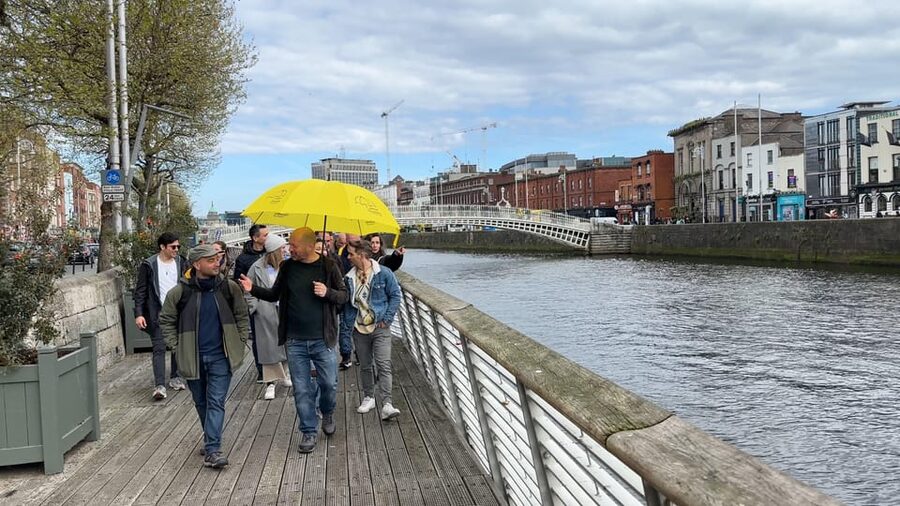
Reviewed · WALKING TOURS
Dublin: Bucket List Sights Walking Tour
Dublin is the kind of city where the streets feel layered, Celtic under medieval, Viking-era under Georgian, and modern tech still peeking through. This 2-hour walking tour is interesting because it gives you a clean storyline while you move, not just photo stops. I especially like the way it pairs landmark buildings with the specific moments that shaped them, like the centuries-long fight for control of Ireland. I also like that you end in a spot that makes it easy to keep exploring, outside Trinity College. One drawback to consider is that it is a walking tour, so you’ll want comfortable shoes and a steady pace.
What makes it stand out is the focus on a real guide, not a prerecorded route. In the best versions, guides like Peter ask questions about your trip, adapt the pace to your English level, and answer the extra stuff people naturally want to know. If you prefer totally free roaming with no structure at all, you might find the order of stops a bit fixed.
Key things to know before you go
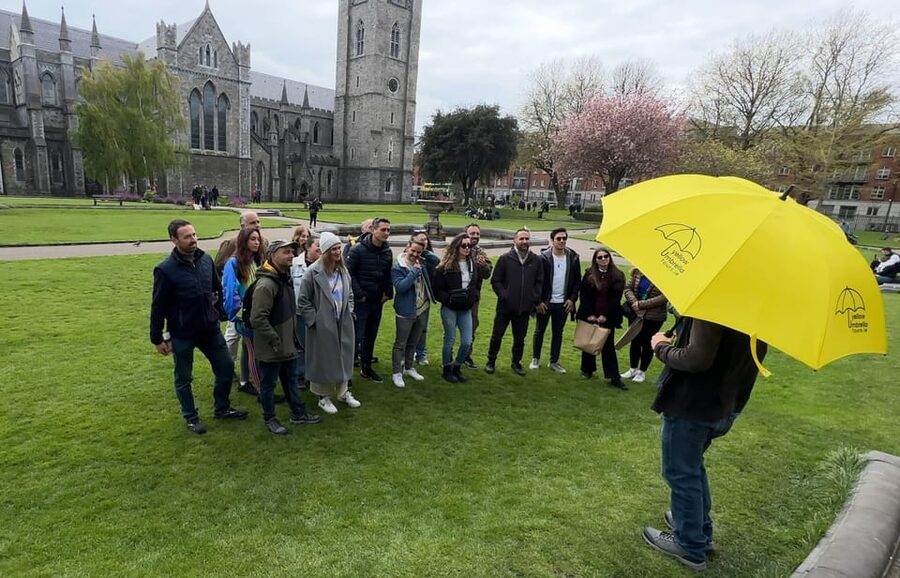
- Christchurch Cathedral layers Viking, Norman, and 19th-century Dublin in one stop.
- St. Patrick’s Cathedral ties the patron saint story to famous burials, including Jonathan Swift.
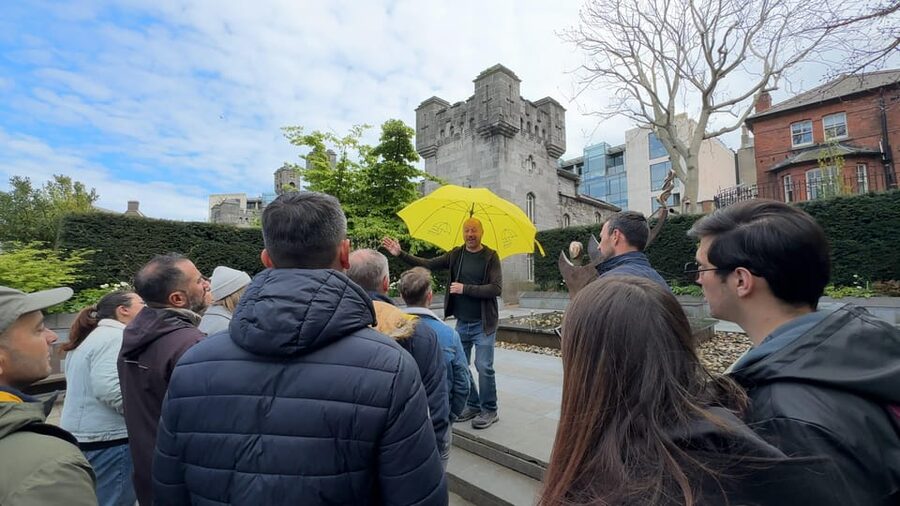
- Dublin Castle connects medieval and Georgian architecture to British rule and independence.
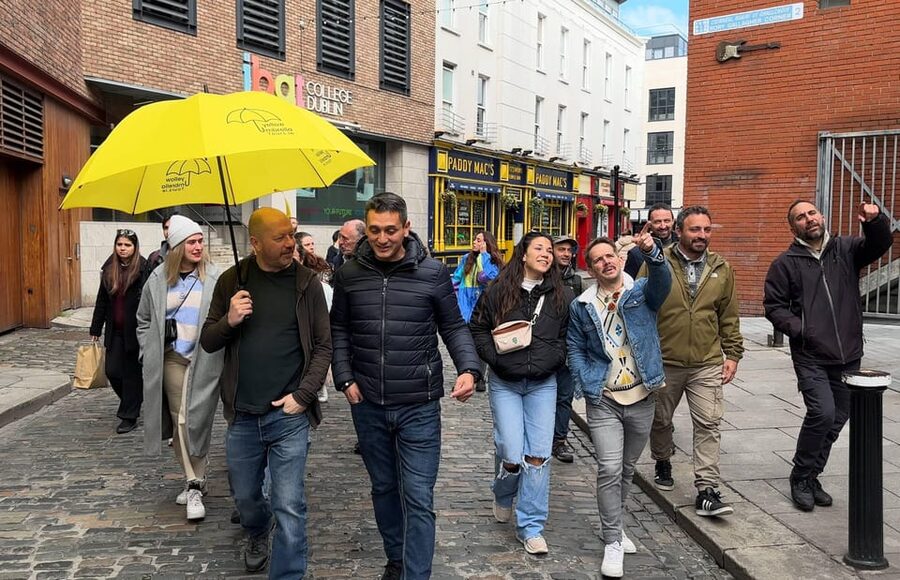
- Temple Bar District shows what the old city feels like today, with pubs and live music nearby.
- Trinity College and the Book of Kells give you a perfect finale and an easy next step.
A 2-hour Dublin loop that hits the big stories fast
This tour is built for orientation. You get a quick sweep across the old city, then you leave with a mental map of how Dublin changed over time. It starts with the earliest big threads, Celts first, then moves through the Christian era, Vikings, Normans, and English influence, all the way to modern American impact at the Silicon Docks.
The pacing matters. Two hours is long enough to make several meaningful stops, but short enough that you’re not stuck in a slow, stop-and-go slog. If you’re arriving in Dublin and want to make your first day smarter, this kind of walking overview is a strong move.
You’ll also get the benefit of a live guide who can explain what you’re actually looking at. That’s a big deal in Dublin, where the scenery often changes meaning street to street. A guide helps you turn buildings into a timeline, not just a backdrop.
More walking tours in Dublin:
- Dublin Highlights and Hidden Gems Guided Walking Tour
★ 5.0 · 6,020 reviews - Dublin: Highlights and Hidden Gems Walking Tour
★ 4.9 · 2,140 reviews - 1916 Rebellion Walking Tour
★ 5.0 · 1,605 reviews
Starting at Christchurch Place, where the route makes sense
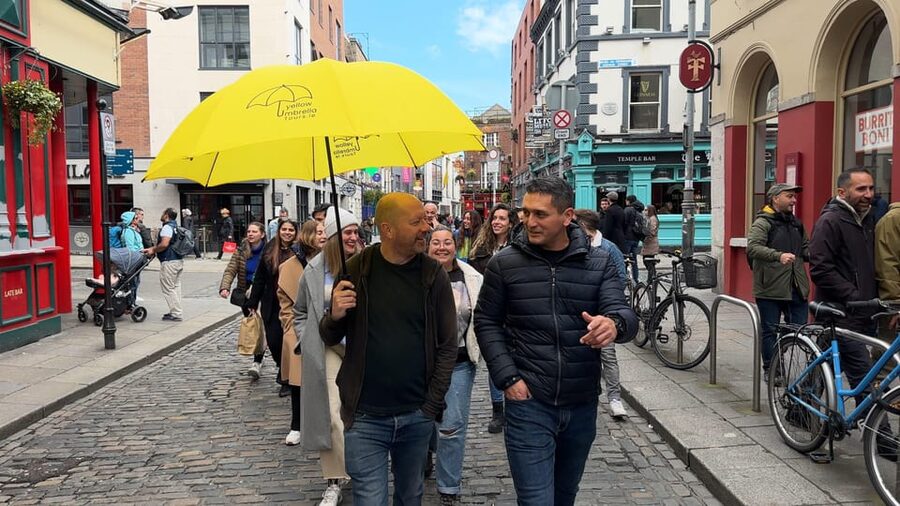
You meet your guide across the road from Christchurch Cathedral, outside the Bull and Castle. Look for the yellow Umbrella, and you’ll know you’re in the right place. Then the tour heads straight into one of the best opening acts Dublin has: Christchurch Cathedral.
I like how this works for first-timers. You start at a location that’s easy to find, right in the historic core, and you begin with a site that’s old enough to contain multiple chapters. It’s a smart way to build momentum early, so you’re paying attention from minute one.
At the end, the tour finishes back at the meeting point. That means you’re not forced to make your own transport plan just to get home base. It’s especially helpful if you plan to do more exploring afterward on foot.
Christchurch Cathedral: Viking roots, Norman stone, and Henry Roe money
The tour’s first stop is Christchurch Cathedral, and it’s a perfect example of how Dublin stacks history. The cathedral you see today is the result of multiple rebuilds. The story starts with Viking settlement patterns, when an early version of the cathedral was built in wood. Later, Normans helped recast it in stone.
Then the tour connects that medieval layering to a 19th-century turning point. The guide explains how Henry Roe’s whiskey money helped fund the spectacular neogothic cathedral seen in the present day. That detail is fun, and it also gives you a practical lesson: Dublin’s major buildings often reflect specific local funding stories, not only royal power.
If you’re the type who likes your sightseeing to make sense, this stop delivers. You can look at the architecture and understand why it feels like more than one era at once.
St. Patrick’s Cathedral and the Swift burial connection
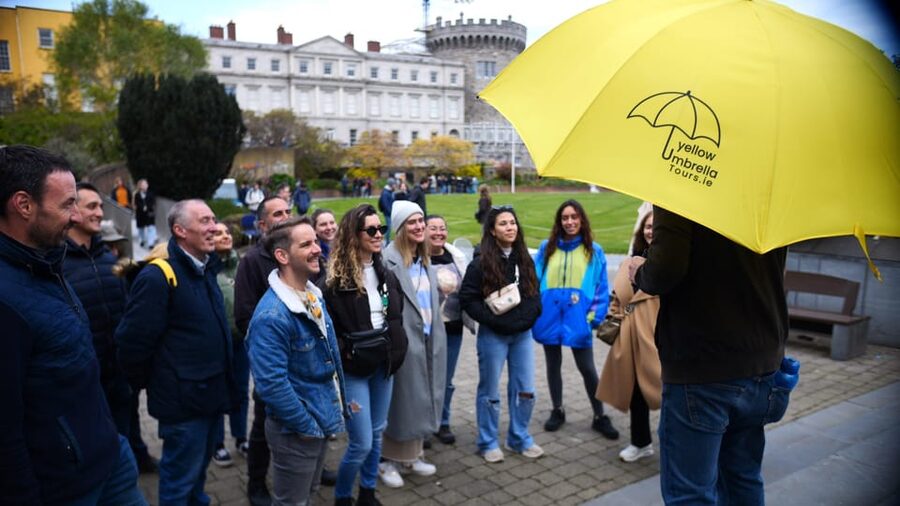
Next comes St. Patrick’s Cathedral, named after Dublin’s beloved patron saint. The guide ties the famous story to the island setting, including the legend of St. Patrick banishing the snakes. You get a clear sense that this is not just a pretty landmark, it’s a key symbol in Irish religious identity.
This stop also brings in Jonathan Swift, the former dean, and the writer of Gulliver’s Travels. The cathedral is his burial place, which gives the site a crossover between literature and history. If you’re a fan of classic writing, you’ll likely appreciate how easily the guide turns the place into a story you’ve already heard in another context.
There’s also a practical takeaway. The guide points out the cathedral’s restoration in the 1860s thanks to Sir Benjamin Lee Guinness. That helps you see how Dublin’s heritage didn’t only survive by luck, it survived through people spending real money to keep it standing.
Same city, a different sort of day out:
- Dublin to Cliffs of Moher, including Wild Atlantic Way and Galway
★ 5.0 · 23,331 reviews - From Dublin: Cliffs of Moher, Burren & Galway City Day Tour
★ 4.8 · 18,888 reviews - Dublin: Guinness Storehouse Entry Ticket
★ 4.6 · 16,863 reviews - Dublin to Cliffs of Moher, Burren, Wild Atlantic Way, Galway Tour
★ 5.0 · 12,924 reviews
Dubh Linn Garden and the Chester Beatty Library area
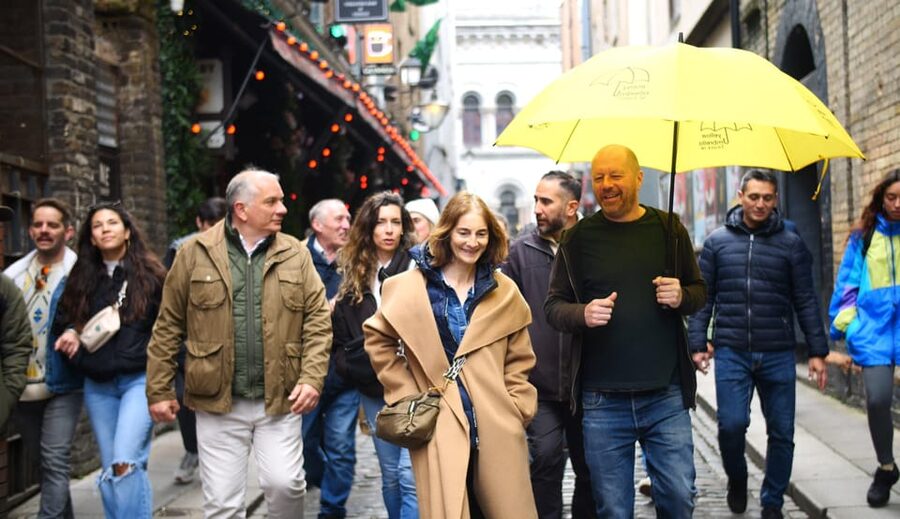
After St. Patrick’s Cathedral, the route shifts to the Dubh Linn Garden area. This is one of those places where the ground level gets quietly fascinating. The guide connects the area to the Chester Beatty Library, but also to the Viking arrival story.
The tour explains that when Vikings came to Dublin around 1,200 years ago, they moored their long boats here. That detail is the kind that changes how you look at the city. Instead of thinking of this as just another garden stop, you realize you’re near the kind of waterfront activity that shaped settlement patterns.
If you like understanding why cities formed where they did, this is a good moment to slow down mentally. Even if you are moving quickly in real life, the guide’s explanation helps you “see” the old geography.
Dublin Castle: British rule for centuries, plus Georgian and medieval mixes
From there, you head into Dublin Castle, and this stop is about power, not just architecture. The guide walks you through both lower and upper courtyard areas and explains the mix of medieval and Georgian features.
The big historical thread is British rule. The castle functioned as the center of British government in Ireland for about 700 years. Then the tour ties it directly to a decisive turning point in Irish independence in 1922, when the handover happened to Michael Collins and the Irish Free State.
That context matters. If you only glance at the castle, it can feel like a grand set piece. With the story attached, you understand it as a machine of governance, used over generations to manage a country under external control.
One more thing I appreciate: the guide doesn’t treat history like a distant lecture. You can stand in courtyards and immediately link what you see to what it was used for, which makes the whole stop stick.
Temple Bar District: old streets with a modern nightlife pulse
After Dublin Castle, the tour moves toward the Temple Bar District. Here, you’ll see one of the oldest parts of the city dating back to the Tudor Conquest in the 16th century.
Then the tour does something useful. It doesn’t stop at the Tudor timeline. It explains what the area feels like now, a center for pubs, live music, and nightlife. That blend is part of why Temple Bar remains a magnet, even for people who are skeptical of tourist spots.
Here’s my practical advice. If you’re walking Temple Bar during the day, you’ll notice the historic street layout without the full crowd energy. If you pass through at night, it becomes more about atmosphere than architecture. This tour happens as a walk-through, so it’s a good “taste” either way.
You’ll also appreciate the way the guide uses Temple Bar as a contrast point. You just came from an official seat of power, and now you’re in a district where the city shows itself socially.
North across the Liffey, Ha’penny Bridge, and the Central Plaza detail
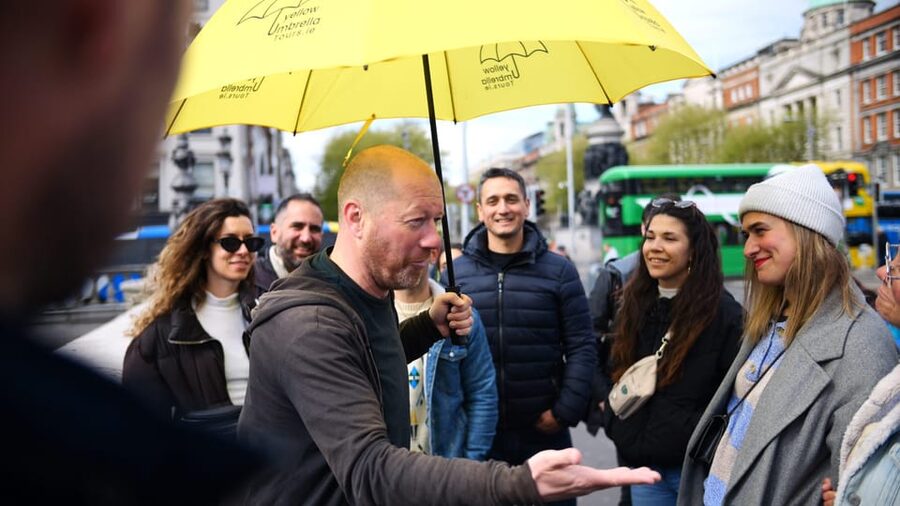
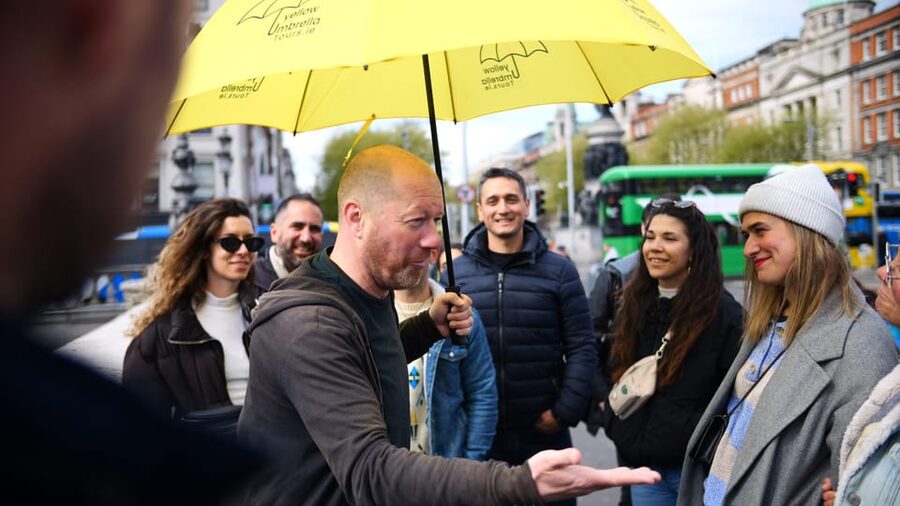
The route then crosses the River Liffey to the north side for a view linked to Dublin’s earliest settlement story. The guide explains how the view stretches from the original Celtic settlement area about 2,100 years ago to the Silicon Docks in the 21st century, where American influence shows up through technology.
This is a clever segment, because it puts a timeline into one glance. You’re not only being told that Dublin evolved, you’re seeing the idea of change in space.
Then you return over the Ha’penny Bridge, walk through Merchant’s Arch, and continue toward Crown Alley. Along the way, the guide points out the Central Plaza and names it as a brutalist behemoth designed by Sam Stephenson. If you like architecture, this is a satisfying left turn after centuries of religious and royal sites.
Even if brutalist design is not your style, it helps you understand Dublin didn’t stop at the old world. The city keeps building, and those buildings also reflect politics, money, and modern taste.
College Green, Molly Malone, and a strong finish at Trinity College
Next you reach College Green, and this is where the walk rewards you again with architecture. The tour highlights some of the finest neoclassical Georgian buildings in the area, including banks and Parliament-related structures. The guide frames it as the earlier center of government and finance for a city that considered itself the Empire’s second city.
That wording matters. It’s a reminder that Dublin wasn’t always just “the smaller partner.” In certain periods, it was a major administrative and economic hub, and College Green reflects that ambition through grand civic design.
Then you get a quick, fun stop for Dublin’s favorite daughter, Molly Malone, outside St. Andrew’s Church. This isn’t heavy on facts like the Castle, but it gives you a human touch and a character-based connection to the city. It’s the kind of moment that helps you remember Dublin not only as history, but as folklore and identity.
Finally, you end outside the front gate of Trinity College, where the famous Book of Kells exhibition is housed. This finish is strategic. You’re wrapping up your orientation at the point many visitors want to see next. If you plan to keep exploring, Trinity is a natural next step.
What $19 buys you, and why it can be good value
At around $19 per person for a 2-hour guided walk, the value comes from speed plus context. You’re paying for a guide who can connect the dots between buildings, funding stories, and political turning points, in a way that a self-guided stroll usually misses.
Two hours also helps. You don’t need a half-day commitment. It’s the kind of sightseeing that fits between museum time and dinner plans, without burning your whole morning.
The other value piece is question time. In the strongest sessions, the guide handles extra questions patiently and adds recommendations for the rest of your stay. If you get a guide like Peter, you also benefit from adaptation, including adjusting to your English level and asking about you as the tour goes.
That last part sounds small, but it changes the experience. When a guide matches your pace and interests, you retain more and you feel less like you’re just following instructions.
Who this walking tour suits best
This tour is ideal if you’re:
- Visiting Dublin for the first time and want a storyline, not a scatter of photos
- Short on time but willing to walk for about two hours
- Interested in how religious sites, government buildings, and everyday districts connect
- The type who likes architecture when it comes with the “why” behind it
It might be less ideal if you:
- Hate walking tours and want to sit for most of the experience
- Already know Dublin’s timeline cold and only want very deep specialist detail
- Prefer completely unstructured wandering with no planned route
Should you book Dublin: Bucket List Sights Walking Tour?
I’d book it if you want a smart introduction that makes the rest of Dublin easier. The stops line up well, from Christchurch and St. Patrick’s to Dublin Castle, Temple Bar, and Trinity. You also get a guided explanation of key historical shifts, including British rule ending in 1922, and you finish in a place that supports your next visit.
Skip it only if you dislike guided walking or you already have a very clear plan for every site and timeline. Otherwise, this is a dependable way to get your bearings fast and learn enough to explore the city on your own with confidence.
FAQ
Where does the Dublin walking tour start?
You start across the road from Christchurch Cathedral, outside the Bull and Castle. The meeting point includes a guide with a yellow Umbrella.
How long is the tour?
The tour lasts about 2 hours.
What are the main sights included?
The tour highlights Christchurch Cathedral, St. Patrick’s Cathedral, Dublin Castle, Temple Bar, and Trinity College with the Book of Kells exhibition.
Does the tour run in English?
Yes, the live tour guide provides the tour in English.
Is the tour wheelchair accessible?
Yes, the tour is listed as wheelchair accessible.
Do I need to choose a specific time in advance?
You select a starting time based on availability, since the duration is 2 hours but starting times can vary.
How much does the tour cost?
The price is $19 per person.
Can I cancel for a refund?
You can cancel up to 24 hours in advance for a full refund.
Where does the tour end?
The tour ends back at the meeting point across from Christchurch Cathedral, outside the Bull and Castle.
Fresh options around Dublin
- Wicklow: Private Day Tour from Dublin★ 5.0 · 5 reviews
- Wicklow Mountains Private Day Tour including Glendalough★ 5.0 · 7 reviews
- Women Of Ireland: Trailblazers & Pioneers★ 5.0 · 4 reviews
- Wicklow Mountains & Glendalough Luxury Private Day Tour★ 5.0 · 23 reviews
- Wicklow tour of Glendalough★ 4.5 · 8 reviews
- Waterford Crystal and Kilkenny Full-Day Rail Tour from Dublin★ 5.0 · 3 reviews
- Full Day Private Wicklow Tour★ 5.0 · 12 reviews
- Dublin To Kilkenny Castle Waterford Crystal Private Car – Day Tour★ 5.0 · 8 reviews
Walking Tours, compared.
Dublin Highlights and Hidden Gems Guided Walking Tour
Read our review →

90 Minute Dublin Walking tour and Sightseeing tips
Read our review →

Historical 2-Hour Guided Walking Tour of Dublin
Read our review →
Dublin Traditional Irish 3 Course Meal Walking Tour with Local
Read our review →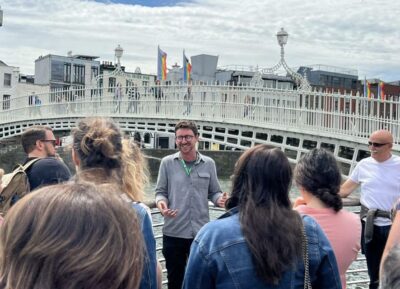
Browse the lists this tour appears in