
Reviewed · HISTORICAL TOURS
Dublin LGBTQ Pride Historical and Cultural Walking Tour
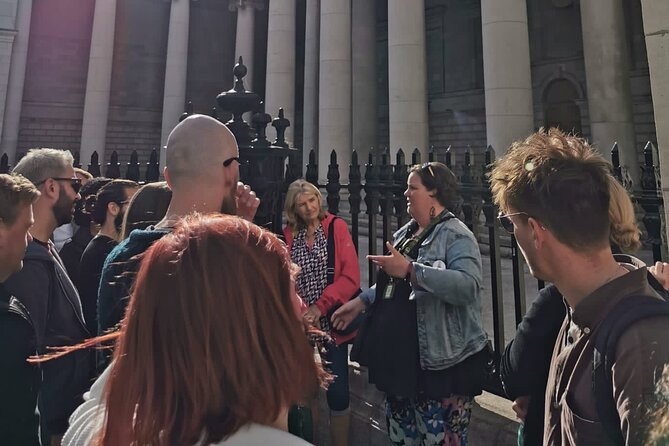
Dublin LGBTQ Pride Historical and Cultural Walking Tour is interesting because it turns central landmarks into a moving timeline you can actually walk, not just read. You’ll start in Temple Bar, then connect the dots between politics, performance, public spaces, and everyday nightlife.
I like that most stops come with free admission, so your money goes to the stories, not extra ticket costs. I also like the human touch, with guides such as Helena and Deidre bringing energy and clarity to Ireland’s LGBTQ+ and gender-justice history.
One drawback to plan for: the tour runs about 2 hours with short time at each stop, so you should expect a fast-paced walk through major sites rather than long museum time.
Key things to know before you go
- Temple Bar as your launch pad: easy to find, very central, and full of built-in context for queer Dublin.
- Mostly free admissions: many stops do not require paid entry, with Trinity College noted as not included.
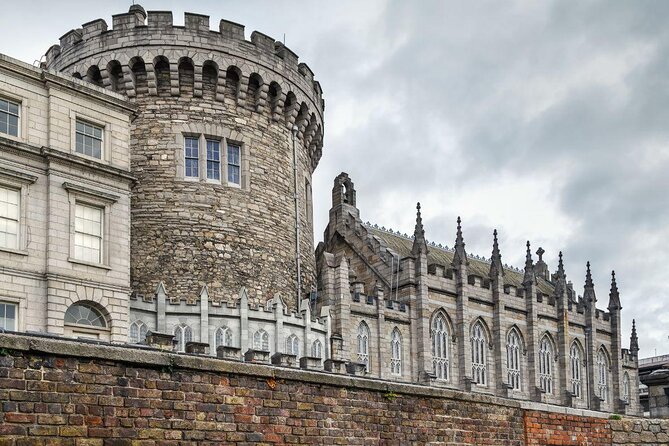
- Major Dublin institutions, viewed differently: GPO Museum, Abbey Theatre, Trinity College, Dublin Castle.
- Pub and place-based history: you’ll learn how queer community life shaped the city’s nightlife, not only politics.
- Capped group size: the experience allows up to 100 people, so it is designed to stay manageable.
- A walkable, moderate fitness level: best for people comfortable with city-center walking for about two hours.
Temple Bar to Dublin Castle, how this walk actually works
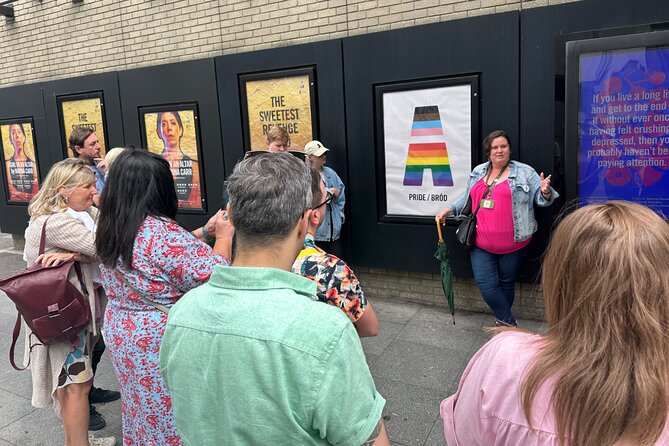
This tour is built for getting your bearings fast. You meet at 3 Crown Alley in Temple Bar, then follow a mostly central city-center route, finishing in the upper courtyard of Dublin Castle. The whole thing clocks in at around 2 hours, so it is long enough to connect themes, but short enough that it stays lively.
The format is simple: you arrive at a stop, the guide shares what happened there and why it matters, then you move on. Expect quick, focused time at each location rather than extended indoor exploring. That makes the tour great for first-time visitors who want context, and also for repeat visitors who want a different lens on familiar places.
A practical note: many stops are marked as free admission, so you mostly avoid the ticket scramble. Trinity College is specifically listed as not included, so you may want to budget for that if it applies on the day.
More walking tours in Dublin:
- Dublin Highlights and Hidden Gems Guided Walking Tour
★ 5.0 · 6,020 reviews - Dublin: Highlights and Hidden Gems Walking Tour
★ 4.9 · 2,140 reviews - 1916 Rebellion Walking Tour
★ 5.0 · 1,605 reviews
Temple Bar start: the neighborhood becomes a story
Temple Bar can feel like a postcard district, but that is the point. Starting there grounds the tour in the Dublin you can see right now, while the guide reframes what those streets meant to LGBTQ+ people over time.
From the start, you are pointed to the area’s LGBTQ+ links, including Temple Bar’s LGBTQ-focused presence. You also visit Temple Bar again later, which helps you notice how a place can hold layers of meaning. It is not just one stop, it is a theme you revisit, so the neighborhood starts to feel like a living archive.
Because Temple Bar is a busy area, it helps that the meeting point is clear and central. You get to find your group quickly, then the guide leads you out into the wider city, connecting those famous streets to other institutions.
The walk across Dublin’s famous bridge and into the GPO Museum
After Temple Bar, the route includes crossing Dublin’s most photographed bridge on the way deeper into the story. Even if you have seen it in photos, crossing it on foot changes the feel. You get a sense of how quickly Dublin can shift from tourist views to political realities.
Then you hit the GPO Museum, in one of Ireland’s most important historic buildings. The building is tied to the 1916 Easter Rising, and the stop is designed to connect that national moment to LGBTQ+ figures who were involved and how they are remembered. The value here is that you see how LGBTQ+ lives did not exist on the sidelines of major history, they intersected it.
This stop is short by museum standards, so do not expect an hour-long exhibit run-through. Instead, think of it as a guided orientation, where you learn what to look for if you later want to return on your own time.
Abbey Theatre: how stage work shaped visibility
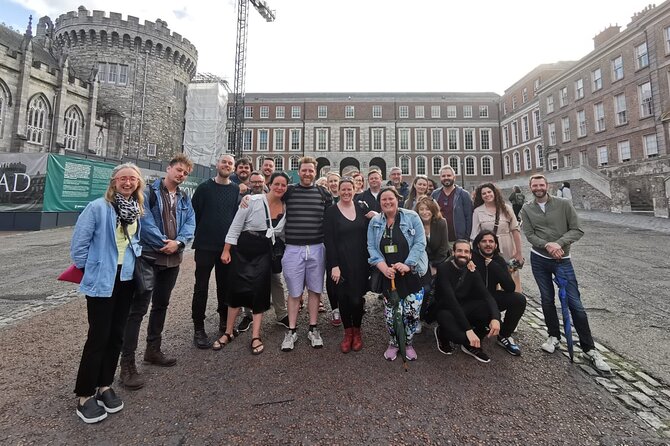
Next up is the Abbey Theatre, Ireland’s national stage. This is one of those Dublin institutions that many visitors walk past or glance at, but the tour asks you to look closer. Here, the emphasis is on Ireland’s LGBTQ+ icons in the arts and on how performance helped shape modern cultural attitudes.
A stop at Abbey Theatre works well for this kind of walking tour because the building is a story machine. Even with limited time, you can connect the dots between art, public conversation, and identity. It also gives you a less purely political angle, which keeps the tour from feeling like only protests and policy.
If you are the type who loves theater or just likes seeing how culture changes people, this is a strong stop. If you are hoping for a behind-the-scenes production experience, you may want to pair this tour with an actual show during your trip.
More history tours in Dublin:
- Dublin Historical Centre Food Tour with 8 Food Tastings & Drinks
★ 5.0 · 1,718 reviews - 2-Hour Historical Walking Tour from Dublin
★ 5.0 · 875 reviews - Historical 2-Hour Guided Walking Tour of Dublin
★ 4.7 · 865 reviews - Dublin to Cork, Blarney Castle & Cóbh Heritage Centre by train
★ 4.5 · 510 reviews
Liberty Hall: pride history and trans activism in the same route
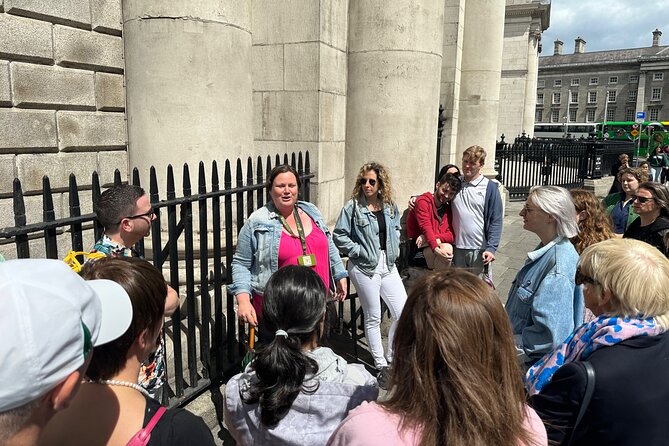
At Liberty Hall, the conversation turns to organizing and to the first ever gay pride parade in Ireland, including the tragic and turbulent circumstances around it. This is an important stop because it anchors Pride in real outcomes and real risk, not just modern celebrations.
The tour also ties that era to an inspirational trans activist. That matters because it frames trans history as part of the same civil rights story, not as a side note. The overall effect is serious, but it is also human. You get a clearer picture of how community momentum forms even when the surrounding conditions are hostile.
Time here is again tight, so the goal is context and direction. You will likely leave wanting to learn more, which is a good sign if you like doing a little follow-up reading later.
Trinity College Dublin and the College Green area
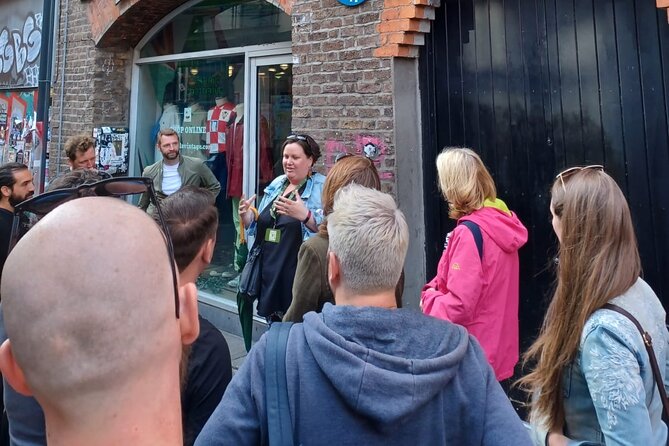
The route then reaches Trinity College Dublin, one of Ireland’s oldest and most famous universities. The guide points out LGBTQI+ alumni who passed beneath the famous old arch, and you also get time around the wider College Green area.
This is a slightly different flavor than the pub-and-street stops. It adds an academic and institutional angle, which helps explain how identity and advocacy show up across professions and social strata. It also gives you a chance to see Dublin from the “center of learning” perspective, right in the middle of sightseeing territory.
One consideration: admission at Trinity is not included. So if you want to go inside exhibits or fully use the campus access, plan for that. Even if you do not, the stop is still useful as a guided landmark walk.
Meeting House Square by Sean Harrington Architects: queer Dublin in the 1980s
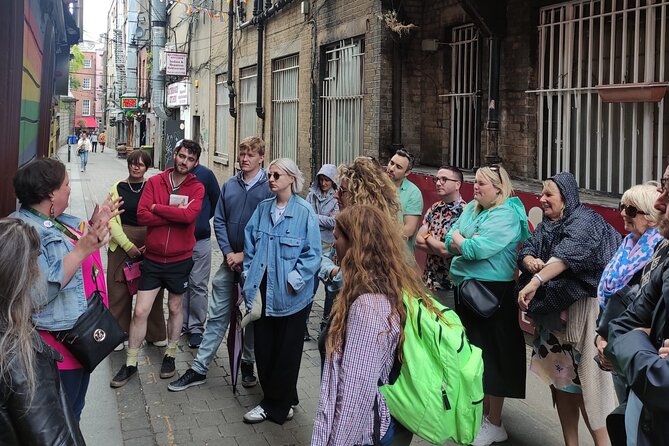
You then head to Meeting House Square, designed by Sean Harrington Architects, and the focus shifts to queer Dublin in the 1980s. This is where the tour starts to feel like it is mapping ideas, not just locations.
The guide connects people who brought hope and light to the community, and it also points you toward thinkers and change makers from that era. It is the kind of stop that makes you realize change is not one dramatic event, it is a long effort with many contributors.
This is also a good momentum break. After heavier political stops, it offers something that feels more like direction and community building. If you like stories where you can picture real humans doing real work, you will probably enjoy this one a lot.
Back through Temple Bar: the idea of a queer headquarters
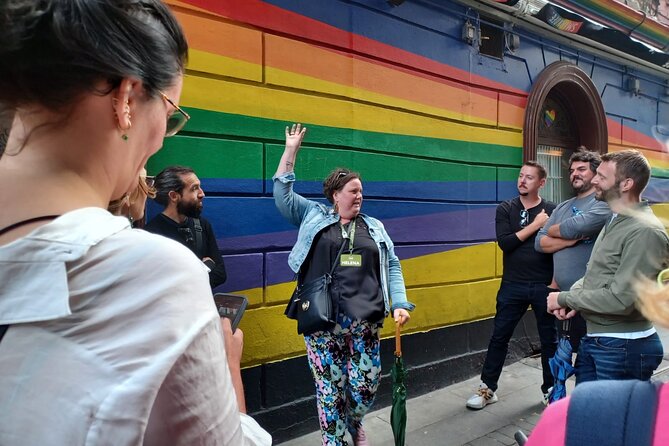
The tour loops back toward Temple Bar for another look. This time the stop focuses on the site of Ireland’s first ever bona fide Gay headquarters, including mentions of a café, disco, cinema, and more.
This is a fun stop even though the subject is serious. It shows you that community spaces were not only about meetings. They were also social, creative, and everyday. The tour helps you see nightlife as infrastructure, a place where identity could be lived out safely and visibly.
If you like connecting history to where you might actually grab a drink, this is one of the most practical stops. You come away with a clearer sense of how queer spaces cluster, why they matter, and what they offer beyond entertainment.
The George Bar: oldest operating gay bar energy
You finish up the core neighborhood storytelling at The George Bar, described as Dublin’s oldest operating gay bar. This is treated as a cultural institution, and the guide explains why the place still holds a central role in LGBTQ+ city life.
This stop works well at the end of the walking portion because it gives you a bridge from “history lesson” to “what life is like now.” Even if you do not go inside immediately, you get a sense of continuity, and you understand why the bar is more than a venue name on a list.
If you are someone who likes to see how communities function through everyday spaces, this is the stop that can make the entire tour feel more grounded.
Dublin Castle: the satisfying finish in 18th-century surroundings
Finally, the tour ends at Dublin Castle, right in the upper courtyard of this historic site. The castle is tied to about 1,200 years of history, and you see it in a way that feels earned, not random.
Ending at a major historic landmark does two things. First, it gives a clear “wrap” point for the route. Second, it makes you think about power structures and visibility, and how queer history has always had to navigate institutions.
This finish is also a convenience win. If you want to keep exploring after the tour, you end in a place where other sightseeing options are easy to reach, and you are still in the heart of central Dublin.
Price and value: what $29.02 buys you
The price is $29.02 per person for about 2 hours. That is a solid value in Dublin terms, especially since many stops note admission ticket free. Your money mostly funds the walking guidance and the connections between sites.
The one cost wrinkle is Trinity College admission not included. If Trinity is a priority for you, it is worth thinking about whether you want to pay for access during your visit. If not, the tour still gives you a guided sense of where LGBTQI+ alumni fit into the campus story.
Also remember the time structure. If you prefer slow museum hours, this tour will feel like a sampler. If you want context quickly, it is hard to beat. It is basically designed to point you toward places worth revisiting.
Who this tour suits best, and who might want a different plan
This is a great fit if you want a guided, LGBTQ+ focused way to see Dublin’s core highlights without building your own research map from scratch. It is also a good choice if you like walking and you feel comfortable with moderate physical fitness for city sidewalks.
I would especially recommend it if you enjoy:
- connecting politics, culture, and nightlife
- short, story-focused stops
- learning about queer community life through real addresses
If you only want long museum time or you dislike quick transitions, you may prefer an option with more indoor time per stop. And because the Trinity admission is not included, you should decide in advance whether that matters to you.
Should you book this Dublin queer history walking tour?
I would book this tour if your goal is context. You’ll leave with a clear mental map of Dublin through LGBTQ+ and gender-justice history, from Temple Bar to the finish at Dublin Castle. The guide-led pacing, the fact that many admissions are free, and the mix of institutions plus nightlife history make it feel like good use of limited time.
I would skip it or pair it with something else if you want a slower, deep museum experience. Treat this as your orientation and your springboard, then return later to the places that grab you most.
If you are in Dublin for a short stay, or you want to understand what you are seeing instead of just taking photos, this walk is an easy yes.
FAQ
What is the duration of the Dublin LGBTQ Pride Historical and Cultural Walking Tour?
The tour runs for about 2 hours.
How much does the tour cost?
The price is $29.02 per person.
Where do I meet the guide, and where does the tour end?
You meet at 3 Crown Alley, Temple Bar, Dublin (D02 CX67). The tour ends in the upper courtyard of Dublin Castle in Dublin 8.
What language is the tour offered in?
The tour is offered in English.
Is admission included at each stop?
Admission is free at multiple stops, but Trinity College Dublin is listed as admission ticket not included.
How big is the group?
The tour has a maximum of 100 travelers.
Is there any physical fitness requirement?
The tour notes that travelers should have a moderate physical fitness level.
What is the cancellation policy?
You can cancel for free up to 24 hours in advance for a full refund. If you cancel less than 24 hours before the start time, the amount paid is not refunded.
Fresh options around Dublin
- Wicklow: Private Day Tour from Dublin★ 5.0 · 5 reviews
- Wicklow Mountains Private Day Tour including Glendalough★ 5.0 · 7 reviews
- Women Of Ireland: Trailblazers & Pioneers★ 5.0 · 4 reviews
- Wicklow Mountains & Glendalough Luxury Private Day Tour★ 5.0 · 23 reviews
- Wicklow tour of Glendalough★ 4.5 · 8 reviews
- Dublin To Kilkenny Castle Waterford Crystal Private Car – Day Tour★ 5.0 · 8 reviews
- Waterford Crystal and Kilkenny Full-Day Rail Tour from Dublin★ 5.0 · 3 reviews
- Full Day Private Wicklow Tour★ 5.0 · 12 reviews
Historical Tours, compared.

Dublin Historical Centre Food Tour with 8 Food Tastings & Drinks
Read our review →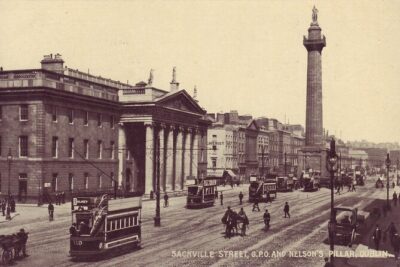

Historical 2-Hour Guided Walking Tour of Dublin
Read our review →
Dublin to Cork, Blarney Castle & Cóbh Heritage Centre by train
Read our review →
Jeanie Johnston Tall Ship Irish Famine History Tour
Read our review →

Deliciously Dublin: The Artisan Donut Walking & History Tour
Read our review →
Hidden Dublin: Haunted History Walking Tour v2.0 2026
Read our review →Browse the lists this tour appears in