
Reviewed · WALKING TOURS
Dublin Private Walking Tour | 3 hour Highlights & Hidden Gems
What makes this Dublin experience interesting is how it blends the headline stops with the quieter political and cultural clues you usually miss when you walk on your own. I love the private format, and that it hits big anchors like Dublin Castle without feeling rushed.
I also like the practical extras you get along the way, especially the digital PDF with cafe, pub, and traditional music ideas, plus a bit of Dublin orientation. One thing to consider: most parts are exterior walks, and any inside access (like Parliament House) depends on opening times, so you should plan for some “see it from the outside” moments.
Key things to know before you go

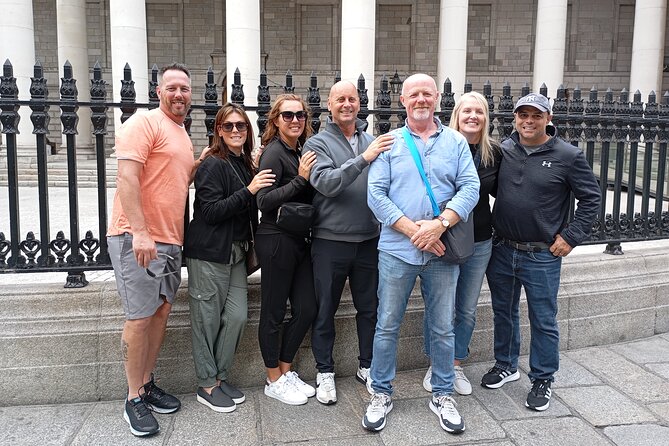
- A 100% private group with personal pacing, so you can ask questions and linger for photos.
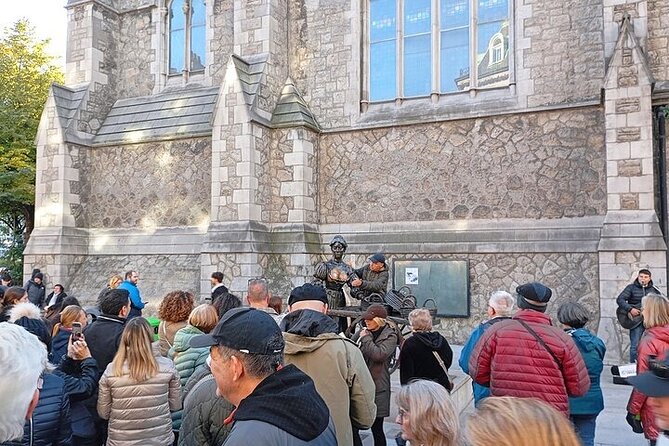
- Start at the Molly Malone Statue and end near College Green, which keeps you in the central core.
- A tight history thread that runs from medieval Dublin into the 1916 Rising sites.
- Parks built in at St Stephen’s Green and Dubh Linn Gardens, which breaks up the city walking.
- A guide who brings Dublin alive with storytelling, and often adds songs and extra materials like photos.
- Guide-built next steps using a digital PDF of places to eat and listen to Irish traditional music.
Why this 3-hour private Dublin walk makes the city click
Dublin is compact, but it is also layered. In just three hours, you can go from medieval power to modern identity if you have someone who knows where to point and when to stop. This tour’s route is built around turning the streets into a timeline, not just a photo list.
I like that it is private, because that changes how you experience a walking tour. You can adjust on the fly, move at a comfortable speed, and ask the question you are actually thinking. If you want more context about British rule, the Easter Rising, or how Trinity College shaped Dublin, you will get it without hunting for answers afterward.
More walking tours in Dublin:
- Dublin Highlights and Hidden Gems Guided Walking Tour
★ 5.0 · 6,020 reviews - Dublin: Highlights and Hidden Gems Walking Tour
★ 4.9 · 2,140 reviews - 1916 Rebellion Walking Tour
★ 5.0 · 1,605 reviews
Price and value: what $144.03 per person buys you
At $144.03 per person for about three hours, this is not a budget group tour. You are paying for three things that add real value in Dublin:
First, you get a licensed, experienced guide who can explain what you are looking at, not just point it out. Second, you get dedicated attention, because it is a true private experience for your group. Third, you walk away with a plan, including a digital PDF with best bets for cafes, restaurants, pubs, and Irish traditional music.
That last part matters more than you might think. Dublin can feel like a lot of the same street-level sights, but the right local suggestions help you spend your remaining time better, whether it is a good pub session or a quieter meal nearby. If you are the type who loves to go from landmark to landmark with context, this price starts to make sense fast.
Where you meet, where you end, and why it helps your day
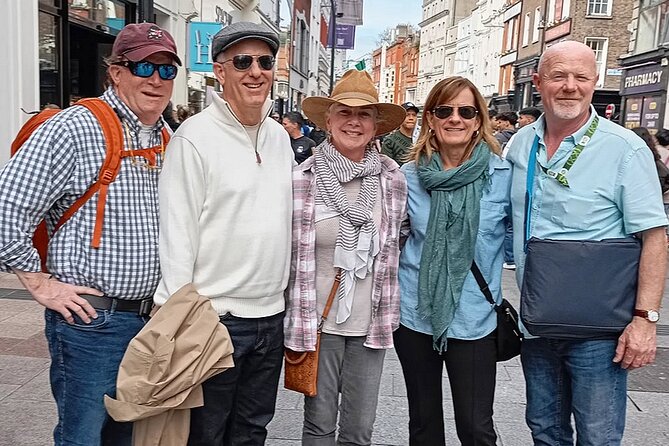
You start at the Molly Malone Statue on Suffolk St, Dublin 2 (D02 KX03). The tour typically ends at College Green, which is a very convenient finish point because it sits right by Trinity College and the central government-area streets.
The operator also allows you to choose an end point that fits your schedule. If you are racing to something else, you can often adjust the finish to match your next stop, such as Christ Church Cathedral, depending on timing.
Pickup is offered, so if walking out the door from your hotel is a hassle, you can arrange a meet-up at hotels or city center accommodations. There is also a central meet option at Molly Malone for people staying nearby.
Stop-by-stop: Dublin Castle, Trinity, Temple Bar, and the 1916 trail
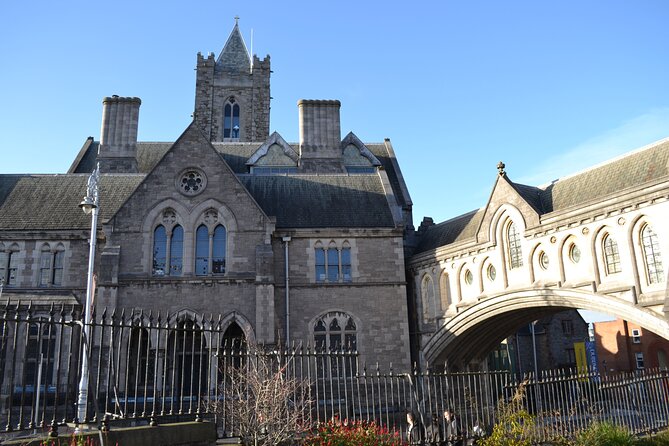
This is a walking route through the historic center. Many stops are exterior walks with quick context, so your best plan is to treat each stop like a “chapter starter,” then let the guide connect them.
A few more Dublin days worth comparing
- The Dublin Private Walking Tour
★ 5.0 · 701 reviews - Private Dublin Arrival Transfer – Airport to Hotel / Accommodation
★ 3.5 · 304 reviews - Private (Nearly!) All of Dublin in 5 hours (Walking Tour)
★ 5.0 · 281 reviews - Cliffs of Moher Private Award Winning Luxury Mercedes Car Tour
★ 5.0 · 176 reviews
Stop 1: Dublin Castle (external views, medieval foundations)
Dublin Castle is tied to centuries of rule and administration, and its story goes back to the first stone laid in 1204. On this tour, you get an external look and a focused explanation of why it became such a central piece of power.
The main benefit here is orientation. Even before you reach Trinity or the parliament-area streets, you start to understand the political geography of Dublin. The possible drawback is that if you were hoping for a full inside visit, that is not the point here, so plan to do a separate ticketed attraction if you want deeper access.
Stop 2: Molly Malone Statue (iconic, photo-worthy start)
Molly Malone comes from Dublin’s famous unofficial singing anthem. The statue has become one of the most visited and photographed spots in the city, and that makes it a smart starting point because it anchors the whole walk in popular Dublin identity.
You get a short stop here, which is exactly right. It is not a long detour, but it gets you in the right headspace for the cultural stories you will hear later.
Stop 3: Trinity College Dublin (founding era and campus beauty)
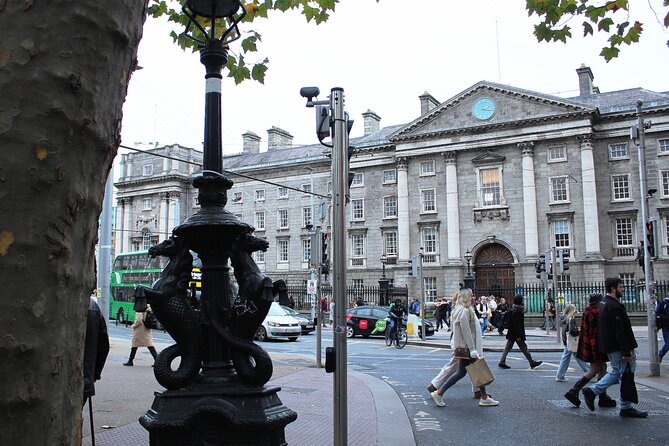
Trinity College Dublin was founded in 1592 by Queen Elizabeth I, and it is Ireland’s oldest university. Here, you get an external stroll through campus grounds, with context on how the institution became part of Dublin’s story.
Trinity is also a great place for architecture and atmosphere, even when you are just walking the edges. The pacing is quick, so if you want a full campus tour with interiors, you may still want to plan extra time.
Stop 4: Temple Bar area (culture at street level)
Temple Bar is more than one pub. It is an area of about 28 acres, made up of side streets, lanes, and places to eat and drink. Expect traditional music culture and lots of Irish storytelling on the street.
The value of this stop on a highlights walk is contrast. After heavier history near government and education, Temple Bar gives you the city’s social pulse. The caution is simple: this area can be busy depending on the day and time, so your best move is to keep moving and let the guide show you where to pause without getting stuck in crowds.
Stop 5: Ha’penny Bridge (older wrought iron, citywide views)
Ha’penny Bridge is one of Dublin’s oldest wrought iron bridges, tied to more than 200 years of history. It is also a perfect “breather stop” because it offers strong views across both the east and west sides of the city.
This is one of those places where standing still for a few minutes gives you better orientation for everything ahead. It is also short, so you get the payoff without the wait time you might face at larger attractions.
Stop 6: College Green (a three-sided plaza where key buildings meet)
College Green is a three-sided plaza in the heart of Dublin. On one side sits the Bank of Ireland building, tied to Ireland’s parliament past. Trinity College is on the east, and to the south you have monuments and a mix of Georgian and Victorian architecture.
The smart part about this stop is how it ties buildings to institutions. You start to see how power, learning, and national identity overlap in the same small area. If you are very into architectural detail, you might want extra time here after the tour, but you will leave with the structure of the area in your mind.
Stop 7: Powerscourt Townhouse Centre (a quieter 18th-century story)
Powerscourt Townhouse began as an 18th-century residence for Richard Wingfield, the 2nd Viscount Powerscourt, and his wife, Lady Elizabeth. It served as a social hub for Dublin’s elite, and now it functions as a townhouse centre that many visitors miss.
This stop works as a palate cleanser. Instead of the busiest landmarks, you get a more tucked-away sense of how Dublin’s wealth and social life operated. The tradeoff is time: you will learn the story quickly, but you will not browse every corner like you would on a longer visit.
Stop 8: St Stephen’s Green (a park stop that actually refreshes)
St Stephen’s Green Park covers about 22 acres and mixes gardens, flower beds, lakes, and wildlife. There are also sculptures and monuments, which means it is not just a rest stop, it is another history layer.
This is where the tour pacing helps you. You are not only walking, you are resetting your senses. If weather turns, a park stop still gives value, because you can duck into shelter nearby and keep your bearings for the rest of the route.
Stop 9: Dubh Linn Gardens (brickwork and Celtic pattern details)
Dubh Linn Gardens are in the heart of Dublin and often overlooked. You will see unique brickwork and Celtic pattern features, plus the garden’s own particular story.
This stop is short, but it is a good reminder that Dublin has small-scale design surprises. If you care about craft and detail, you will enjoy the focus on texture and pattern rather than big-ticket architecture.
Stop 10: Edward Delaney’s Famine Memorial (a heavy stop handled with care)
The Dublin Famine Memorial honors over one million victims of the Great Irish Famine of 1845. It features haunting sculptures of emaciated figures and is meant as a reminder of starvation and displacement that helped shape the Irish diaspora worldwide.
This is the emotional core of the walk. The benefit is context, because your guide can frame why this memorial exists and what it signals beyond the stone. The only consideration is that the topic is intense, so pace yourself and bring a moment of quiet if you need it.
Stop 11: Parliament House (House of Lords interior, if open)
The old Parliament House area, connected to the original House of Lords (now part of the Bank of Ireland), was constructed in the early 18th century. This stop is especially interesting because it may include walking into the House of Lords, as it was over 250 years ago.
The key practical point is that entry is subject to times and opening. If it is not accessible that day, you will still get significant exterior and historical framing, but you will lose the interior moment.
Stop 12: Wall of Fame (Irish music you can name on sight)
The Music Wall of Fame celebrates legendary Irish bands and singers. It is a quick stop that helps you connect Dublin identity to music and public memory.
This is useful if you like to anchor your trip in culture you will hear later. You might also use what you see here to pick a pub session that fits your taste.
Stop 13: Theobald Wolfe Tone Statue (1798 rebellion, Irish nationalism)
Theobald Wolfe Tone is commemorated for his role in the quest for greater autonomy and independence from British rule. He is often called the father of Irish nationalism, and his influence links to the 1798 rebellion.
This stop adds cause-and-effect to the story you have already started at Dublin Castle. You understand that the fight was not only one moment in history, it was a series of pushes and responses.
Stop 14: Dame Lane (the Irish Proclamation, April 24, 1916)
Dame Lane is where you see a copy of the original Irish Proclamation. The document was issued April 24, 1916 during the Easter Rising against British rule, declaring an independent republic and outlining ideas like equal citizenship and respect for people’s rights.
This is one of the best stops for understanding why modern Ireland remembers 1916 so intensely. If you leave with anything from this walk, it should be a clear sense that the proclamation is not just a historic text, it is a statement of values that people still talk about today.
How the guide changes the walking tour from sights to sense

The best walking tours do not just show you where to look. They teach you how to look.
On this route, the guide’s job is to connect the dots across very different types of places: a castle, a university campus, a park, music culture, and national political memory. If you get a guide like David, the storytelling energy can be a big part of the experience, including extra photos, added items of interest, and even songs.
That matters for you because it keeps the tour from turning into a list of facts. When the guide explains why Molly Malone matters, then you see how Wolfe Tone and the proclamation fit into the bigger identity conversation, the whole day stops feeling random.
You also get a digital PDF of recommendations for the best cafes, restaurants, pubs, and Irish traditional music venues. That turns the walk into a working plan for the next hours of your trip, not just three hours of walking.
Timing tips: make the route work with your shoes, weather, and attention span

This tour is about three hours, so you do not need to plan your whole day around it. Still, a few practical choices help.
- Wear comfortable shoes you can walk in for a solid stretch.
- Bring a light layer, Dublin weather can change quickly.
- Take photos, but keep moving. Several stops are short, and the best photos are the ones you get without slowing the group too much.
- If you want interiors, consider reserving separate tickets for the places you care about most. This route is designed for orientation and context, not a full checklist of timed entries.
Also, because the walk ends at College Green, it is a smart anchor for scheduling a later visit nearby. If you have a museum or cathedral visit in mind, plan it after the tour so you benefit from the guide’s directional context.
Who should book this private Dublin walking tour
This tour is a great fit if you want:
- A fast, guided way to understand Dublin’s main cultural and political reference points.
- A private experience where your group can ask questions and set the pace.
- Clear next-step recommendations, especially for Irish traditional music and where to eat afterward.
It is also a strong option for couples or small groups who would rather pay for a single guide than piece together multiple self-guided stops without context. If you are traveling with kids, note that it is not recommended for babies or children under age 5. Service animals are allowed, and most travelers can participate.
If you are the type who only wants ticketed attractions and expects long inside visits, this may feel short. The route is built around exterior viewing plus explanation, with interior access only when the sites are open.
Should you book it?
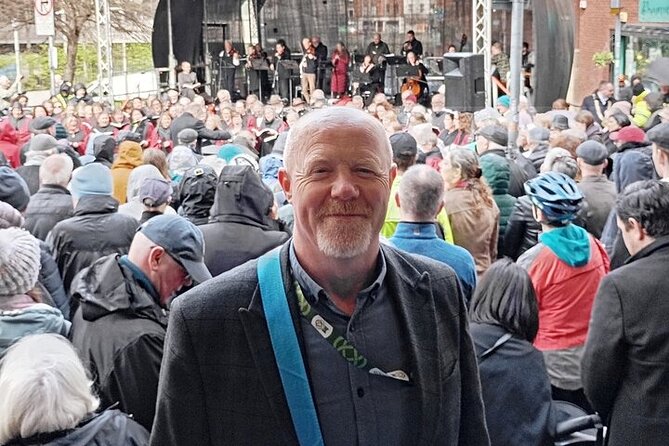
I would book it if you want your Dublin time to feel guided and connected, especially if it is your first visit or you like learning what you are actually looking at. The combination of a licensed guide, a private pace, and a practical digital PDF makes it feel like you leave with a plan, not just memories.
Skip it or swap expectations if you want guaranteed interior access at every stop. Some places depend on opening times, and the stops are designed to keep the route moving.
If your goal is to walk the center with a clear storyline from medieval Dublin to the 1916 Rising, this one is a solid bet.
FAQ
How long is the Dublin private walking tour?
It runs for about 3 hours.
Is this tour private or shared?
It is a private experience, and only your group participates.
Where does the tour start and where does it end?
You start at the Molly Malone Statue on Suffolk St in Dublin 2. The tour generally ends at College Green, with an option to choose an end point convenient to your itinerary.
Is pickup available from hotels or accommodations?
Pickup is offered. You can meet the guide at hotels or city center accommodations, or at the Molly Malone Statue meeting point.
What language is the tour offered in?
The tour is offered in English.
Are tickets or paid attractions included?
Food and drink are not included, and entrance into ticketed or paid attractions is not included. Some stops are described as external visits.
Can I cancel for a full refund?
Yes. Free cancellation is available up to 24 hours in advance for a full refund.
Is the tour suitable for young children or service animals?
Service animals are allowed. The tour is not recommended for babies or children under age 5.
Fresh options around Dublin
- Wicklow: Private Day Tour from Dublin★ 5.0 · 5 reviews
- Wicklow Mountains Private Day Tour including Glendalough★ 5.0 · 7 reviews
- Women Of Ireland: Trailblazers & Pioneers★ 5.0 · 4 reviews
- Wicklow Mountains & Glendalough Luxury Private Day Tour★ 5.0 · 23 reviews
- Wicklow tour of Glendalough★ 4.5 · 8 reviews
- Dublin To Kilkenny Castle Waterford Crystal Private Car – Day Tour★ 5.0 · 8 reviews
- Waterford Crystal and Kilkenny Full-Day Rail Tour from Dublin★ 5.0 · 3 reviews
- Full Day Private Wicklow Tour★ 5.0 · 12 reviews
Walking Tours, compared.
Dublin Highlights and Hidden Gems Guided Walking Tour
Read our review →

90 Minute Dublin Walking tour and Sightseeing tips
Read our review →

Historical 2-Hour Guided Walking Tour of Dublin
Read our review →
Dublin Traditional Irish 3 Course Meal Walking Tour with Local
Read our review →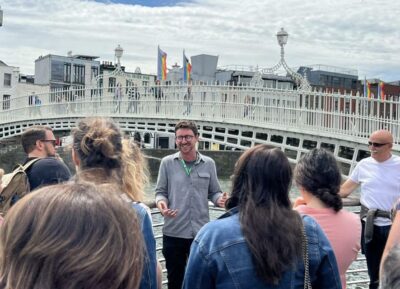
Browse the lists this tour appears in