
Reviewed · WALKING TOURS
Dublin: Sightseeing Walking Tour in German
This German-guided Dublin walk is interesting because it mixes major landmarks with the kind of local stories you would not stumble into by accident. I love the professional, friendly guide who speaks German, keeping everything clear and easy to follow.
I also like that it is a small group. It helps you hear the guide’s explanations, and the pace stays relaxed while you hit streets and squares people often rush past.
One consideration: most sights are external during the walk, so you are mainly looking at buildings, not touring inside.
Key highlights to look for
- Small group pace that makes the 2.5 hours feel manageable
- German-speaking guide with explanations built for real understanding, not just facts
- Old Dublin to the northside in one run, crossing key parts of the center and the River Liffey
- Landmark + story stops, including the General Post Office and the Book of Kells area
- Quirky Dublin details pointed out along the way, from odd art to a wobbly bridge moment
- Wheelchair accessible tour route for easier participation
Start at Dame Street and Actually Learn the Layout Fast
Your tour begins at the Tree of Gold Statue (Crann an Óir), right on Dame Street at the corner with Fownes Street Upper. That spot is a great anchor. From there, you are walking into the heart of the city center and building a mental map quickly.
The route has an easy-going feel. You wind through the former Viking and Medieval quarter area, then swing around through Temple Bar and across to the River Liffey, working your way toward the northside side of Dublin. You also spend time on the main historic street, O’Connell Street, which makes the whole thing feel like one clean story, not disconnected stops.
Even better, the guide keeps it human. Dublin’s big buildings are important, but you spend just as much time on the people connected to them. Expect the walk to include little surprises that keep you alert, like the tour’s repeated theme of Dublin being full of odd reminders of culture, change, and reinvention.
More walking tours in Dublin:
- Dublin Highlights and Hidden Gems Guided Walking Tour
★ 5.0 · 6,020 reviews - Dublin: Highlights and Hidden Gems Walking Tour
★ 4.9 · 2,140 reviews - 1916 Rebellion Walking Tour
★ 5.0 · 1,605 reviews
Dublin Castle Grounds to Christ Church Cathedral, With City Hall in the Mix
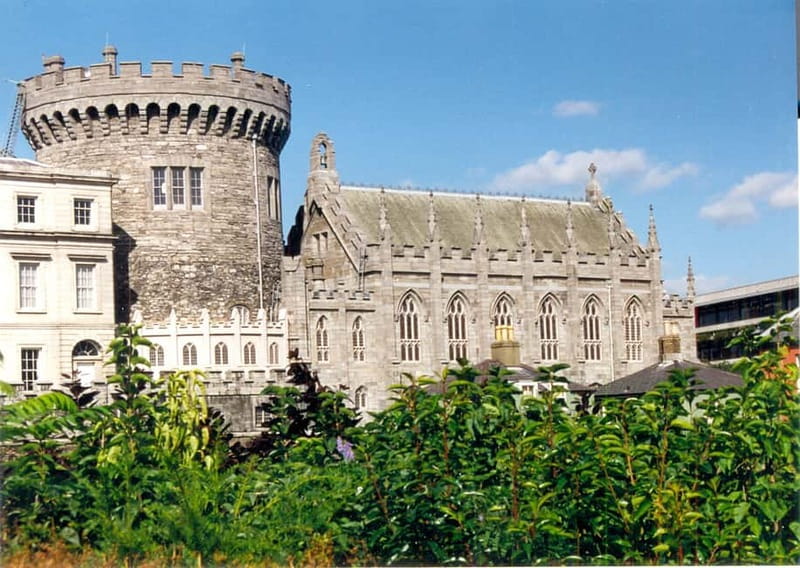
Early on, you head into the area tied to Dublin Castle and its grounds and gardens, with the tour keeping everything street-level and exterior-focused. This is a smart approach on a walking tour, especially in a city center where inside visits can eat up time.
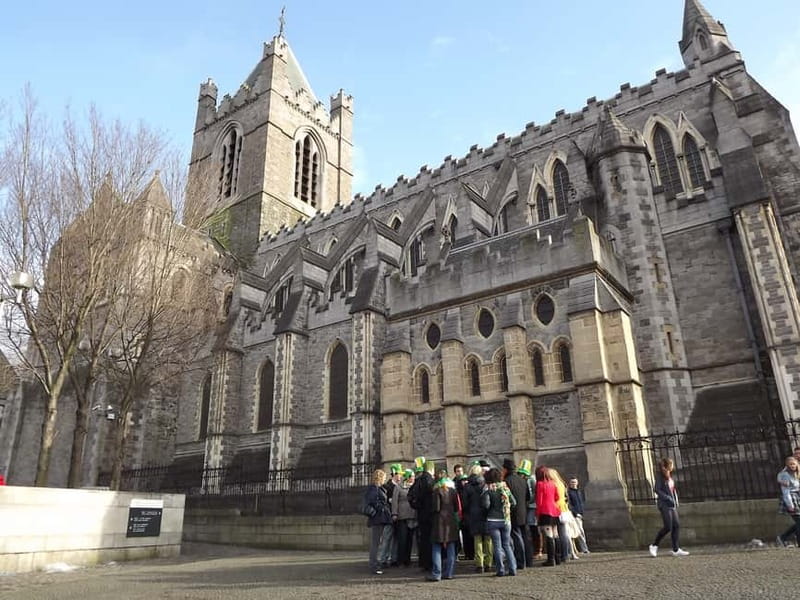
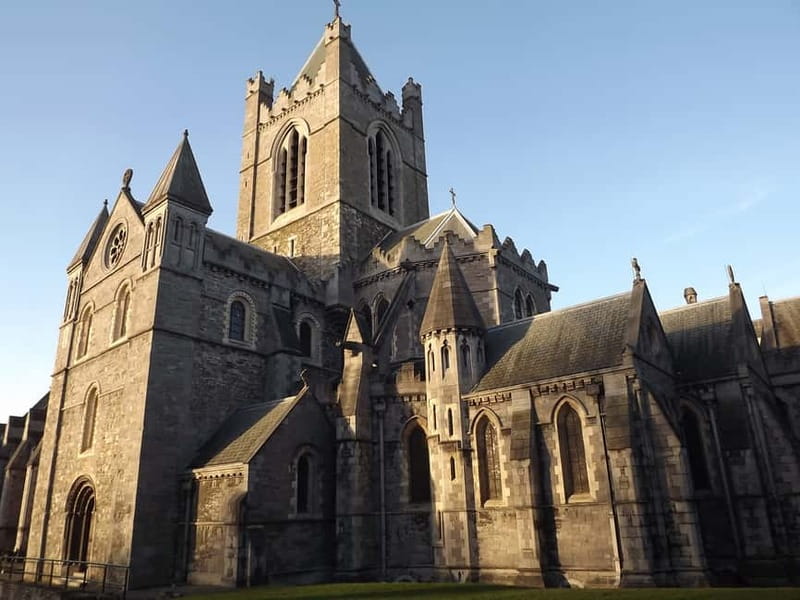
You also pass City Hall and Christ Church Cathedral. Seeing these from outside does not mean you miss the point. The guide uses these stops to set context, then connects that context to what you will see later around Temple Bar and the Liffey.
Why I like this part for you: it sets a baseline. Once you have the “big formal Dublin” on your radar, the backstreets and transformed buildings later make more sense. The tour is building contrast on purpose.
A minor downside to keep in mind, as you plan your expectations: you are not doing timed entry inside any of these sites during the walk. Your guide does note that opportunities for visits may come after the tour, but the main event is what you can see and understand from the street.
Temple Bar Without the Chaos, Fishamble Street and Smock Alley Stories
After the castle and cathedral area, the walk turns toward Temple Bar. You will pass by places like Meeting House Square (Temple Bar) and move through streets tied to Fishamble Street and Smock Alley.
This is where the tour feels especially good for first-timers. Temple Bar can be loud and touristy when you wander without a plan. On this walk, you are not just dropping into the area for photos. You get a guided route through the surrounding lanes and squares, which makes the area feel more like a neighborhood and less like a backdrop.
The guide is also setting up later surprises. You might hear about Dublin locations that are not what they seem. The tour’s style is to point out the things that look ordinary at first, then explain the twist. That could include a church that is now something else, or an unexpected repurposed space.
If you like walking tours where you learn why places look the way they do, this section is strong. You come away feeling like you understand how the city’s layers overlap.
Across the Liffey on Millennium Bridge, Then Into the Italian Quarter
At some point you cross into the River Liffey zone via Millennium Bridge. This matters for a couple reasons.
First, it gives you a natural break in the walking rhythm. Second, it changes the vibe of what you are seeing, because you are shifting from the historic core toward the northside City feel described by the route.
Then you head into the Italian Quarter area. This is one of those sections where the tour can help you spot Dublin’s personality beyond the most photographed streets. The guide points out what to notice visually and what to ask about in your head.
This part also sets up the tour’s “odd but true” moments. You may encounter references tied to things like a former Lisbon tram that is now serving as a café, and other small visual winks that make Dublin feel playful rather than just ceremonial.
I like how the tour keeps nudging you to look up and look closer, instead of just walking from one postcard to another.
Same city, a different sort of day out:
- Dublin to Cliffs of Moher, including Wild Atlantic Way and Galway
★ 5.0 · 23,331 reviews - From Dublin: Cliffs of Moher, Burren & Galway City Day Tour
★ 4.8 · 18,888 reviews - Dublin: Guinness Storehouse Entry Ticket
★ 4.6 · 16,863 reviews - Dublin to Cliffs of Moher, Burren, Wild Atlantic Way, Galway Tour
★ 5.0 · 12,924 reviews
St Mary’s Church Turned Café, Plus Other Odd Landmarks You Would Miss
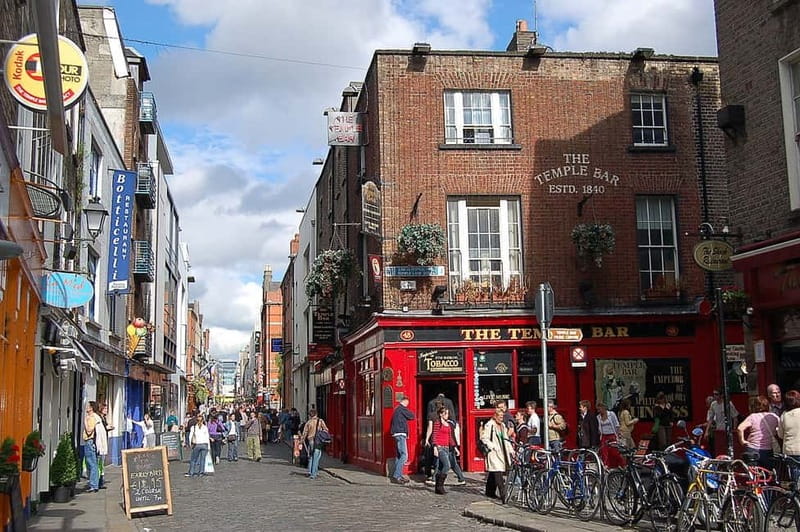
One of the more memorable stops is St Mary’s Church, described as now being a famous café and bar. That one detail tells you a lot about Dublin’s approach to space. Buildings do not always stay in their original roles. The guide uses these transformations to explain Dublin’s ability to adapt without fully erasing the past.
You will also pass Henry and Moore Streets, and the tour uses street-by-street movement to keep things fluid. It’s not a rushed sprint. It feels like you are moving through scenes while your guide threads the stories together.
Along the way, the walk includes several quirky prompts. You might get pointed toward:
- Dublin’s first but now defunct full-time cinema
- A church that is not a church
- A Lisbon tram repurposed into a café
- A representation of a da Vinci painting
- A wobbly bridge experience
- A tale connected to a post-box representing Ireland’s transition to independence
- A very famous 18th century composer represented in a stark way
No, you will not need to know art history before you go. The guide handles the “what am I looking at and why does it matter” part. For you, that is the value. These are exactly the kinds of details that turn a normal walk into something you remember.
O’Connell Street and the GPO, Where 1916 Is Marked in Stone
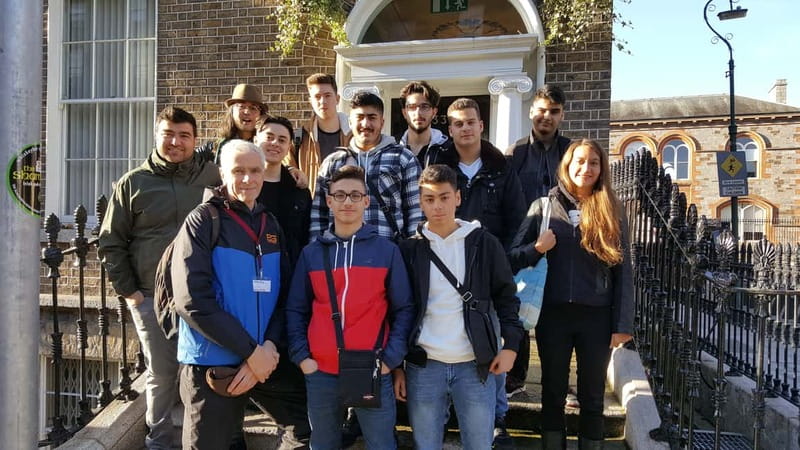
Next comes O’Connell Street, one of Dublin’s most important corridors, and you connect it to the General Post Office stop.
This is where the tour gets especially serious. The General Post Office is described as having housed the headquarters of the rebels of the 1916 Rising, and the building was destroyed along with almost the entire street and surrounds. That is a heavy piece of context, and the guide keeps it connected to the location you are standing by.
You also pass O’Connell Monument. The guide uses it to reinforce the idea that in Dublin, monuments and street markers often act like shortcuts to larger stories. You do not just walk past them. You understand what they are tied to.
Why this section is worth your time on a first visit: it gives the city’s center a meaning. You see the shape of the streets, you see the scale of the landmarks, then you learn the human stakes behind them. That makes everything feel more real than a list of sights.
Keep your pace steady here. Since the guide is layering story, you might want a quick pause to just look around yourself and re-orient, especially if the street is busy.
Former Parliament House by the Bank of Ireland, and the Walk Toward Trinity
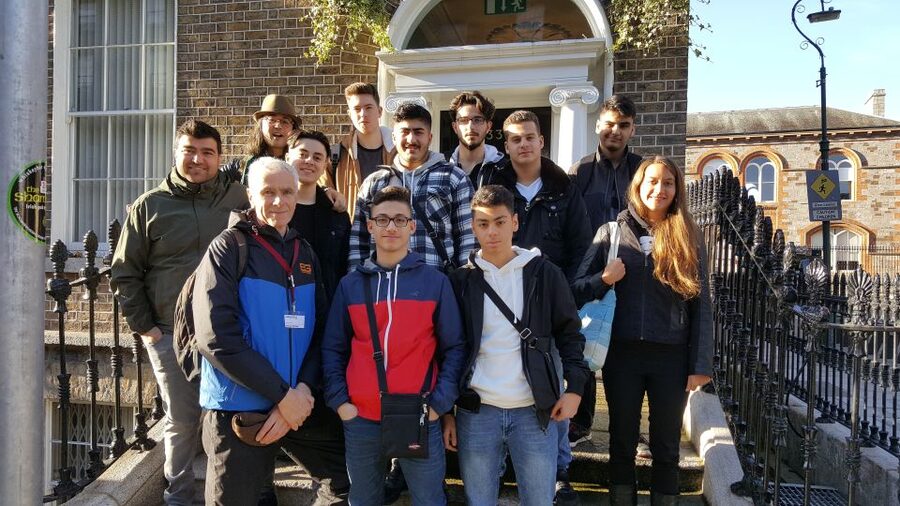
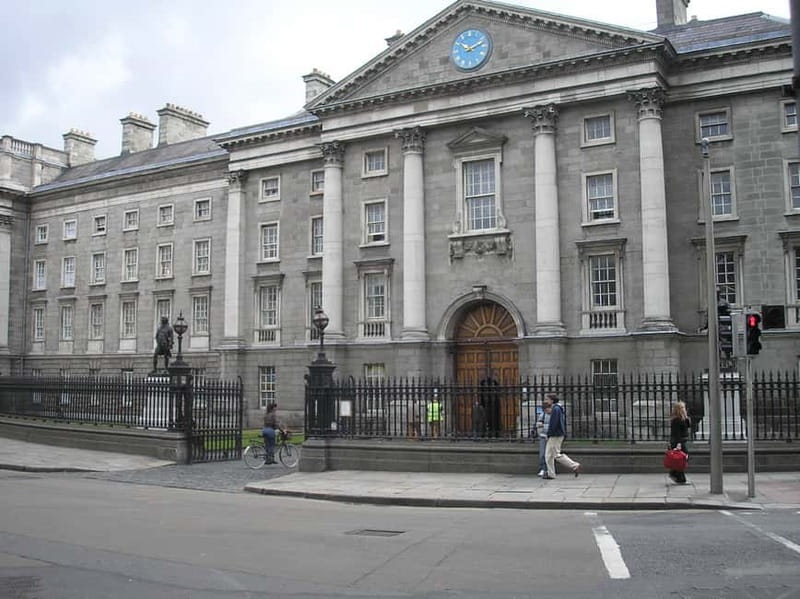
As the route continues, you pass the former Parliament House, described as the Bank of Ireland. The tour frames it as part of the historic Houses of Parliament area connected to the overall Trinity College finish zone.
This stretch is useful because it links the political and institutional Dublin you started with to the academic Dublin you end near. It also helps you understand how all these places are close enough to connect on foot, even though they feel worlds apart in atmosphere.
You may also pass other central street names like O’Connell Street again along the way, plus the Henry and Moore Streets corridor, depending on the exact flow of the group. The point is that you are covering a lot of the key central geography without needing public transit.
For practical planning: this is still a walking tour. The “easy-going” part means the guide supports you, but you should still wear comfortable shoes and expect street time more than museum time.
Finish Outside Trinity College and the Book of Kells Area
The walk finishes outside Trinity College, with the famed Book of Kells mentioned as the payoff. Even if you are only viewing from the outside during the tour, the location is a strong final anchor. It is the kind of place that naturally makes you slow down, because it feels like Dublin’s intellectual identity turned into a visitor destination.
Your tour ends back at the meeting point area too. So think of it as a loop that delivers the major sights across central Dublin, then returns you to where you started.
This ending works well if you want a clean next step after the walk. You can use the rest of your day to decide what you want to do in-depth based on what the guide emphasized most to you.
What You Get for $34: Value of a German Guide in 2.5 Hours
At $34 per person for about 2.5 hours, you are paying for one thing: a guided understanding of Dublin’s center, delivered in German. That price is reasonable if you value explanations over wandering.
You also get a lot of “high signal” stops in a short time, including Dublin Castle grounds and gardens, City Hall, O’Connell Street, the General Post Office, the O’Connell Monument area, and the Trinity College Book of Kells finish. On top of that, you are getting the quirky extras, like the wobbly bridge moment and the strange art-style representations, which are exactly what make a walking tour feel worth doing instead of just looking things up later.
Group size matters here. A small group makes it easier to track the guide and hear details, even in busy streets. It is also helpful if you have questions and want clarification without the experience feeling rushed.
If you like the idea of learning Dublin in German while still getting an efficient overview, this one is good value for your first day.
Should You Book This German Dublin Walking Tour?
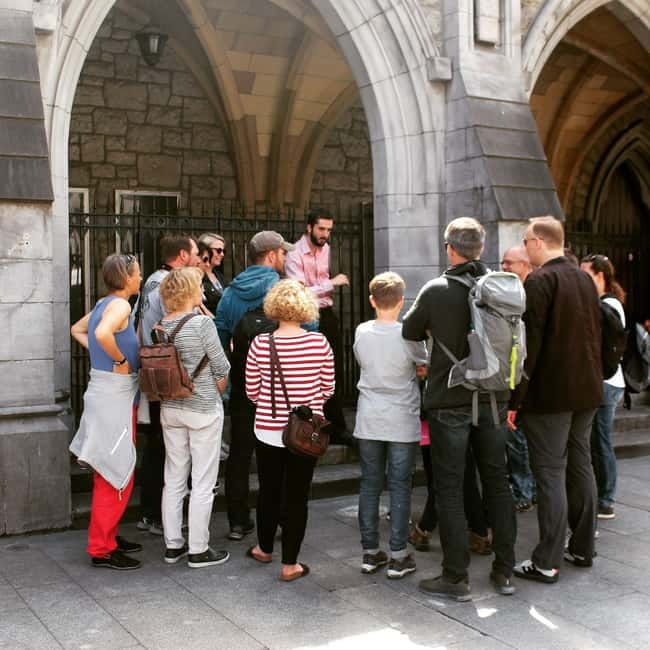
I’d book it if you want an organized walk that covers Dublin’s central landmarks on both sides of the River Liffey, and you want the stories in German. It is a strong choice for first-time visitors who need orientation fast, plus it is a fun pick if you enjoy quirky, pointed-out details like repurposed buildings and odd public art moments.
You might skip it if you specifically want inside visits during the tour itself, because the main approach is exterior viewing. Also, if German is not your comfortable language level, the whole point of the tour is the German guide and the explanations you get with it.
If you are planning a morning or early afternoon in Dublin and you want your bearings by the end, this walk is a solid, low-stress way to start.
FAQ
How long is the Dublin sightseeing walking tour in German?
The tour lasts 2.5 hours.
What is the tour language?
The live tour guide speaks German.
Where does the tour start?
It starts at the Tree of Gold Statue (Crann an Óir), Central Plaza, Dame Street Dublin 2, at the corner of Dame Street and Fownes Street Upper.
What are the main places you will see?
You will visit or pass by major central landmarks and areas including City Hall, Dublin Castle grounds and gardens, O’Connell Street, Trinity College with the Book of Kells area, and also stops such as the General Post Office, O’Connell Monument, and Millennium Bridge and the River Liffey.
Are the visits inside buildings during the tour?
All visits are external during the tour. Opportunities for such visits may be available after the tour.
Is it a small group tour?
Yes, it is a small group experience.
How much does the tour cost?
The price is $34 per person.
Is the tour wheelchair accessible?
Yes, it is wheelchair accessible.
What is included in the price?
The tour includes a professional well trained guide. Gratitudes are not included.
Fresh options around Dublin
- Wicklow: Private Day Tour from Dublin★ 5.0 · 5 reviews
- Wicklow Mountains Private Day Tour including Glendalough★ 5.0 · 7 reviews
- Women Of Ireland: Trailblazers & Pioneers★ 5.0 · 4 reviews
- Wicklow Mountains & Glendalough Luxury Private Day Tour★ 5.0 · 23 reviews
- Wicklow tour of Glendalough★ 4.5 · 8 reviews
- Dublin To Kilkenny Castle Waterford Crystal Private Car – Day Tour★ 5.0 · 8 reviews
- Waterford Crystal and Kilkenny Full-Day Rail Tour from Dublin★ 5.0 · 3 reviews
- Full Day Private Wicklow Tour★ 5.0 · 12 reviews
Walking Tours, compared.
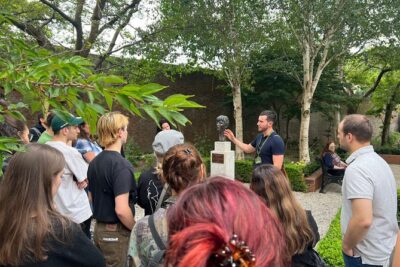
Dublin Highlights and Hidden Gems Guided Walking Tour
Read our review →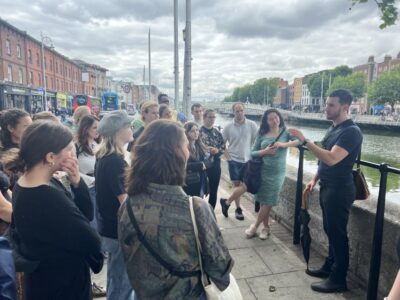
90 Minute Dublin Walking tour and Sightseeing tips
Read our review →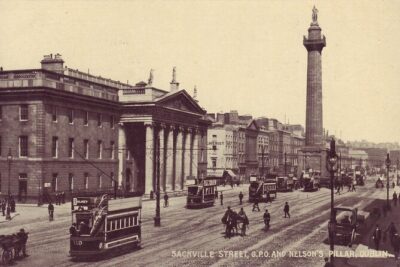

Historical 2-Hour Guided Walking Tour of Dublin
Read our review →
Dublin Traditional Irish 3 Course Meal Walking Tour with Local
Read our review →
Browse the lists this tour appears in