
Reviewed · WALKING TOURS
Small Group Bucket List Sights Walking Tour with a Local Guide
Dublin can feel like a blur if you only do it by pub crawl and photo stops. This small-group walk is interesting because it stitches the city together step by step, so you leave with an actual mental map of how Dublin grew. I love the tight 2-hour pacing and the way the route links monuments to real political and cultural change. I also love that you get Q and A time with a friendly local guide. The only drawback to plan for is that many major buildings are viewed from the outside, so if you want to go in, you may need separate admission tickets.
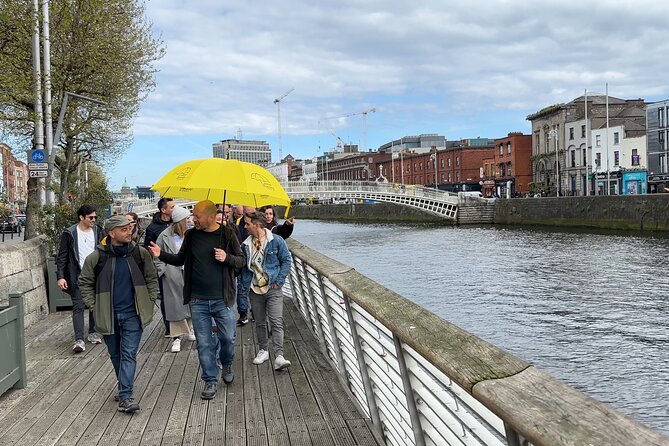
You start near the river and finish on College Green by Trinity College, in the heart of Dublin’s busiest old core. With a maximum group size of 25 and a local guide leading the way, it is an easy way to get your bearings fast, especially if you are on a short visit. Bring good walking shoes, because you are covering a lot of ground at a steady pace.
Key reasons this walk works so well
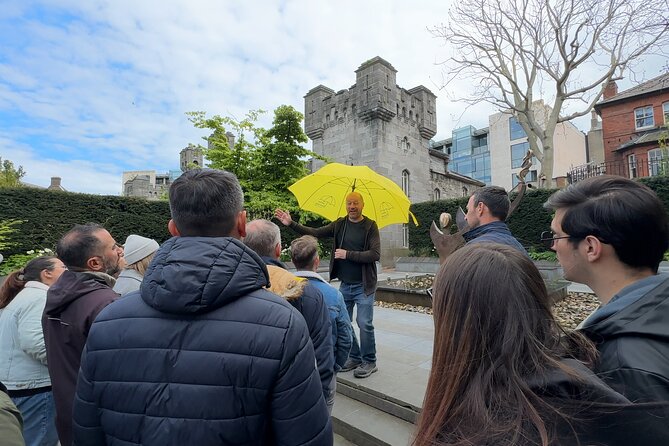
- 12 classic Dublin stops in about 2 hours, with time to ask questions
- Local guide energy, with names like Peter, Martin, and Rob showing up in guest experiences
- A smart story thread, from Viking beginnings to Tudor street plans and modern Dublin
- Most attractions are free to view, so you control what you pay for
- Small group size up to 25, so you do not feel lost in a crowd
Two Hours, 12 Stops, and a Dublin You Can Actually Navigate
This tour is built for orientation. Each stop is short, around 10 minutes, which means you keep moving and still get enough context to understand what you are looking at. For me, that time structure matters because Dublin has a lot of “pretty but confusing” streets if you go solo. Here, each location gets placed into a bigger timeline, so the city starts making sense.
You also get a natural walking loop through central areas: around the cathedrals, through the castle and flag area, past Temple Bar, across the river, and up to College Green and Trinity. That means you are not just ticking off sights. You are learning where the important bits are, so later you can choose your own route to museums, pubs, or parks without second-guessing distances.
Finally, the small-group format helps. When the group is capped at 25, you can usually hear the guide and ask things without shouting. That is the practical side of why people rate this so highly.
More walking tours in Dublin:
- Dublin Highlights and Hidden Gems Guided Walking Tour
★ 5.0 · 6,020 reviews - Dublin: Highlights and Hidden Gems Walking Tour
★ 4.9 · 2,140 reviews - 1916 Rebellion Walking Tour
★ 5.0 · 1,605 reviews
Christ Church Cathedral: From Viking Wood to Norman Stone to Whiskey-Funded Renovation
Christ Church Cathedral is a strong first stop because it sets the “layer-cake Dublin” theme immediately. The story goes like this: the original site was built in wood by the Vikings, then recast in stone by the Normans, and later renovated in the 19th century using money tied to the whiskey trade.
You do not need to be a history nerd to appreciate why this works. It is one of the clearest examples of how Dublin’s power shifted over time, and how each era left physical fingerprints. Even when you are only seeing the exterior up close, you get the feel of continuity, where later arrivals do not erase the past so much as build over it.
Plan for the practical reality: admission is not included here. If you want to go inside, you will need to sort that separately. But even outside, Christ Church is a useful anchor for the rest of the morning because it frames what comes next.
St. Patrick’s Cathedral and the Guinness Renovation Era
St. Patrick’s Cathedral is another high-impact stop, and it connects religion to major families in Ireland in a way that feels human, not textbooky. The guide theme is straightforward: the cathedral is named after Ireland’s patron saint, traditionally linked with the story of driving snakes off the island. Then comes the 19th century renovation by the Guinness family, specifically Sir Benjamin Lee Guinness in the 1860s.
Why I like this stop: you learn that monuments are not only spiritual symbols. They are also community statements, funded and maintained by real people with real influence. If you are wondering how Irish public life ties into business power, this is one of the easiest places to see the connection.
As with the first cathedral, admission is not included. You can still enjoy the exterior setting, but if you want more than views and context, you will likely pay extra for an interior visit later.
Dubh Linn Gardens and Chester Beatty: A Quiet Pause on the River’s Timeline
After the two cathedral stops, the pace shifts with Dubh Linn Gardens. It is marked as a free admission area, and it works as a reset without breaking the overall story.
The key detail here is Viking arrival. The gardens are described as a home for the Chester Beatty Library area, and the space is connected to the Vikings mooring long boats when they arrived in Dublin in the 9th century. That is a fascinating contrast to the typical image of Dublin as all medieval and modern. It reminds you that the timeline starts earlier, and the river is central to it.
This is the kind of stop you appreciate more if you slow down for a minute. You get greenery, a calmer feel, and a historical anchor that is not just about buildings. It helps you absorb what you have already been told, instead of rushing straight onward.
A few more Dublin days worth comparing
- Dublin to Glendalough, Wicklow and Kilkenny Full Day Guided Tour
★ 5.0 · 4,895 reviews - Dublin Book of Kells, Castle and Molly Malone Statue Guided Tour
★ 4.5 · 3,825 reviews - The Little Museum of Dublin Famous Guided Tour
★ 5.0 · 2,948 reviews - Dublin Jameson Distillery and Guinness Storehouse Guided Tour
★ 4.5 · 2,608 reviews
Dublin Castle and City Hall: 700 Years of British Rule and the Meaning of the National Flag
Dublin Castle is the big centerpiece for the political side of the walk. You are told it served as the center of British government in Ireland for around 700 years. Architecturally, it is described as a mix of medieval, Georgian, Gothic, and modern elements, which is a useful hint that this is not one single “style moment.” It is layers of authority, constantly rebuilt to suit new needs.
Right beside the castle gates, City Hall becomes your lesson in national identity. You learn the significance of the national flag as a symbol of peace between Catholic and Protestant communities, and also peace across North and South. This is one of those moments where you understand that symbols are not decorations. They reflect political reality.
Both of these stops are largely about what you see and what the guide explains. If you want to go inside any buildings that are open, that will be separate from the walk timing. Still, the exterior experience plus interpretation is enough to make these places feel more than names on a map.
Temple Bar: Tudor Street Planning Meets Pub-Lit Nightlife
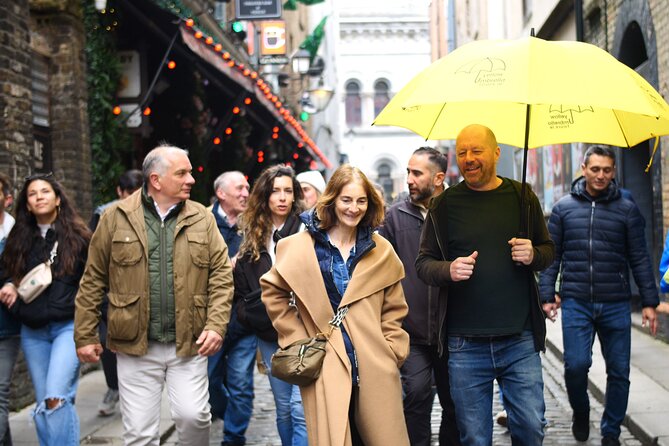
Temple Bar is where the tour turns from power and faith to place-making and everyday life. You are told it is one of the oldest parts of the city, and now it is famous for lively pubs and nightlife. The guide also points to how the area was laid out during the Tudor conquest of Ireland.
What I like about this stop is the “how the city got its shape” angle. Temple Bar today can be loud and crowded, depending on when you visit, but the historical connection to Tudor-era planning gives context. You stop seeing it only as a nightlife district and start understanding it as a street system with an origin story.
This stop is marked as free in the sense that you are not paying admission as part of the tour. It is more about walking the streets and noticing the feel of the area. Even if you do not plan to go out that night, it helps you understand where the energy of the city lives.
Millennium Bridge and Ha’penny Bridge: River Liffey Views, Plus Fixes That Solved Real Problems
Crossing the River Liffey is a highlight because it turns the city into a series of viewpoints. At the Millennium Bridge side, you get guidance on what you are looking at from east to west. The east is tied to a Celtic settlement built around 2,100 years ago. The west side connects to modern Dublin, described as the Americans inspiring the Silicon Docks about 21 years ago.
That east-west contrast is a neat trick. It prevents the common mistake of treating Dublin as only old or only new. From the bridge, you see the continuity of the city’s changing economic engine.
Then you head back over the river on Ha’penny Bridge. This is one of Dublin’s most iconic crossings, and the story here is clever. The bridge was originally named after the Duke of Wellington, and Harland and Wolff are credited with making sure it no longer shakes when people walk over it.
If you like practical stories, this is the one. It is not only about who named it. It is about engineering and everyday comfort, meaning the city’s charm comes with a fix behind the scenes.
For these river crossings, admission is not included, and you simply enjoy the walk and views with your guide. It is a great “breather” portion that still moves the story forward.
Merchant’s Arch, Crown Alley Contrasts, and College Green’s Government and Finance Angle
After the bridges, the walk keeps building contrast. Merchant’s Arch is described as a place that shows Dublin’s different moods at once, with Crown Alley and Merchant’s Arch at one end, and a brutalist tower, Stephenson Tower, at the other. That end of the walk helps you notice that Dublin is not one uniform vibe. It is a mix of eras and styles sharing the same streets.
Then you reach College Green, one of the most important stretches for understanding how Dublin sees itself. The area is described as having some of the city’s most beautiful buildings, including banks and parliament. The story ties it to government and finance, and also to Dublin’s role as a major city within an empire framework.
This is where the tour becomes especially useful for planning. Once you stand here and get the guide’s interpretation, you can better decide what you want to see next. If you are the type who likes to follow government buildings, you now know where to aim. If you prefer culture and education, Trinity College is about to be your next target.
Molly Malone, Then Trinity College Dublin and the Book of Kells Clue
No Dublin walk feels complete without Molly Malone. The tour includes a stop for the Molly Malone statue, essentially a friendly hello before you finish up. It is a fun cultural punctuation mark, and it also helps keep the walk from becoming only serious monuments.
The final step is Trinity College Dublin, finishing outside the front area on College Green. You are told Trinity is home to the famous Book of Kells exhibition. Even if you do not go in right away, this clue is valuable because it gives you a clear next action. You now know which “big ticket” sight to pair with your next hours in Dublin.
As with the earlier major indoor sites, admission to the attractions is not described as included. So treat this as a guided arrival and context stop, then decide what you want to purchase on your own time.
What You Pay for $20.52, and What You Control Yourself
At $20.52 per person for about two hours, you are paying mainly for direction, pacing, and interpretation, not for building admissions. That is not a weakness. It is a smart value model for short visits.
Many big stops are marked as admission not included, while a couple areas are free to enjoy, including Dubh Linn Gardens and parts tied to City Hall and public areas. This means you can spend money selectively. If you want cathedral interiors or specific museum time, you can choose based on your interests, instead of being forced into a package.
Also, with a mobile ticket, you can travel lighter. You are not dealing with paper on a busy street corner. For a walking tour, that little convenience matters more than it sounds.
One more practical upside: the tour is in English, and it is described as suitable for most travelers. That usually translates to a route that is straightforward to follow, with stops kept short so you are not stuck waiting in one place for long.
Pacing, Conversation, and Why People Keep Praising the Guides
The strongest pattern in the experience is the guide impact. Multiple named guides, including Peter, Martin, and Rob, show up in guest feedback as energetic and engaging. The consistent theme is clear communication and an ability to make Dublin feel personal.
You also get a sense that the pacing is intentional. People talk about it flying by, in a good way, and that it is not rushed. With around 10 minutes at each stop, you get quick orientation without long gaps. That is ideal if you want to see a lot and also ask questions while you are still near the key sights.
Another praise point to take seriously: questions. The guide experience is described as interactive, with encouragement to ask. If you come with even a few curiosity questions, like why certain neighborhoods feel the way they do or how Irish history shows up in architecture, you can get useful answers right then, not hours later.
Who Should Book This Dublin Highlights Walk
This is a great fit if you:
- want a quick, structured way to learn central Dublin
- are visiting for a short break and need orientation
- like walking and outdoor sightseeing more than sitting in one place
- enjoy history connected to real locations, not just dates
It is also good if you want to build a plan for after the tour. Because you finish near Trinity, you can decide what to do next based on your energy and interests, whether that is museum time, a longer stroll, or grabbing food nearby.
If you are the kind of traveler who only likes to go inside buildings, know this tour is mostly about seeing the exteriors and learning context. You can still get a lot from that, but you should plan possible ticket purchases for interiors if they matter to you.
Should You Book This Dublin Walking Tour?
If you are asking me whether this is worth it, my answer is yes, with one condition: go into it expecting context and orientation more than guaranteed indoor access. For $20.52 and about two hours, it offers a compact tour through major landmarks tied to Viking beginnings, Norman stone, 19th century renovation stories, long political rule, river views, and the urban layout of Temple Bar.
Book it if you want a small-group guide to help you see Dublin as a connected story, so you can roam confidently afterward. Skip it only if your top priority is entering multiple museums and cathedrals during the tour itself, because several key sites are marked as not included for admission.
FAQ
How long is the Dublin walking tour?
It is approximately 2 hours.
What is the price per person?
The price is $20.52 per person.
Is the tour in English?
Yes, it is offered in English.
Are admission tickets included for the main stops?
Admission is not included for some major sites like Christ Church Cathedral, St. Patrick’s Cathedral, and Dublin Castle. Dubh Linn Gardens is listed as free, and City Hall, Temple Bar, and other public areas are also listed as free to enjoy from the outside.
Where does the tour start and where does it end?
It starts at 121 R137, Wood Quay, Dublin, Ireland. It ends on College Green outside the front gate of Trinity College, at Fox House, 37 College Green, Dublin 2.
What is the maximum group size?
The tour has a maximum of 25 travelers.
Can I cancel for a refund?
You can cancel up to 24 hours in advance for a full refund. If you cancel less than 24 hours before the start time, you do not get a refund.
Fresh options around Dublin
- Wicklow: Private Day Tour from Dublin★ 5.0 · 5 reviews
- Wicklow Mountains Private Day Tour including Glendalough★ 5.0 · 7 reviews
- Women Of Ireland: Trailblazers & Pioneers★ 5.0 · 4 reviews
- Wicklow Mountains & Glendalough Luxury Private Day Tour★ 5.0 · 23 reviews
- Wicklow tour of Glendalough★ 4.5 · 8 reviews
- Waterford Crystal and Kilkenny Full-Day Rail Tour from Dublin★ 5.0 · 3 reviews
- Full Day Private Wicklow Tour★ 5.0 · 12 reviews
- Dublin To Kilkenny Castle Waterford Crystal Private Car – Day Tour★ 5.0 · 8 reviews
Walking Tours, compared.
Dublin Highlights and Hidden Gems Guided Walking Tour
Read our review →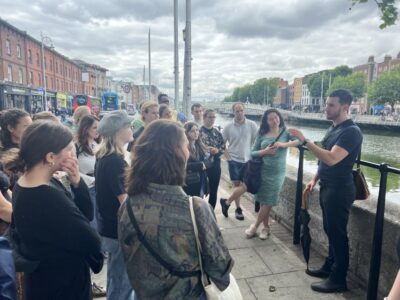

90 Minute Dublin Walking tour and Sightseeing tips
Read our review →

Historical 2-Hour Guided Walking Tour of Dublin
Read our review →
Dublin Traditional Irish 3 Course Meal Walking Tour with Local
Read our review →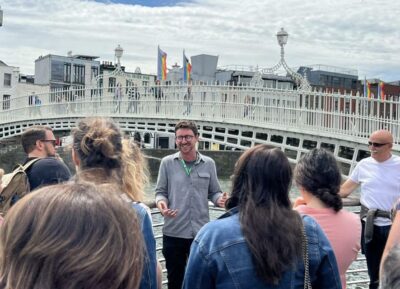
Browse the lists this tour appears in